

VITAMIN B1 #CAS:59-43-8
Vitamin B1, also known as "thiamine," is a member of the B-vitamin complex. It promotes normal glucose metabolism and is essential for maintaining proper nerve impulse conduction, as well as the normal functioning of the heart and gastrointestinal tract. It combines with adenosine triphosphate (ATP) to form thiamine pyrophosphate (also known as cocarboxylase), a coenzyme essential for carbohydrate metabolism. A deficiency in this coenzyme hinders oxidative metabolism, leading to the accumulation of pyruvic acid and lactic acid, which in turn impairs the body's energy supply. Vitamin B1 also inhibits the activity of cholinesterase; in the event of a deficiency, cholinesterase activity increases, accelerating the hydrolysis of acetylcholine. This disrupts nerve impulse conduction and adversely affects the function of the gastrointestinal tract and the myocardium.
Applicaion of VITAMIN B1
Vitamin B1 is a member of the B-vitamin complex. It is primarily used to prevent and treat vitamin B1 deficiency and the conditions resulting from it, such as beriberi or Wernicke’s encephalopathy. It also serves as an adjunctive therapy for peripheral neuritis, myocarditis, indigestion, and congestive heart failure. Furthermore, it is used for vitamin B1 supplementation in various clinical scenarios, including in patients with burns, fever, or long-term chronic infections; individuals with malabsorption syndromes associated with hepatobiliary disorders (e.g., alcoholism with cirrhosis) or small intestinal diseases (e.g., celiac disease, persistent diarrhea); patients who have undergone a gastrectomy, those with hyperthyroidism, or individuals undergoing hemodialysis; as well as those suffering from malnutrition due to prolonged parenteral nutrition or inadequate dietary intake, individuals engaged in heavy physical labor, and pregnant or breastfeeding women.
Vitamin B1 is used in method for cultivating tremella strain. Also, it is protein compound liquid comprising collagen and Rhodiola rosea extract or preparing injection to remove skin wrinkle.| Thiamine chloride Chemical Properties |
| Melting point | 248 °C (decomp) |
| density | 1.3175 (rough estimate) |
| refractive index | 1.5630 (estimate) |
| storage temp. | Keep in dark place,Inert atmosphere,Room temperature |
| solubility | DMSO : 6 mg/mL (19.95 mM) |
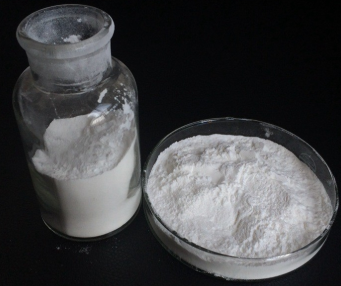
| form | Solid |
| color | White to off-white |
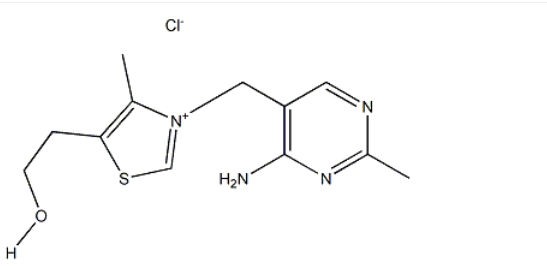
| InChI | InChI=1S/C12H17N4OS.ClH/c1-8-11(3-4-17)18-7-16(8)6-10-5-14-9(2)15-12(10)13;/h5,7,17H,3-4,6H2,1-2H3,(H2,13,14,15);1H/q+1;/p-1 |
| InChIKey | MYVIATVLJGTBFV-UHFFFAOYSA-M |
| SMILES | O([H])CCC1=C(C)[N+](=CS1)CC1C=NC(=NC=1N)C.[Cl-] |
| LogP | -3.930 (est) |
| CAS DataBase Reference | 59-43-8(CAS DataBase Reference) |
| EPA Substance Registry System | Thiamine (59-43-8) |
| Safety Information |
| RTECS | XI7350000 |
| TSCA | TSCA listed |
| HS Code | 2936220000 |
| Hazardous Substances Data | 59-43-8(Hazardous Substances Data) |
Fact Factory and Equipment Show