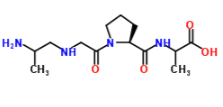

Collagen #CAS9007-34-5
CAS Number:9007-34-5
Chemical Formula:C₄H₆N₂O₃R₂·(C₇H₉N₂O₂R)ₙ
Synonyms:
Collagenpowder
collagen type iv from human placenta
Collagen, Type II, Bovine Joint Cartilage
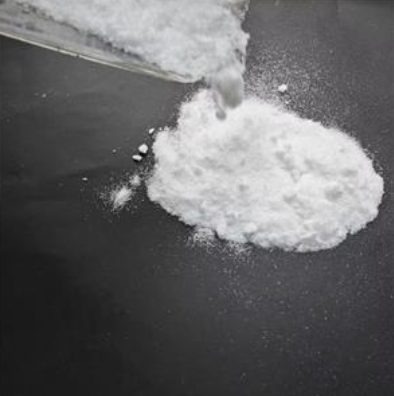
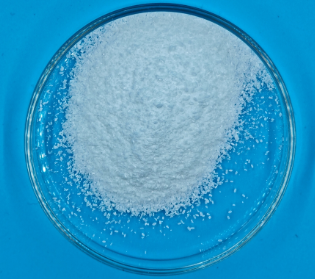
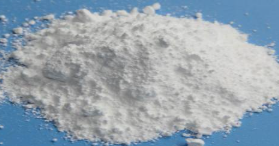
Appearance:white to off-white
MOQ (Minimum Order Quantity): 1 FCL (Full Container Load)
Collagen #CAS9007-34-5
Hydrolyzed Collagen is a mixture of polypeptide segments obtained by controlled enzymatic or acid hydrolysis of natural collagen. It is soluble in warm water, and the solubility increases with rising temperature. It is insoluble in organic solvents such as ethanol and ether. Its aqueous solution shows weak amphoteric property, containing both amino groups and carboxyl groups, so it can react with both acids and alkalis. It maintains relatively stable properties under neutral and weakly acidic conditions. Under strong alkaline, strong acidic environments or sustained high-temperature heating, peptide bonds will break further, leading to deeper hydrolysis into free amino acids. It is sensitive to high temperature for a long time and ultraviolet radiation, which may cause denaturation and loss of activity. It has good compatibility with most cosmetic raw materials, including humectants, surfactants, plant extracts, vitamins and preservatives. It has good film-forming ability on skin and hair. It is hygroscopic and can absorb moisture from ambient air.
Application of Collagen
1. Application in healthcare industry
Collagen is mainly used as scaffolds, skin and bones in tissue engineering. With the application of collagen in tissue engineering, the study of biological membrane also becomes more extensive such as vascular membrane, ligaments and heart valves.
Collagen has good biocompatibility and biodegradable security. It can be degraded and absorbed, and have a good adhesion force thus having a unique skin repair function which can be used for skin transplant after modification. Collagen can form the skeleton of the extracellular matrix and is an important component of cells. It plays a role of anchoring and supporting the cells, and providing the appropriate microenvironment for cell proliferation and growth, also providing a good supply of nutrients. Thus whether as the backbone of the new organization before being absorbed, or being assimilated into the host to become part of it, the collagen always has good interaction with the matrix surrounding them which exhibits the coordination of interaction with each other. This will boost the normal proliferation and repairmen of epithelial cells, thus boosting the healing wound healing of the wound. In this case, it is used for burns and trauma repair, treatment and care, reducing and alleviating the degree of burns. Collagen biological dressing has two advantages: First, the preparation method is simple, easy for sterilization, easy for process; the second is having good adhesion, suitable for the formation of granulation tissue and epithelial cells; can reduce the contracture and antigenic response of wounds, having a good hemostatic effect and easy to absorb tissue exudates.
Because of its unique properties, collagen protein can also be used to treat ophthalmic diseases. Collagen can promote cell growth and the repair of corneal epithelial cell damage, and can also be dissolved in tears. It also has the ability to introduce epithelia cells into the defect area. At the same time, its degraded products can be taken advantage by new cells for new collagen synthesis, which plays the role of connecting different cells. Thus, it is widely applied in the treatment of eye diseases. Collagen can also be used as the carrier for ocular administration, with the function of increasing drug concentration, prolonging drug action time, and reducing the systemic toxicity of the drug, which has broad prospects for development.
In clinical medicine, collagen has also been widely used for cosmetic and orthopedic treatment, for treatment of periodontal diseases, for hard tissue repair, for nerve repair and regeneration, as the wrapping materials of periodontal nerve repair, as artificial organs, as pacemakers and the filling materials of human organs.
2. The application in cosmetics
Collagen can be extracted from animal skin which also contains some proteoglycans like hyaluronic acid, chondroitin sulfate in addition to collagen, which all belongs to the natural moisturizing factor as important materials for maintaining skin moisture. Moreover it also has the role of preventing the conversion of tyrosine into melanin in the skin. Collagen, similar with the collagen structure in the skin and also the stratum corneum, which promotes the proliferation and repair of epithelial cell and replenishes amino acids and other nutrients, improves the living environment of skin cells, promotes the metabolism of skin and enhance circulation, fill and repair the damaged and aging skin, and also has a good compatibility, affinity and permeability with the skin. It can be fully absorbed by the skin and make the skin plump, stretch the wrinkles while being able to increase the density of the skin and resulting in tension. Therefore, collagen has a natural effect of moisturizing, whitening, eliminating freckle and wrinkle, and thus be widely used in the cosmetics industry. Currently on the market, many selling cosmetics such as masks, eye creams, skin creams contain collagen.
3. Application in Food Industry
There are two aspects of the application of collagen in food industry: its function and nutrition, respectively. Collagen peptides can be directly taken as a functional food alone, such as chewable tablets, and protein powders or enteral nutrition agents desired for athletes. Having foods rich in collagen can not only effectively delay the aging of body, strengthening the gluten and bone, enhancing physical fitness, but also lose the weight and blood pressure and have other health effects like replenishing calcium. Treating collagen with specific enzyme can break the intermolecular hydrogen bonds and further disrupting the original compact super-coiled structure. The resulting structure is more loosely-formed small molecules whose addition to the meat products can improve the connective tissue, increase the protein content, and have good taste and nutritious. The hydrolysis products of collagen can be used as frozen food modifier for using as thickening agent and have a low melting point, easy to be dissolved immediately after entrance into mouth. Therefore, collagen is widely used in jelly, sour cheese, ham, canned food, and bread. In addition, using the film-forming property can make collagen be the membrane materials for solidified and the labels of meat. Collagen can also be used as food adhesive for synthesizing film and as protective layer of food like meat and fish which has antioxidant activity while maintaining the bright color of meat.
4. Applications in other fields
With the continuous studies of collagen, there are increasing cases and promising prospects that collagen are applied in other fields. For example, extracting the collagen rich in the residual waste of tanning process can make collagen be the protein resources for feeding animal which realizes resource utilization. After the denaturation treatment of collagen, we can improve its textile properties and apply to the textile industry. In recent years, there are more and more cases that collagen has been applied to light industry such as paper industry, leather industry, and daily chemical industry. With the continuous development and progress of research techniques, it is clear that collagen will have broader application
| Collagen Chemical Properties |
| density | 1.01g/mL± 0.02g/mL |
| storage temp. | 2-8°C |
| solubility | H2O: 5 mg/mL, hazy, colorless and viscous |
| form | solution |
| color | white to off-white |
| PH | 7.0 |
| PH Range | 7.0 - 7.6 |
| biological source | rat |
| Water Solubility | It is soluble in water. |
| Cosmetics Ingredients Functions | HUMECTANT MOISTURISING HAIR CONDITIONING SKIN CONDITIONING |
| Cosmetic Ingredient Review (CIR) | Collagen (9007-34-5) |
| EPA Substance Registry System | Collagen (9007-34-5) |
| Safety Information |
| Hazard Codes | B |
| WGK Germany | 1 |
| F | 10-21 |
| TSCA | TSCA listed |
| HS Code | 35040090 |
| Storage Class | 12 - Non Combustible Liquids |
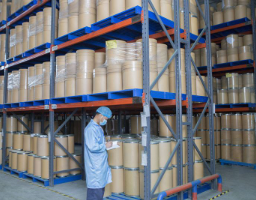
Fact Factory and Equipment Show