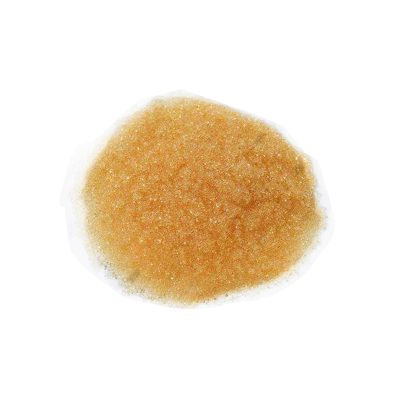
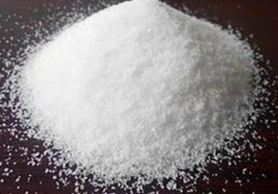
Sodium Phosphate #CAS7558-79-4
Sodium Phosphate #CAS7558-79-4
Sodium phosphate dibasic is highly hygroscopic and water soluble. Useful in conjunction with Sodium Phosphate, Monobasic in the preparation of biological buffers. It is commonly used in biological assay buffers. Sodium is required for nerve and muscle functioning. Sodium Phosphate Dibasic can be used as a dietary supplement and as a nutrient. Sodium hydrogen phosphate is used in food and water treatment in conjunction with trisodium phosphate.In foods, it is used to adjust pH. In water treatment, It retards calcium scale formation. It is also found in some detergents and cleaning agents. This product is known to be Used in many applications including the purification of antibodies. It is used as a saline laxative to treat constipation or to clean the bowel before a colonoscopy.
The anhydrous compound is white crystalline powder; hygroscopic; density 1.70 g/cm3; converts to sodium pyrophosphate at 240°C; soluble in water; 874 SODIUM PHOSPHATE, DIBASIC insoluble in alcohol. The dihydrate is a crystalline powder or granular solid; density 2.066 g/cm3 at 15°C; loses water of crystallization at 92.5°C. The heptahydrate is a powdered or granular crystalline solid; density 1.679 g/cm3; loses five molecules of water at 48°C. The dodecahydrate is made up of translucent crystals or granules; density 1.524 g/cm3; readily loses five water molecules on exposure to air at ambient temperature; melts at 35°C when the salt contains all water of crystallization; loses all water at 100°C. All the hydrates are soluble in water and insoluble in alcohol.
Sodium hydrogen phosphate,NaH2P04·H20, is hygroscopic, transparent, water-soluble crystals. Used as a purgative, reagent,and buffer.
Disodium phosphate is anhydrous or contains two molecules of water of hydration.
The anhydrous compound is white crystalline powder; hygroscopic; density 1.70 g/cm3; converts to sodium pyrophosphate at 240°C; soluble in water;insoluble in alcohol.
The dihydrate is a crystalline powder or granular solid; density 2.066 g/cm3 at 15°C; loses water of crystallization at 92.5°C.
The heptahydrate is a powdered or granular crystalline solid; density 1.679 g/cm3; loses five molecules of water at 48°C.
The dodecahydrate is made up of translucent crystals or granules; density 1.524 g/cm3; readily loses five water molecules on exposure to air at ambient temperature; melts at 35°C when the salt contains all water of crystallization; loses all water at 100°C.
All the hydrates are soluble in water and insoluble in alcohol.
Applicaion of Sodium Phosphate
Sodium Phosphate, Dibasic is used as a laboratory reagent and a buffer in chemical analysis. Other uses are in manufacturing ceramics, detergents, and enamels; as a mordant in dyeing; for fireproofing paper and wood; for weighting and printing silk; in the treatment of boiler water; as a sequestrant in food; as a dietary supplement; in soldering enamels; and in fertilizers. It is used therapeutically as a cathartic.
It is used in pH buffer solutions.
Sodium Phosphate Dibasic is used as an in conjunction with trisodium phosphate in foods and water treatment. In foods, it is used to adjust pH. In water treatment, It retards calcium scale formation. It is also found in some detergents and cleaning agents. Sodium Phosphate Dibasic is used as a saline laxative to treat constipation or to clean the bowel before a colonoscopy.
| Sodium Phosphate, Dibasic Chemical Properties |
| Melting point | 243-245 °C |
| density | 1.064 g/mL at 20 °C |
| bulk density | 880kg/m3 |
| vapor density | 4.9 (vs air) |
| vapor pressure | 0Pa at 20℃ |
| FEMA | 2398 | DISODIUM PHOSPHATE |
| storage temp. | Store at +5°C to +30°C. |
| solubility | H2O: 0.5 M at 20 °C, clear, colorless |
| form | powder |
| color | White |
| PH | 8.9-9.2 (25℃, 50g/L in water) |
| pka | (1) 2.15, (2) 6.82, (3) 12.38 (at 25℃) |
| Odor | odorless |
| biological source | synthetic |
| Water Solubility | >=10 g/100 mL at 20 ºC |
| Specific Heat Capacity | Cp(crystal): 0.95 J/(g·K), at 25℃ |
| Sensitive | Hygroscopic |
| λmax | λ: 260 nm Amax: 0.019 λ: 280 nm Amax: 0.016 |
| Merck | 14,8659 |
| Stability: | Stable. Incompatible with strong acids. Hygroscopic. |
| Major Application | PFAS testing |
| Cosmetics Ingredients Functions | FRAGRANCE ANTICORROSIVE BUFFERING |
| Cosmetic Ingredient Review (CIR) | Sodium Phosphate, Dibasic (7558-79-4) |
| InChI | 1S/2Na.H3O4P/c;;1-5(2,3)4/h;;(H3,1,2,3,4)/q2*+1;/p-2 |
| InChIKey | BNIILDVGGAEEIG-UHFFFAOYSA-L |
| SMILES | [Na+].[Na+].[H]OP([O-])([O-])=O |
| LogP | -2.15 |
| CAS DataBase Reference | 7558-79-4(CAS DataBase Reference) |
| EPA Substance Registry System | Disodium phosphate (7558-79-4) |
| Absorption | ≤0.01 at 260nm ≤0.01 at 280nm |
| Safety Information |
| Hazard Codes | Xi |
| Risk Statements | 36/37/38 |
| Safety Statements | 26-36-24/25 |
| RIDADR | UN 3077 9 / PGIII |
| WGK Germany | 3 |
| RTECS | WC4500000 |
| F | 3 |
| TSCA | TSCA listed |
| HazardClass | 9 |
| HS Code | 2835220000 |
| Storage Class | 11 - Combustible Solids |
| Hazardous Substances Data | 7558-79-4(Hazardous Substances Data) |
| Toxicity | LD50 orally in Rabbit: > 2000 mg/kg |
Fact Factory and Equipment Show