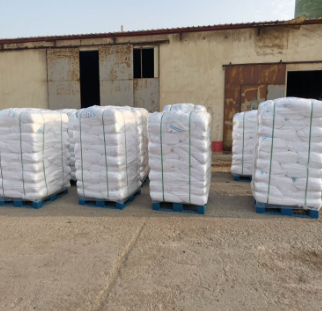
Sodium acetate #CAS127-09-3
Sodium acetate #CAS127-09-3
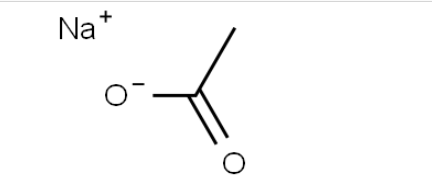
Sodium acetate (CH3COONa) is the sodium salt of acetic acid. It appears as a colorless deliquescent salt with a wide range of applications. In industry, it can be used in textile industry to neutralize sulfuric acid waste streams and as a photoresist upon using aniline dyes. In concrete industry, it can be used as a concrete sealant to mitigate the water damage. In food, it can be used as a seasoning. It can also be used as a buffer solution in lab. In addition, it is also used in heating pads, hand warmers and hot ice. For laboratory use, it can be produced by the reaction between acetate with the sodium carbonate, sodium bicarbonate and sodium hydroxide. In industry, it is prepared from the glacial acetic acid and sodium hydroxide.
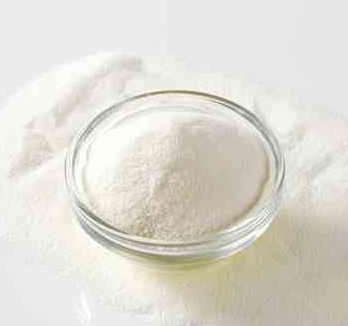
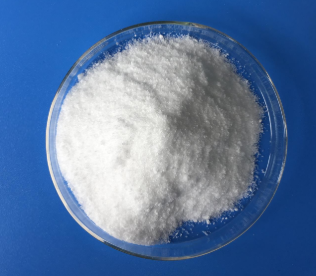
Anhydrous salt is a colorless crystalline solid; density 1.528 g/cm3; melts at 324°C; very soluble in water; moderately soluble in ethanol. The colorless crystalline trihydrate has a density 1.45 g/cm3; decomposes at 58°C; is very soluble in water; pH of 0.1M aqueous solution is 8.9; moderately soluble in ethanol, 5.3 g/100mL.
Applicaion of Sodium acetate
Sodium Acetate, Anhydrous is a source of acetic acid obtained as a granular powder. it has a solubility of 1 g in 2 ml of water.
Sodium acetate is a mordant in dyeing. Other applications are in photography, as an additive to food, in purification of glucose, in preservation of meat, in tanning, and as a dehydrating agent. In analytical chemistry it is used to prepare buffer solution.
Sodium acetate can be used to preserve processed meats and it is often used in combination with other acid based preservatives like lactates and propionates. The typical inclusion level is 0.2 to 0.5%. Sodium acetate is also used in salad dressings and ready-to-eat meals.
2 - 1 - Industrial
Sodium acetate is used in the textile industry to neutralize sulfuric acid waste streams, and as a photoresist while using aniline dyes. It is also a pickling agent in chrome tanning, and it helps to retard vulcanization of chloroprene in synthetic rubber production. In processing cotton for disposable cotton pads, sodium acetate is used to eliminate the buildup of static electricity.
2 - 2 - Concrete longevity
Sodium acetate is used to reduce the damage water can potentially do to concrete by acting as a concrete sealant, while also being environmentally benign and cheaper than the epoxy alternative that is usually employed for sealing concrete against water permeation.
2 - 3 - Food
Sodium acetate may be added to foods as a seasoning. It may be used in the form of sodium diacetate — a 1:1 complex of sodium acetate and acetic acid, given the E-number E262. A frequent use is to impart a salt and vinegar flavor to potato chips.
2 - 4 - Buffer solution
As the conjugate base of acetic acid, a solution of sodium acetate and acetic acid can act as a buffer to keep a relatively constant pH.
2 - 5 - Heating pad
Sodium acetate is also used in consumer heating pads or hand warmers and is also used in hot ice. Sodium acetate trihydrate crystals melt at 58.4°C , (to 58°C ) dissolving in their water of crystallization. When they are heated to around 100°C, and subsequently allowed to cool, the aqueous solution becomes supersaturated. This solution is capable of cooling to room temperature with out forming crystals.
| Sodium acetate Chemical Properties |
| Melting point | >300 °C (dec.)(lit.) |
| density | 1.01 g/mL at 20 °C |
| refractive index | 1.4640 |
| FEMA | 3024 | SODIUM ACETATE |
| Fp | >250 °C |
| storage temp. | Store at +5°C to +30°C. |
| solubility | H2O: 3 M at 20 °C, clear, colorless |
| form | powder |
| pka | 4.756[at 20 ℃] |
| Specific Gravity | 1.45 |
| color | white |
| PH | 7.87(1 mM solution);8.33(10 mM solution);8.75(100 mM solution);9.04(1000 mM solution) |
| Odor | Slight acetic acid |
| PH Range | 8.5 - 9.9 at 246 g/l at 25 °C |
| Odor Type | odorless |
| biological source | synthetic |
| Water Solubility | 500 g/L (20 ºC) |
| Specific Heat Capacity | Cp(crystal): 0.97 J/(g·K), at 25℃ |
| Hydrolytic Sensitivity | 0: forms stable aqueous solutions |
| λmax | λ: 260 nm Amax: 0.03 λ: 280 nm Amax: 0.02 |
| Sensitive | Hygroscopic |
| Merck | 14,8571 |
| Boiling point | >400°C(decomposition) |
| BRN | 3595639 |
| Stability: | Stable. Incompatible with strong oxidizing agents, halogens. Moisture sensitive. |
| Cosmetics Ingredients Functions | BUFFERING FRAGRANCE |
| InChI | 1S/C2H4O2.Na/c1-2(3)4;/h1H3,(H,3,4);/q;+1/p-1 |
| InChIKey | VMHLLURERBWHNL-UHFFFAOYSA-M |
| SMILES | [Na+].CC([O-])=O |
| LogP | -3.72 |
| CAS DataBase Reference | 127-09-3(CAS DataBase Reference) |
| NIST Chemistry Reference | Sodium ethanoate(127-09-3) |
| EPA Substance Registry System | Sodium acetate (127-09-3) |
| Absorption | ≤0.01 at 260nm in H2O at 100mM ≤0.01 at 280nm in H2O at 100mM |
| Safety Information |
| Safety Statements | 22-24/25 |
| WGK Germany | 1 |
| RTECS | AJ4300010 |
| F | 3 |
| Autoignition Temperature | 607 °C |
| TSCA | TSCA listed |
| HS Code | 2915291000 |
| Storage Class | 11 - Combustible Solids |
| Hazardous Substances Data | 127-09-3(Hazardous Substances Data) |
| Toxicity | LD50 orally in Rabbit: 3530 mg/kg LD50 dermal Rabbit > 10000 mg/kg |
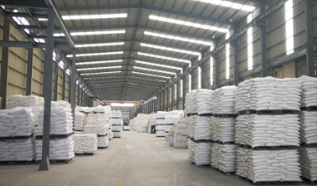
Fact Factory and Equipment Show