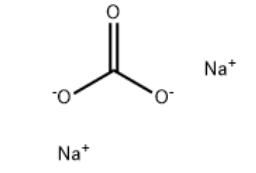
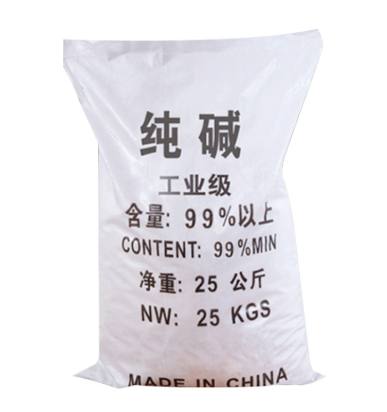
Sodium carbonate #CAS:497-19-8
CAS Number:497-19-8
Chemical Formula:C9H9NO6
Synonyms:
sodium carbonate, acs primary standard
SODA ASH LIGHT & SODA BI CARBONATE
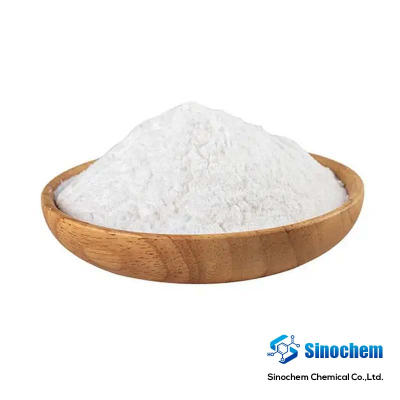
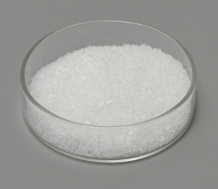
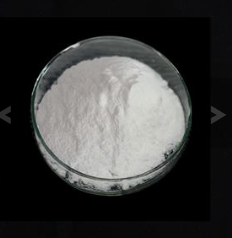
Appearance:White Solid
MOQ (Minimum Order Quantity): 1 FCL (Full Container Load)
Sodium carbonate #CAS:497-19-8
Sodium carbonate( 497-19-8), Na2CO3, is a sodium salt of carbonic acid. The pure product appears as a while, odorless powder with a strong alkaline taste. It has high hygroscopicity. It can be easily dissolved in water to form an aqueous solution with moderate alkalinity.
Sodium carbonate has wide applications in various kinds of fields around the world. One of most important application of sodium carbonate is for the manufacturing of glass. Based on statistics information, about half of the total production of sodium carbonate is used for the manufacturing of glass. During the production of glass, sodium carbonate acts as a flux in the melting of silica. In addition, as a strong chemical base, it is used in the manufacturing of pulp and paper, textiles, drinking water, soaps and detergents and as a drain cleaner. In addition, it can also be used for tissue digestion, dissolving amphoteric metals and compounds, food preparation as well as acting as a cleaning agent.
There are generally two ways for the production of sodium carbonate. One is through the reactions between sodium chloride and calcium carbonate (via the ammonia soda (Solvay) process). The other is from sodium carbonate and hydrogencarbonate ores (trona and nahcolite).
Sodium carbonate is an inorganic salt and therefore the vapour pressure can be considered negligible. It has a melting point of 851°C (CRC Handbook, 1986; The Merck Index, 1983), it decomposes when heated at > 400 °C and therefore a boiling point cannot be determined. soluble in water; insoluble in alcohol; dissolves in acids liberating CO2.The octanol water partition coefficient (log Pow) is not relevant for an inorganic substance which dissociates. The average particle size diameter (d50) of light sodium carbonate is in the range of 90 to 150 µm and of dense sodium carbonate is in the range of 250 to 500 µm.
The monohydrate consists of colorless and odorless small crystals or cystalline powder; orthorhombic structure; refractive index 1.420; hardness 1.3 Mohs; density 2.25 g/cm3; loses water at 100°C becoming anhydrous; very soluble in water; insoluble in ethanol.
The decahydrate consists of transparent crystals; effloresces on exposure to air; density 1.46 g/cm3; decomposes at 34°C; very soluble in water; insoluble in ethanol.
An aqueous solution of sodium carbonate are strongly alkaline.
Sodium carbonate is a white, crystalline and hygroscopic powder with a purity of > 98 %. There are two forms of sodium carbonate available, light soda and dense soda. Impurities of sodium carbonate may include water (< 1.5 %), sodium chloride (< 0.5 %), sulphate (< 0.1 %), calcium (< 0.1 %), magnesium (< 0.1 %) and iron (< 0.004 %). The purity and the impurity profile depends on the composition of the raw materials, the production process and the intended use of the product. For example the purity of the pharmaceutical grade must be higher than 99.5 % in Europe.
Sodium carbonate is a strong alkaline compound with a pH of 11.6 for a 0.1M aqueous solution (The Merck Index, 1983; Johnson and Swanson, 1987). The pKa of CO3 2- is 10.33, which means that at a pH of 10.33 both carbonate and bicarbonate are present in equal amounts.
Sodium carbonate is known as soda ash or washing soda and is a heavily used inorganic compound. Approximately 45 million tons of soda ash are produced globally both naturally and synthetically. Soda ash is obtained naturally primarily from the mineral trona, but it can also be obtained from nahcolite (NaHCO3) and salt brine deposits. Trona is a freshwater sodium carbonate-bicarbonate evaporite, with the formula Na3CO3HCO3 .2H2O. The largest known deposit of trona is located in the Green River area of Wyoming, and other large deposits are found in Egypt’s Nile Valley and California’s Searles basin around the city of Trona. Soda ash is produced from mined trona by crushing and screening the ore and then heating it. Th is produces a soda ash mixed with impurities. Pure soda ash is obtained by dissolving the product and precipitating impurities combined with filtering processes.
Application of Sodium carbonate
Sodium carbonate(497-19-8) is a kind of important raw material for chemical industry with wide application. It is the important raw material for making glass, soaps, detergents, textiles, leather, spices, dyes, medicines, etc.
Sodium carbonate was used as a pH modifier in toning baths and as the primary alkali in developers used for gelatin emulsions.
As the detergent, it can be used for wool rinse. It can also be applied to bath salts and pharmaceutical use and also be used as the alkali agent of tanning.
Sodium carbonate is most used in industry with a small part using by the civilian. In the soda ash of industry purpose, it is mainly applied to light industry, building materials and chemical industry, accounting for about 2/3: followed by metallurgy, textiles, petroleum, defense, and pharmaceutical. The glass industry is the largest soda consumer sector with each ton of glass consuming 0.2 ton of soda ash. In the chemical industry, it can be used for manufacturing of sodium silicate, sodium dichromate, sodium nitrate, sodium fluoride, baking soda, borax, and trisodium phosphate. In the metallurgical industry, it is mainly used for fluxing agent, mineral flotation agent, and desulfurization agent for steel and antimony. It can also be used as water softener in printing and dyeing industry. In tanning industry, it can be used for the degreasing of raw hides, neutralizing chrome tanned leather and improving the alkalinity of the chrome liquid. It is also used in the production of synthetic detergent additive sodium tripolyphosphate and other sodium salt.
Soda ash is used in glass making, in production of sodium chemicals (such as sodium chromates, phosphates, and silicates), in the wood pulp industry, in production of soaps and detergents, in oil refining, in water softening, and in refining of nonferrous metals. In its hydrous crystallized form (Na2C03.10H2O), it is known as sal soda,washing soda,or soda crystals, not to be confused with baking soda,which is sodium hydrogen carbonate or sodium bicarbonate (NaHC03). Its monohydrate form(Na2C03·H20) is the standard compound for scouring solutions.
When in solution, sodium carbonate creates less alkalinity than the hydroxides. A 0.1% solution creates a pH of 11;a fully saturated solution is 35%, which has a pH of 12.5.
The safety requirements for sodium carbonate, because of its lower alkalinity, can be considered less demanding than those for the related bicarbonates.
Sodium Carbonate is an alkali that exists as crystals or crystalline powder and is readily soluble in water. it has numerous functions: an antioxidant, a curing and pickling agent, a flavoring agent, a processing aid, a sequestrant, and an agent for ph control. it is used in instant soups to neutralize acidity. it is used in alginate water des- sert gels to sequester the calcium, allowing the alginate to solubilize. it is also used in puddings, sauces, and baked goods.
| Sodium carbonate Chemical Properties |
| Melting point | 851 °C (1,564 °F; 1,124 K) (Anhydrous); 100 °C (212 °F; 373 K); decomposes (monohydrate); 33.5 °C (92.3 °F; 306.6 K); decomposes (heptahydrate); 34 °C (93 °F; 307 K); (decahydrate) |
| Boiling point | 1600°C |
| bulk density | 1100kg/m3 |
| density | 2.54 g/cm3 (25 °C, anhydrous)1.92 g/cm3 (856 °C)2.25 g/cm3 (monohydrate)1.51 g/cm3 (heptahydrate)1.46 g/cm3 (decahydrate) |
| refractive index | 1.485 (anhydrous); 1.420 (monohydrate); 1.405 (decahydrate) |
| storage temp. | 15-25°C |
| solubility | H2O: 1 M at 20 °C, clear, colorless |
| form | solid |
| color | White |
| Specific Gravity | 2.532 |
| PH | 10.52(1 mM solution);10.97(10 mM solution);11.26(100 mM solution); |
| pka | (1) 6.37, (2) 10.25 (carbonic (at 25℃) |
| Flame Color | Yellow |
| Odor | at 100.00%. odorless |
| Water Solubility | 22 g/100 mL (20 ºC) |
| Specific Heat Capacity | Cp(crystal): 1.06 J/(g·K), at 25℃ |
| Sensitive | Hygroscopic |
| λmax | λ: 260 nm Amax: 0.01 λ: 280 nm Amax: 0.01 |
| Merck | 14,8596 |
| BRN | 4154566 |
| Dielectric constant | 5.3(Ambient) |
| Exposure limits | PC-TWA: 3 mg/m3; PC-STEL: 6 mg/m3 |
| Stability: | Stable. Incompatible with powdered alkaline earth metals, aluminium, organic nitro compounds, fluorine, alkali metals, nonmetallic oxides, concentrated sulfuric acid, oxides of phosphorus. |
| Cosmetics Ingredients Functions | BUFFERING BULKING |
| InChI | 1S/CH2O3.2Na/c2-1(3)4;;/h(H2,2,3,4);;/q;2*+1/p-2 |
| InChIKey | CDBYLPFSWZWCQE-UHFFFAOYSA-L |
| SMILES | O=C(O[Na])O[Na] |
| CAS DataBase Reference | 497-19-8(CAS DataBase Reference) |
| NIST Chemistry Reference | Sodium carbonate(497-19-8) |
| EPA Substance Registry System | Sodium carbonate (497-19-8) |
| Safety Information |
| Hazard Codes | Xn,Xi |
| Risk Statements | 32-36-51/53-36/37/38-41-37/38 |
| Safety Statements | 36/37-26-22-36-39 |
| WGK Germany | 2 |
| RTECS | XN6476000 |
| F | 3 |
| TSCA | TSCA listed |
| HS Code | 28362000 |
| Storage Class | 11 - Combustible Solids |
| Hazard Classifications | Eye Irrit. 2 |
| Hazardous Substances Data | 497-19-8(Hazardous Substances Data) |
| Toxicity | LD50 orally in Rabbit: 4090 mg/kg |
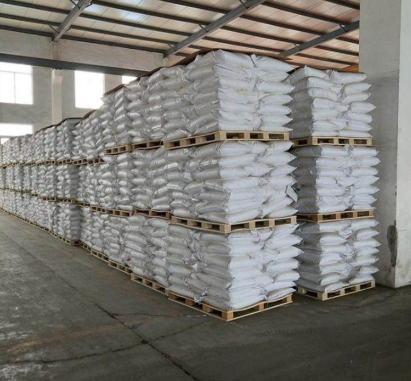
Fact Factory and Equipment Show