
Feed Grade Calcium Carbonate #CAS471-34-1
CAS Number:471-34-1
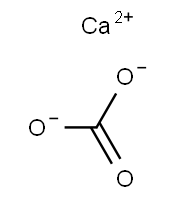
Chemical Formula:CCaO3
Synonyms:
Calcium carbonate
PRECIPITATED CHALK
PARIS WHITE
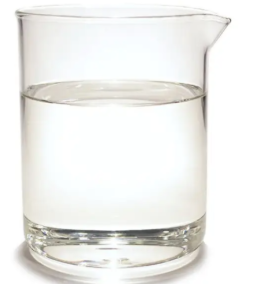
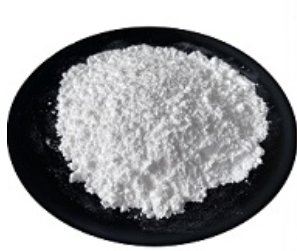
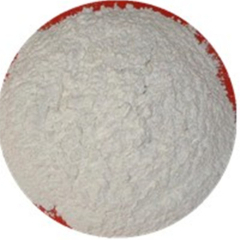
Appearance:White-beige to slightly beige-gray
MOQ (Minimum Order Quantity): 1 FCL (Full Container Load)
Feed Grade Calcium Carbonate #CAS471-34-1
Calcium carbonate is a naturally occurring compound found in organisms and throughout the earth’s crust. After quartz, calcium carbonate, primarily in the form of calcite, is the most common mineral found in the crust. Geologically, calcium carbonate exists in several mineral forms: calcite, aragonite, and vaterite. Calcite is the most common calcium carbonate mineral, whereas vaterite is a very rare form. The different mineral forms of calcium carbonate are based on their crystalline structure. The form of calcium carbonate depends on the conditions at its formation such as temperature and pressure.Calcium carbonate has the molecular formula of CaCO3 and the molecular weight of 100.0924 g/mol. It is a common substance found in rock in all parts of the world, and is the main component of the shells of many marine organisms such as snails and conches. It is the main ingredient in eggshells of birds and pearls obtained from oysters.Calcium carbonate is the active ingredient in "limestone" used as "agricultural lime" and is the principal cause of "hard water" since most subterranean streams used for fresh water come from wells where underground water flows through limestone beds which are eroded due to its passage. Calcium carbonate occurs in nature as limestone in various forms, such as marble, chalk, and coral.
Application of Feed Grade Calcium Carbonate
It is a widely used calcium supplement feed additive for livestock, poultry and aquatic animals. It provides readily available calcium element, which is an essential mineral constituent for bone formation, tooth development and eggshell synthesis. It helps adjust the calcium level and balance the calcium-phosphorus ratio in animal diets, and supports normal mineral metabolism. It can effectively prevent calcium deficiency disorders such as rickets in young animals, osteomalacia and osteoporosis in adult livestock. For laying hens, it is a reliable calcium source to increase eggshell thickness and hardness, reduce soft-shell eggs, cracked eggs and thin-shell eggs, stabilise laying performance and extend the peak laying cycle. For meat-producing pigs, broilers, cattle and sheep, it promotes bone growth, improves skeletal strength, reduces the risk of lameness and skeletal deformity, and helps optimise feed utilisation efficiency. When used in aquafeed for fish, shrimp and crustaceans, it assists the formation of fish bones and shrimp shells, supports normal moulting and enhances the survival rate of aquatic organisms. Calcium also participates in many important physiological activities inside animals, including nerve signal transmission, muscle contraction, blood coagulation and immune function regulation, improving the health and anti-stress capacity of animals. It has excellent compatibility with conventional feed raw materials such as corn, soybean meal, wheat bran, as well as premixes, vitamins and trace element additives. It can be evenly incorporated into compound feed, concentrated feed and mineral premixes. It also brings benefits to breeding animals: it improves the reproductive performance of breeding sows and dairy cows, increases the birth weight of newborn young animals, and reduces the incidence of postpartum paralysis caused by calcium deficiency. Its stable properties make it safe to mix and store with most common feed ingredients, and it will not produce harmful precipitates under normal mixing conditions.
| Calcium carbonate Chemical Properties |
| Melting point | 825 °C |
| Boiling point | 800 °C |
| bulk density | 300-1400kg/m3 |
| density | 2.93 g/mL at 25 °C (lit.) |
| refractive index | 1.6583 |
| storage temp. | Store at +5°C to +30°C. |
| solubility | 5 M HCl: 0.1 M at 20 °C, clear, colorless |
| form | random crystals |
| color | White-beige to slightly beige-gray |
| Specific Gravity | 2.93 |
| PH | 9.91(1 mM solution);9.91(10 mM solution);9.91(100 mM solution); |
| Flame Color | Red-orange |
| Odor | Odorless |
| PH Range | 8 |
| Water Solubility | Insoluble |
| Thermal Conductivity | 0.92 W/(m·K); 2.259 W/(m·K) |
| Specific Heat Capacity | Cp(crystal): 0.83 J/(g·K), at 25℃ |
| λmax | λ: 260 nm Amax: ≤0.09 λ: 280 nm Amax: ≤0.06 |
| Merck | 14,1657 |
| BRN | 8008338 |
| Solubility Product Constant (Ksp) | pKsp: 8.54 |
| Dielectric constant | 6.1(Ambient) |
| Exposure limits | NIOSH: TWA 10 mg/m3; TWA 5 mg/m3 |
| Stability: | Stable. Incompatible with acids, fluorine, ammonium salts, alum. |
| Cosmetics Ingredients Functions | BULKING BUFFERING ABRASIVE ORAL CARE COLORANT OPACIFYING |
| Cosmetic Ingredient Review (CIR) | Calcium carbonate (471-34-1) |
| InChI | 1S/CH2O3.Ca/c2-1(3)4;/h(H2,2,3,4);/q;+2/p-2 |
| InChIKey | VTYYLEPIZMXCLO-UHFFFAOYSA-L |
| SMILES | [Ca++].[O-]C([O-])=O |
| Hardness, Mohs | 2.0 - 5.0 |
| Hardness, Shore H | 10 - 60 |
| Modulus of Elasticity | 10.0 - 80.0 GPa |
| Drilling Hardness | 50 |
| Hardness, Knoop | 75 - 120 |
| Hardness, Vickers | 105 - 136 |
| CAS DataBase Reference | 471-34-1(CAS DataBase Reference) |
| EPA Substance Registry System | Calcium carbonate (471-34-1) |
| Safety Information |
| Hazard Codes | Xi |
| Risk Statements | 37/38-41-36/38-36 |
| Safety Statements | 26-36/37/39-37/39-37 |
| OEB | B |
| OEL | TWA: 10 mg/m3 (total) |
| WGK Germany | - |
| RTECS | FF9335000 |
| TSCA | TSCA listed |
| HS Code | 28365000 |
| Storage Class | 13 - Non Combustible Solids |
| Hazardous Substances Data | 471-34-1(Hazardous Substances Data) |
| Toxicity | LD50 orally in Rabbit: 6450 mg/kg LD50 dermal Rat > 2000 mg/kg |
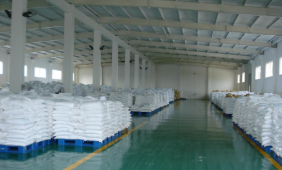
Fact Factory and Equipment Show