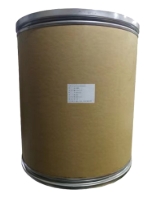
Choline chloride #CAS67-48-1
CAS Number:67-48-1
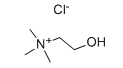
Chemical Formula:C5H14ClNO
Synonyms:
Choline chloride >=97.0% (AT)
2-hydroxy-N,N,N-trimethyl-, chloride (1:1)
chloridedecholine(french)
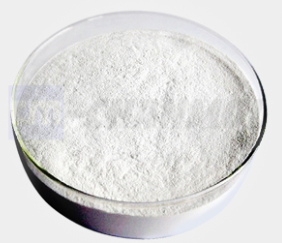
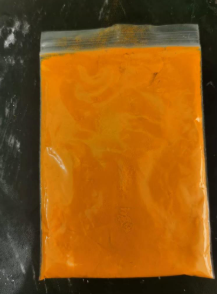
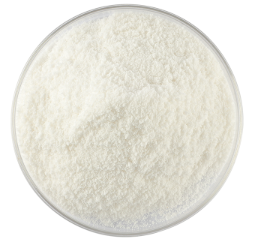
Appearance:white hygroscopic crystal
MOQ (Minimum Order Quantity): 1 FCL (Full Container Load)
Choline chloride #CAS67-48-1
It is white hygroscopic crystal and is odorless with fish stench. Its melting point of 240 ℃. Its 10% aqueous solution has a pH 5-6. However, it is unstable in alkaline solution. This product is easily soluble in water and ethanol but insoluble in ether, petroleum ether, benzene and carbon disulfide. It has a low toxicity with LD50 (rat, oral) being 3400 mg/kg.Choline chloride is a plant growth regulator. It is highly soluble in water, is not volatile or persistent in soil systems. Based on its physico-chemical properties it has potential to leach to groundwaters. It tends not to be highly toxic to biodiversity although available data is limited. Choline chloride has a low mammalian toxicity and whilst it may be a skin and eye irritant no evidence has been found to suggest exposure may cause chronic health conditions.
Application of Choline chloride
Choline chloride is an animal feed additive, classified as a water-soluble B-vitamin that increases animal growth. ChCl is added exogenously to feedstocks because it plays an essential role in fat transport and metabolism and protects cell membrane structure. It can be supplied to tissue culture media and animal feed additives and used as a clinical anti-fatty liver agent.It can be used to treat fatty liver and cirrhosis. It can also be used as a feed additive, stimulating the ovaries to give birth to more eggs and farrow. It can also facilitate the weight-gaining process of livestock, fish, etc.
Choline chloride is effective in preventing and treating fat deposition and tissue degeneration in livestock and poultry organs. It can also promote the absorption and synthesis of amino acids. Moreover, it can enhance livestock's physical fitness and disease resistance, promote their growth and development, and improve poultry laying rate. The usage amount is 1-2 g/kg.
As a kind of feed additive, choline chloride has the following physiological effects: it can prevent the accumulation of fat in the liver and the kidney and tissue degeneration; it can promote the recombination of amino acids; it can improve the utilization efficiency of amino acids, especially the essential amino acid methionine in vivo. In Japan, 98% of the applied choline chloride is used as feed additives for chickens, pigs, cattle, fish, and other animals. Most of them have been processed into powder; the preparation process of 50% powder is that: first, add an appropriate excipient of specific particle size into the mixer prepared by previously adding an appropriate particle size of the excipient, and then add dropwise of aqueous solution of choline chloride, after mixing, drying to derive it. Some powder products are also blended with vitamins, minerals, and drugs. Choline chloride is a vitamin B-class drug that can be used for the treatment of hepatitis, liver function degradation, early cirrhosis, and pernicious anemia.
It is a precursor of acetylcholine and is a methyl donor in various metabolic processes and lipid metabolism.
| Choline chloride Chemical Properties |
| Melting point | 302-305 °C (dec.) (lit.) |
| density | 1.0238 (rough estimate) |
| refractive index | 1.5400 (estimate) |
| FEMA | 4500 | Choline chloride (Also Includes Choline) |
| storage temp. | Sealed in dry,Room Temperature |
| solubility | H2O: 1 M, clear, colorless |
| form | Adhering Crystals |
| color | White |
| Odor | sl. odor of trimethylamine |
| PH | 5.0-7.5 (25℃, 1M in H2O) |
| biological source | synthetic (organic) |
| Water Solubility | soluble |
| Sensitive | Hygroscopic |
| λmax | λ: 260 nm Amax: 0.015 λ: 280 nm Amax: 0.010 |
| Merck | 14,2206 |
| JECFA Number | 2003 |
| BRN | 3563126 |
| Stability: | Stable. Incompatible with strong oxidizing agents, moisture. Store under a dry atmosphere. |
| Cosmetics Ingredients Functions | SKIN CONDITIONING HUMECTANT |
| Cosmetic Ingredient Review (CIR) | Choline chloride (67-48-1) |
| InChI | 1S/C5H14NO.ClH/c1-6(2,3)4-5-7;/h7H,4-5H2,1-3H3;1H/q+1;/p-1 |
| InChIKey | SGMZJAMFUVOLNK-UHFFFAOYSA-M |
| SMILES | [Cl-].C[N+](C)(C)CCO |
| LogP | -3.70 |
| CAS DataBase Reference | 67-48-1(CAS DataBase Reference) |
| NIST Chemistry Reference | Choline chloride(67-48-1) |
| EPA Substance Registry System | Choline chloride (67-48-1) |
| Safety Information |
| Hazard Codes | Xi |
| Risk Statements | 36/37/38 |
| Safety Statements | 26-36 |
| WGK Germany | 1 |
| RTECS | KH2975000 |
| F | 3-9 |
| Autoignition Temperature | 355°C |
| TSCA | TSCA listed |
| HS Code | 29212900 |
| Storage Class | 11 - Combustible Solids |
| Hazardous Substances Data | 67-48-1(Hazardous Substances Data) |
| Toxicity | LD50 in rats (g/kg): 0.400 i.p.; 6.64 orally (Hartung, Cornish) |
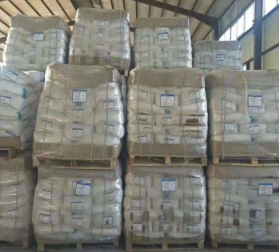
Fact Factory and Equipment Show