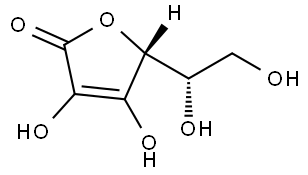
Ascorbic Acid #CAS50-81-7
Vitamin C (L‑ascorbic acid) is a water‑soluble enediol compound with strong reducing properties. It is readily oxidized, especially under high temperature, light, alkaline environment or in contact with metal ions, and gradually converts into dehydroascorbic acid and further decomposition products. It is stable in weakly acidic conditions, unstable in alkaline medium. It dissolves easily in water, slightly soluble in ethanol, insoluble in ether, chloroform and oil solvents. It can participate in redox reactions, react with oxidizing agents. It cannot withstand long‑time high‑temperature heating. It has good compatibility with most neutral and acidic raw materials, and should be isolated from oxidants, alkaline substances and heavy metals during storage.
Applicaion of Ascorbic Acid
vitamin C is a well-known anti-oxidant. Its effect on free-radical formation when topically applied to the skin by means of a cream has not been clearly established. The effectiveness of topical applications has been questioned due to vitamin C’s instability (it reacts with water and degrades). Some forms are said to have better stability in water systems. Synthetic analogues such as magnesium ascorbyl phosphate are among those considered more effective, as they tend to be more stable. When evaluating its ability to fight free-radical damage in light of its synergistic effect with vitamin e, vitamin C shines. As vitamin e reacts with a free radical, it, in turn, is damaged by the free radical it is fighting. Vitamin C comes in to repair the free-radical damage in vitamin e, allowing e to continue with its free-radical scavenging duties. Past research has indicated that high concentrations of topically applied vitamin C are photoprotective, and apparently the vitamin preparation used in these studies resisted soap and water, washing, or rubbing for three days. More current research has indicated that vitamin C does add protection against uVB damage when combined with uVB sunscreen chemicals. This would lead one to conclude that in combination with conventional sunscreen agents, vitamin C may allow for longer-lasting, broader sun protection. Again, the synergy between vitamins C and e can yield even better results, as apparently a combination of both provides very good protection from uVB damage. However, vitamin C appears to be significantly better than e at protecting against uVA damage. A further conclusion is that the combination of vitamins C, e, and sunscreen offers greater protection than the sum of the protection offered by any of the three ingredients acting alone. Vitamin C also acts as a collagen biosynthesis regulator. It is known to control intercellular colloidal substances such as collagen, and when formulated into the proper vehicles, can have a skin-lightening effect. Vitamin C is said to be able to help the body fortify against infectious conditions by strengthening the immune system. There is some evidence (although debated) that vitamin C can pass through the layers of the skin and promote healing in tissue damaged by burns or injury. It is found, therefore, in burn ointments and creams used for abrasions. Vitamin C is also popular in anti-aging products. Current studies indicate possible anti-inflammatory properties as well.
| Ascorbic Acid Chemical Properties |
| Melting point | 190-194 °C (dec.) |
| alpha | 20.5 º (c=10,H2O) |
| Boiling point | 227.71°C (rough estimate) |
| density | 1,65 g/cm3 |
| FEMA | 2109 | ASCORBIC ACID |
| refractive index | 21 ° (C=10, H2O) |
| storage temp. | Store at +5°C to +30°C. |
| solubility | H2O: 50 mg/mL at 20 °C, clear, nearly colorless |
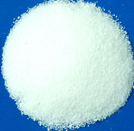
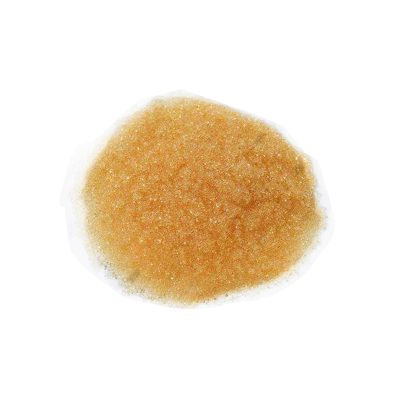
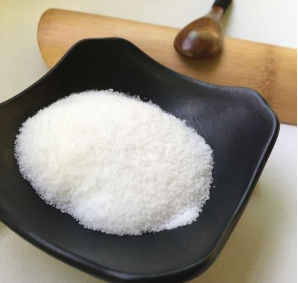
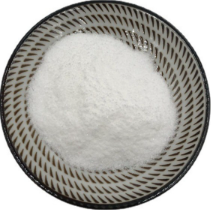
| form | powder |
| pka | 4.04, 11.7(at 25℃) |
| color | white to slightly yellow |
| PH | 3.59(1 mM solution);3.04(10 mM solution);2.53(100 mM solution); |
| Odor | Odorless |
| PH Range | 1 - 2.5 |
| Appearance | colorless solid |
| Odor Type | green |
| Optical Rotation | [α]25/D 19.0 to 23.0°, c = 10% in H2O |
| biological source | synthetic (organic) |
| Water Solubility | 333 g/L (20 ºC) |
| Merck | 14,830 |
| BRN | 84272 |
| BCS Class | 1 |
| Stability: | Stable. May be weakly light or air sensitive. Incompatible with oxidizing agents, alkalies, iron, copper. |
| Cosmetics Ingredients Functions | ANTIOXIDANT BUFFERING FRAGRANCE SKIN CONDITIONING |
| Cosmetic Ingredient Review (CIR) | Ascorbic Acid (50-81-7) |
| InChI | 1S/C6H8O6/c7-1-2(8)5-3(9)4(10)6(11)12-5/h2,5,7-10H,1H2/t2-,5+/m0/s1 |
| InChIKey | CIWBSHSKHKDKBQ-JLAZNSOCSA-N |
| SMILES | OC([C@]([C@@H](O)CO)([H])O1)=C(O)C1=O |
| LogP | -1.85 |
| CAS DataBase Reference | 50-81-7(CAS DataBase Reference) |
| NIST Chemistry Reference | L-Ascorbic acid(50-81-7) |
| EPA Substance Registry System | Ascorbic acid (50-81-7) |
| Absorption | cut-off at 306nm in H2O at 1M |
| Safety Information |
| Hazard Codes | |
| Risk Statements | |
| Safety Statements | 24/25-36-26 |
| WGK Germany | 1 |
| RTECS | CI7650000 |
| TSCA | TSCA listed |
| HS Code | 2936270030 |
| Storage Class | 11 - Combustible Solids |
| Hazardous Substances Data | 50-81-7(Hazardous Substances Data) |
| Toxicity | LD50 oral in rat: 11900mg/kg |
Fact Factory and Equipment Show