Lauryl glucoside #CAS110615-47-9
CAS Number:110615-47-9
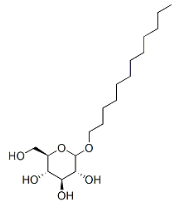
Chemical Formula:C18H36O6
Synonyms:
D-Glucopyranose, oligomeric, C10-16-alkyl glycosides
Alkyl Polyglucoside C08 - C16
Appearance:Colorless to pale yellow viscous liquid
MOQ (Minimum Order Quantity): 1 FCL (Full Container Load)
Lauryl glucoside #CAS110615-47-9
Lauryl Glucoside is a non‑ionic alkyl polyglycoside surfactant derived from natural fatty alcohol and glucose. It has excellent surface activity, good foaming property and mild detergency. It is compatible with anionic, cationic and other non‑ionic surfactants. It features low irritation, readily biodegradable performance and stable chemical property under weak acid and neutral conditions. It will hydrolyze gradually in strong alkaline or strong acidic environment for a long time. It is insoluble in mineral oil, but easy to disperse and dissolve in water. It does not contain APEO, and shows good thickening and emulsifying effects in formulation systems.
Application of Lauryl glucoside
lauryl glucoside is a mild surfactant.
Lauryl glucoside creates an excellent and stable foam. Lauryl glucoside is useful in hair care products where it aids hair cleaning abilities without stripping the hair.
Lauryl glucoside can be used alongside other glucosides to enhance the foam and skin conditioning properties. Lauryl glucoside is very effective when used in ionic formulations to add foam depth and emulsifying properties.
Lauryl glucoside is very useful for Bath Foams, Shower Gel and Shampoo where you wish to increase the foaming ability of the product without a decrease in the natural formulation.
Lauryl glucoside is biodegradable.
Lauryl Glucoside belongs to the family of alkyl polyglycosides, a class of green non‑ionic surfactants manufactured from renewable plant‑derived glucose and lauryl alcohol. Thanks to its extremely low irritation to skin and mucous membranes, rich and fine foam, as well as soft after‑feel on skin and hair, it is highly favored for premium mild personal care formulations. It is widely incorporated into facial cleansers, sensitive‑skin shampoo, body wash, bubble bath, hand sanitizer, liquid hand soap, baby shampoo and baby body wash. It can reduce the irritation of anionic surfactants when compounded together, while stabilizing the foam system and improving the mildness of the whole formula.
In household cleaning industry, it is a key ingredient for high‑grade dishwashing detergent, food‑contact surface cleaner, concentrated laundry liquid and hard‑surface cleaner. It delivers good grease removal capacity without leaving irritating residues, meeting the demand of eco‑friendly household cleaners.
In industrial applications, it functions as an efficient wetting agent, emulsifier, dispersant and penetrant. It is applied in textile auxiliary for wetting and scouring; in agrochemical formulations as emulsifier and adjuvant for herbicides and insecticides to improve spreading and absorption on crop leaves; it is also used in leather processing, paper deinking and water‑based coating systems.
This product is fully biodegradable and free of APEO, formaldehyde and dioxane. It complies with most global green cosmetic and detergent regulations, making it a preferred surfactant for brands pursuing clean and sustainable product concepts.
| Lauryl glucoside Chemical Properties |
| Boiling point | 301℃ at 101.3kPa |
| density | 1.16 at 20℃ |
| vapor pressure | 0.008Pa at 20℃ |
| refractive index | 1.4450 |
| form | Solid |
| color | Slightly yellowish |
| Odor | Mild, sweet, fatty odor |
| Cosmetics Ingredients Functions | FOAMING SURFACTANT - FOAM BOOSTING SKIN CONDITIONING - EMOLLIENT CLEANSING SURFACTANT - CLEANSING SKIN CONDITIONING |
| Cosmetic Ingredient Review (CIR) | Lauryl glucoside (110615-47-9) |
| InChI | InChI=1/C18H36O6/c1-2-3-4-5-6-7-8-9-10-11-12-23-18-17(22)16(21)15(20)14(13-19)24-18/h14-22H,2-13H2,1H3/t14-,15-,16+,17-,18/s3 |
| InChIKey | PYIDGJJWBIBVIA-KGFPCJIYNA-N |
| SMILES | O(CCCCCCCCCCCC)C1O[C@H](CO)[C@@H](O)[C@H](O)[C@H]1O |&1:15,18,20,22,r| |
| LogP | -0.07 at 20℃ |
| Surface tension | 29.5mN/m at 1g/L and 23℃ |
| EPA Substance Registry System | D-Glucopyranose, oligomeric, C10-16-alkyl glycosides (110615-47-9) |
| Safety Information |
| WGK Germany | WGK 3 |
| TSCA | TSCA listed |
| Storage Class | 11 - Combustible Solids |
| Hazard Classifications | Eye Irrit. 2 Skin Irrit. 2 STOT SE 3 |
Fact Factory and Equipment Show