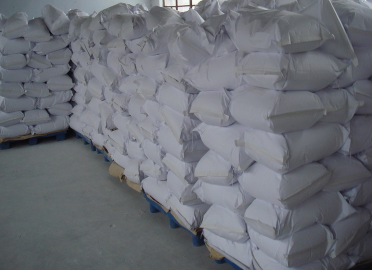
Potassium chloride #CAS:7447-40-7
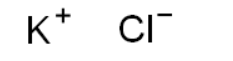
Chemical Formula:KCl
Synonyms:
Chloropotassuril diffu-K
Kalitabs
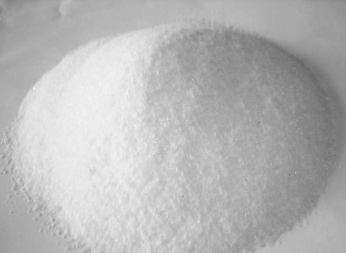
Appearance:White
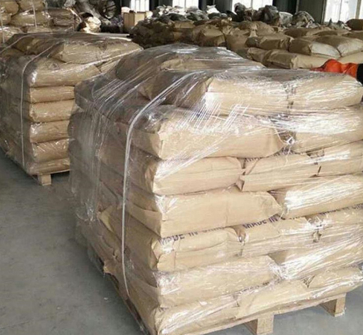
MOQ (Minimum Order Quantity): 1 FCL (Full Container Load)
Potassium chloride #CAS:7447-40-7
Potassium chloride, KCI, also known as potassium muriate and sylvite, is a colorless crystalline solid with a salty taste that melts at 776°C (1420 OF). It is soluble in water, but insoluble in alcohol. Potassium chloride is used in fertilizers, pharmaceuticals, photography, and as a salt substitute.
Potassium chloride is primarily used in the production of agricultural potash fertilizers. It also serves as a fundamental raw material in the inorganic chemical industry for manufacturing potassium salts—such as potassium hydroxide and potassium sulfate—and is used as a low-sodium salt substitute in food processing.
In China, potash production from salt lakes utilizes carnallite as a raw material. Following solar evaporation and crystallization in salt pans, a process involving reverse flotation and cold crystallization is employed; this leverages the differences in how carnallite and sodium chloride adsorb onto collectors to separate the sodium chloride. Subsequently, water is added to induce decomposition, causing magnesium chloride to enter the liquid phase while potassium chloride precipitates out.
China has the world’s highest demand for potash fertilizers, accounting for approximately 25% of global consumption. In 2024, China’s apparent consumption of potassium chloride reached approximately 18.72 million tonnes, with imports totaling about 12.63 million tonnes—representing an import dependency of approximately 67%.
Applicaion of Potassium chloride
PPotassium chloride (KCl) is used in drug preparations and as a food additive and chemical reagent. It is possible to reduce the sodium in your diet by substituting potassium chloride for table salt (sodium chloride), which may be healthier. Molten potassium chloride is also used in the electrolytic production of metallic potassium. KCl is also found in seawater brine and can be extracted from the mineral carnallite.
Potassium chloride (KCl) is a metal halide salt that is used in a variety of areas. The dominant application of potassium chloride is to serve as a fertilizer, which offers potassium to plants and prevents them from certain diseases. Besides, it can be applied in food and medical industry. As a treatment for hypokalemia, potassium chloride pills are taken to balance the blood's potassium levels and prevent potassium deficiency in the blood. In food industry, it serves as a electrolyte replenisher and a good salt substitute for food, as well as a firming agent to give consistent texture to food, thus to strengthen its structure.
Primarily used in the inorganic chemical industry, it serves as a fundamental raw material for the production of various potassium salts and alkalis, such as potassium hydroxide, potassium sulfate, potassium nitrate, potassium chlorate, and potassium dichromate. In the pharmaceutical industry, it is used as a diuretic and as a medication to prevent or treat potassium deficiency. In the dye industry, it is employed in the production of "G salt," reactive dyes, and other products. In agriculture, it functions as a potassium fertilizer; it acts quickly and, when applied directly to farmland, can facilitate the upward movement of moisture from deeper soil layers, thereby providing a drought-resistance effect. However, it is not suitable for use on saline-alkali soils, nor should it be applied to crops such as tobacco, sweet potatoes, or sugar beets.
| Potassium chloride Chemical Properties |
| Melting point | 770 °C (lit.) |
| Boiling point | 1420°C |
| density | 1.98 g/mL at 25 °C (lit.) |
| bulk density | 1000kg/m3 |
| refractive index | n |
| FEMA | 5000 | Prepared Mixture of Chloride Salts of Potassium, Magnesium and Calcium |
| Fp | 1500°C |
| storage temp. | 2-8°C |
| solubility | H2O: soluble |
| form | random crystals |
| color | White |
| Specific Gravity | 1.984 |
| Odor | Odorless |
| PH Range | 7 |
| Flame Color | Light Purple |
| PH | 5.5-8.0 (20℃, 50mg/mL in H2O) |
| biological source | rabbit |
| Water Solubility | 340 g/L (20 ºC) |
| Thermal Conductivity | 8.368 W/(m·K) |
| Specific Heat Capacity | Cp(crystal): 0.69 J/(g·K); Cp(gas): 0.49 J/(g·K), at 25℃ |
| Sensitive | Hygroscopic |
| λmax | λ: 260 nm Amax: 0.02 λ: 280 nm Amax: 0.01 |
| Crystal Structure | NaCl type |
| crystal system | Cube |
| Merck | 14,7621 |
| Sublimation | 1500 ºC |
| BRN | 1711999 |
| Space group | Fm3m |
| Lattice constant | a/nmb/nmc/nmα/oβ/oγ/oV/nm30.62930.62930.62939090900.2492 |
| Dielectric constant | 4.6(Ambient) |
| BCS Class | 1 |
| Stability: | Stable. Incompatible with strong oxidizing agents, strong acids. Protect from moisture. Hygroscopic. |
| Cosmetics Ingredients Functions | VISCOSITY CONTROLLING |
| InChI | 1S/ClH.K/h2H;/q;+1/p-1 |
| InChIKey | WCUXLLCKKVVCTQ-UHFFFAOYSA-M |
| SMILES | [Cl-].[K+] |
| CAS DataBase Reference | 7447-40-7(CAS DataBase Reference) |
| NIST Chemistry Reference | Potassium chloride(7447-40-7) |
| EPA Substance Registry System | Potassium chloride (7447-40-7) |
| Safety Information |
| Hazard Codes | Xi,C,F,Xn,T |
| Risk Statements | 36-34-11-36/37/38-40-61-60 |
| Safety Statements | 24/25-39-26-22-23-45-36/37/39-16-36/37-53 |
| RIDADR | UN 1824 8 / PGII |
| WGK Germany | 1 |
| RTECS | TS8050000 |
| F | 8 |
| TSCA | TSCA listed |
| HS Code | 3104209000 |
| Storage Class | 13 - Non Combustible Solids |
| Hazardous Substances Data | 7447-40-7(Hazardous Substances Data) |
| Toxicity | LD50 orally in Rabbit: 2600 mg/kg |
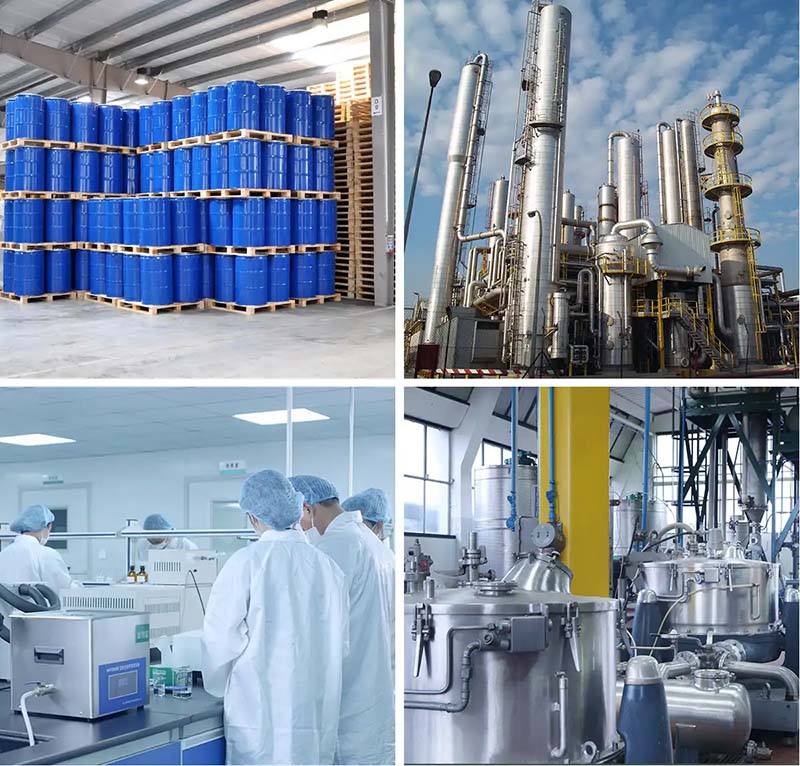
Fact Factory and Equipment Show