Potassium chloride #CAS7447-40-7
CAS Number:7447-40-7
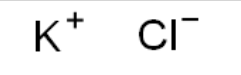
Chemical Formula:KCl
Synonyms:
Chlorid draselny
chloriddraselny
Chloropotassuril
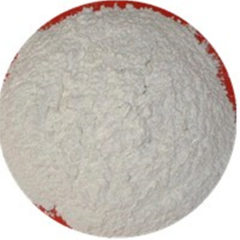
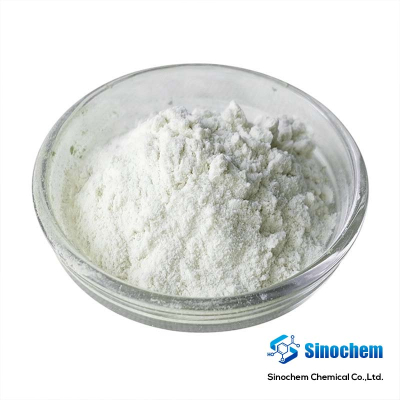
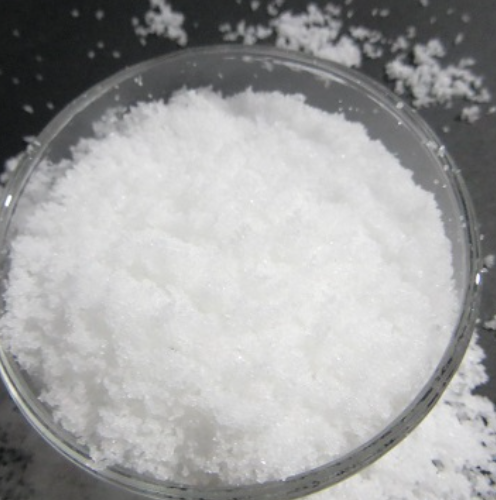
Appearance:White random crystals
MOQ (Minimum Order Quantity): 1 FCL (Full Container Load)
Potassium chloride #CAS7447-40-7
Potassium chloride, KCI, also known as potassium muriate and sylvite, is a colorless crystalline solid with a salty taste that melts at 776°C (1420 OF). It is soluble in water, but insoluble in alcohol. Potassium chloride is used in fertilizers, pharmaceuticals, photography, and as a salt substitute.
Potassium chloride (KCl) is a metal halide salt that is used in a variety of areas. The dominant application of potassium chloride is to serve as a fertilizer, which offers potassium to plants and prevents them from certain diseases. Besides, it can be applied in food and medical industry. As a treatment for hypokalemia, potassium chloride pills are taken to balance the blood's potassium levels and prevent potassium deficiency in the blood. In food industry, it serves as a electrolyte replenisher and a good salt substitute for food, as well as a firming agent to give consistent texture to food, thus to strengthen its structure.
Potassium chloride occurs as odorless, colorless crystals or a white crystalline powder, with an unpleasant, saline taste. The crystal lattice is a face-centered cubic structure. Potassium chloride occurs naturally as the mineralsylvite (KCl) and as carnallite(KCl·MgCl2·6H2O); it is produced industriallyby fractional crystallizationof these deposits or of solutions fromlake brines. It has the interesting property of being more soluble than sodium chloride in hot water but less soluble in cold. It has low toxicity.
Potassium chloride occurs naturally as the mineral sylvite or sylvine; it also occurs in other minerals such as sylvinite, carnallite, and kainite. Commercially, potassium chloride is obtained by the solar evaporation of brine or by the mining of mineral deposits.
Potassium chloride occurs naturally as the mineral sylvite or sylvine; it also occurs in other minerals such as sylvinite, carnallite, and kainite. Commercially, potassium chloride is obtained by the solar evaporation of brine or by the mining of mineral deposits.
Potassium chloride tablets become increasingly hard on storage at low humidities. However, tablets stored at 76% relative humidity showed no increase or only a slight increase in hardness.The addition of lubricants, such as 2% w/w magnesium stearate, reduces tablet hardness and hardness on aging.Aqueous potassium chloride solutions may be sterilized by autoclaving or by filtration.
Potassium chloride is stable and should be stored in a well-closed container in a cool, dry place.
| Concentration | 0.50% | 1% | 2% | 5% | 10% | 15% |
|---|---|---|---|---|---|---|
| mS/cm | 8.2 | 15.7 | 29.5 | 71.9 | 143 | 208 |
Applicaion of Potassium chloride
Potassium chloride (KCl) is used in drug preparations and as a food additive and chemical reagent. It is possible to reduce the sodium in your diet by substituting potassium chloride for table salt (sodium chloride), which may be healthier. Molten potassium chloride is also used in the electrolytic production of metallic potassium. KCl is also found in seawater brine and can be extracted from the mineral carnallite.
Potassium Chloride is a nutrient, dietary supplement, and gelling agent that exists as crystals or powder. it has a solubility of 1 g in 2.8 ml of water at 25°c and 1 g in 1.8 ml of boiling water. hydrochloric acid, and sodium chloride and magnesium chloride diminish its solubility in water. it is used as a salt substitute and mineral supple- ment. it has optional use in artificially sweetened jelly and preserves. it is used as a potassium source for certain types of carrageenan gels. it is used to replace sodium chloride in low-sodium foods.
Potassium chloride (KCl), commonly referred to as muriate of potash, is the most common source of potash (K2O), and accounts for about 95 % of world potash production. Virtually all (90 %) commercial potash is extracted from natural sources of potassium salt deposits occurring in thin beds in large salt basins formed by the evaporation of ancient seas. Present-day salt lakes and natural brines represent about 10 % of total recoverable potash. Extraction is followed by milling, washing, screening, flotation, crystallization, refining and drying.
More than 90 % of the total KCl consumption is used for fertilizer production. Production of potassium hydroxide accounts for more than 90 % of the non-fertilizer or industrial use of KCl. KOH is also used in the production of some agricultural-grade liquid fertilizers. uses of KCl include:
Potassium chloride (KCl), also known as muriate of potash, is generally blended with other components to make it a multinutrient fertilizer. It is a white crystalline solid, available in fine, coarse and granular grades. It is the least expensive carrier of potassium in the fertilizer market. This important fertilizer contains about 48 to 52% plant food as potassium and about 48% chloride. Coarser potassium blends well with granular N-P compounds to form an NPK-blended multinutrient fertilizer.
At least 78 % of the potassium salts are estimated to be consumed worldwide, in the form of potassium chloride, and over 90% of all processed potassium is used as fertilizer. Muck, peat and sands are generally potassiumdeficient, whereas arid soils are mostly potassium-rich, with 448 kg/ha or more of readily available potassium.
Potassium chloride is neutral and totally watersoluble. It can be applied to all soils and crops that are not sensitive to chlorides. Soluble soil-potassium is adsorbed and retained by soil colloids and thus prevented from leaching. Roots take up potassium in the ionic form.
Potassium chloride is best applied either while sowing or prior to it. However, when soils are light or coarsetextured, the applied potassium may be lost through leaching. So, it is preferable to apply potassium in split doses. On heavy soils, the fertilizer is placed advantageously in bands, as in the case of phosphatic fertilizers.
Potassium chloride is manufactured from potash minerals or brine. Sylvinite, which is a mixture of potassium chloride and halite, is the major potash mineral used for potassium chloride manufacture. A large percentage of potassium chloride is mined and refined either by the floatation or crystallization process. Both processes, of which the floatation process is more common, involve the separation of potassium chloride from sodium chloride. Fine potassium chloride is a freeflowing material which does not cake in dry places.
Potassium chloride is widely used in a variety of parenteral and nonparenteral pharmaceutical formulations. Its primary use, in parenteral and ophthalmic preparations, is to produce isotonic solutions.
Potassium chloride is also used therapeutically in the treatment of hypokalemia.
Many solid-dosage forms of potassium chloride exist including: tablets prepared by direct compression and granulation; effervescent tablets; coated, sustained-release tablets; sustained- release wax matrix tablets;microcapsules;pellets; and osmotic pump formulations.
Experimentally, potassium chloride is frequently used as a model drug in the development of new solid-dosage forms, particularly for sustained-release or modified-release products. Potassium chloride is also used widely in the food industry as a dietary supplement, pH control agent, stabilizer, thickener, and gelling agent. It can also be used in infant formulations.
Potassium chloride is a colorless or white crystallinecompound of the composition KCl, usedfor molten salt baths for the heat treatment ofsteels. The specific gravity is 1.987. A bathcomposed of three parts potassium chloride andtwo parts barium chloride is used for hardeningcarbon-steel drills and other tools. Steel toolsheated in this bath and quenched in a 3% sulfuricacid solution have a very bright surface.A common bath is made up of potassium chlorideand common salt and can be used for temperaturesup to 900°C.
Potassium chloride is used in the porcelainenamel industry as a setting-up agent in titaniumcover coats. In general, the quantities ofpotassium chloride, when used as an electrolyte,will be approximately the same as sodiumnitrite, which it replaces. However, KCl doesnot aid tearing resistance as does nitrite. Themain advantage in using potassium chloride isthe freedom from yellowing or creaming whenused in a blue-white enamel. Potassium chloridemay exert an adverse effect on the glossand may cause a slight decrease in the acidresistingproperties of the enamel, although thelatter effect is somewhat debatable.
| Potassium chloride Chemical Properties |
| Melting point | 770 °C (lit.) |
| Boiling point | 1420°C |
| density | 1.98 g/mL at 25 °C (lit.) |
| bulk density | 1000kg/m3 |
| refractive index | n |
| Fp | 1500°C |
| storage temp. | 2-8°C |
| solubility | H2O: soluble |
| form | random crystals |
| color | White |
| Specific Gravity | 1.984 |
| Odor | Odorless |
| PH Range | 7 |
| Flame Color | Light Purple |
| PH | 5.5-8.0 (20℃, 50mg/mL in H2O) |
| biological source | rabbit |
| Water Solubility | 340 g/L (20 ºC) |
| Thermal Conductivity | 8.368 W/(m·K) |
| Specific Heat Capacity | Cp(crystal): 0.69 J/(g·K); Cp(gas): 0.49 J/(g·K), at 25℃ |
| Sensitive | Hygroscopic |
| λmax | λ: 260 nm Amax: 0.02 λ: 280 nm Amax: 0.01 |
| Crystal Structure | NaCl type |
| crystal system | Cube |
| Merck | 14,7621 |
| Sublimation | 1500 ºC |
| BRN | 1711999 |
| Space group | Fm3m |
| Lattice constant | a/nmb/nmc/nmα/oβ/oγ/oV/nm30.62930.62930.62939090900.2492 |
| Dielectric constant | 4.6(Ambient) |
| BCS Class | 1 |
| Stability: | Stable. Incompatible with strong oxidizing agents, strong acids. Protect from moisture. Hygroscopic. |
| Cosmetics Ingredients Functions | VISCOSITY CONTROLLING |
| InChI | 1S/ClH.K/h2H;/q;+1/p-1 |
| InChIKey | WCUXLLCKKVVCTQ-UHFFFAOYSA-M |
| SMILES | [Cl-].[K+] |
| CAS DataBase Reference | 7447-40-7(CAS DataBase Reference) |
| NIST Chemistry Reference | Potassium chloride(7447-40-7) |
| EPA Substance Registry System | Potassium chloride (7447-40-7) |
| Safety Information |
| Hazard Codes | Xi,C,F,Xn,T |
| Risk Statements | 36-34-11-36/37/38-40-61-60 |
| Safety Statements | 24/25-39-26-22-23-45-36/37/39-16-36/37-53 |
| RIDADR | UN 1824 8 / PGII |
| WGK Germany | 1 |
| RTECS | TS8050000 |
| F | 8 |
| TSCA | TSCA listed |
| HS Code | 3104209000 |
| Storage Class | 13 - Non Combustible Solids |
| Hazardous Substances Data | 7447-40-7(Hazardous Substances Data) |
| Toxicity | LD50 orally in Rabbit: 2600 mg/kg |
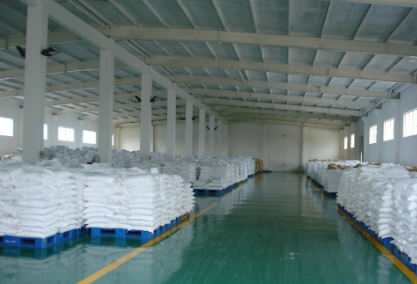
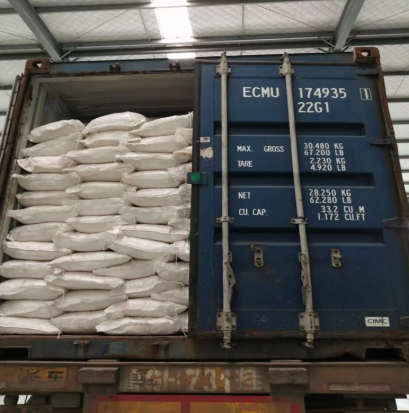
Fact Factory and Equipment Show