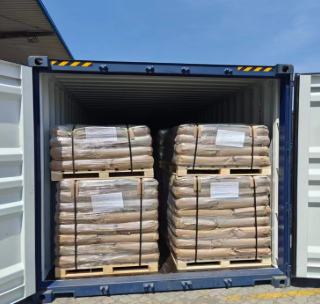
LOCUST BEAN GUM #CAS9000-40-2
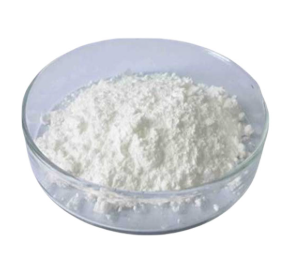
Off-white to yellow-green powder. Odorless and tasteless, but acquires a leguminous taste when boiled in water.
Ceratonia occurs as a yellow-green or white colored powder. Although odorless and tasteless in the dry powder form, ceratonia acquires a leguminous taste when boiled in water.
Carob bean gum is a natural product obtained from the endosperm of milled seeds from the fruit pod of C. siliqua. Carob bean gum is obtained from the macerated endosperm of the seeds of the fruit pod of the carob tree. This endosperm, comprising 42 to 46% of the kernel, contains virtually all of the galactomannan present in the seed. Galactomannan is not found in the kibble. Carob bean gum is used as a food stabilizer and thickener, a flavor and/or flavor modifier, an emulsifier, a texturizer and a solvent/ carrier/encapsulating agent.
Applicaion of LOCUST BEAN GUM
Locust bean gum (LBG, galactomannan polysaccharide) from Ceratonia siliqua seeds may be used as a substrate to help identify, differentiate and characterize mannanase(s), such as the β-Mannanases (EC 3.2.1.78). LBG may be used in the development of drug delivery devices. LBG may be used to study its properties as a protective agent on both eucalyptus and microcrystalline cellulose destruction of crystallinity by ball milling. LBG may be used to study its properties as a food additive that reduces spoilage caused by Aspergillus flavus. LBG may be used as a starting material for the organic synthesis of hyperbranched N-glycan core structures.
Locust Bean Gum is a gum that is a galactomannan obtained from the plant seed from the locust bean tree known as ceratonia siliqua. it has a mannose:galactose ratio of approximately 4:1. its properties include swelling partially in cold water but requiring heating to approximately 82°c for complete solubility. it provides high viscos- ity, forms gels with xanthan gum upon heating and cooling of the solution, and functions as a water binder. it can make agar or car- rageenan gels more elastic. its uses include processed cheese, ice cream, bakery products, soups, and pies. typical usage level is 0.1– 1.0%. it is also called carob gum or saint john’s bread, and is scien- tifically called carubin.
| LOCUST BEAN GUM Chemical Properties |
| Melting point | >200°C (dec.) |
| FEMA | 2648 | LOCUST GUM (CERATONIA SILIQUA L.) |
| storage temp. | Sealed in dry,Room Temperature |
| solubility | Ceratonia is dispersible in hot water, forming a sol having a pH 5.4–7.0 that may be converted to a gel by the addition of small amounts of sodium borate. In cold water, ceratonia hydrates very slowly and incompletely. Ceratonia is practically insoluble in ethanol. |
| form | Solid |
| color | Off-White to Light Beige |
| Odor | at 100.00 %. fruity raisin jammy brown cocoa chocolate bready coffee jammy brandy |
| Odor Type | fruity |
| biological source | Ceratonia siliqua seeds |
| Stability: | Hygroscopic |
| Cosmetics Ingredients Functions | SKIN CONDITIONING - EMOLLIENT VISCOSITY CONTROLLING FRAGRANCE BINDING FILM FORMING EMULSION STABILISING |
| Cosmetic Ingredient Review (CIR) | LOCUST BEAN GUM (9000-40-2) |
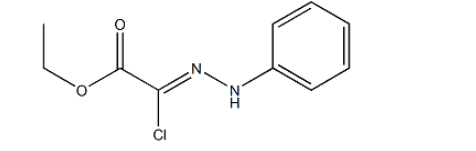
| InChI | InChI=1S/C10H11ClN2O2/c1-2-15-10(14)9(11)13-12-8-6-4-3-5-7-8/h3-7,12H,2H2,1H3/b13-9- |
| InChIKey | LZCJYKSOIZQABU-LCYFTJDESA-N |
| SMILES | C(OCC)(=O)/C(/Cl)=N/NC1=CC=CC=C1 |
| EPA Substance Registry System | Carob gum (9000-40-2) |
| Safety Information |
| WGK Germany | 2 |
| RTECS | OJ8690000 |
| F | 3 |
| TSCA | TSCA listed |
| Storage Class | 11 - Combustible Solids |
| Hazardous Substances Data | 9000-40-2(Hazardous Substances Data) |
Fact Factory and Equipment Show