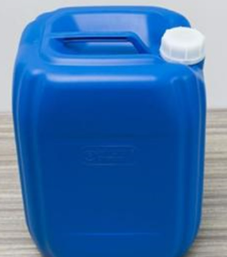
Textile Leveling Agent #CAS8001-54-5
Textile Leveling Agent #CAS8001-54-5
Textile levelling agents are a large category of dyeing auxiliaries, including anionic, cationic, non-ionic and compound types, and their physicochemical properties vary greatly among different types. They have good water solubility and can be diluted evenly in dye baths. They maintain good solution stability within the suitable pH range and are not prone to precipitation. Non-ionic levelling agents are generally hard-water resistant and stable under weakly acidic to neutral conditions. Anionic levelling agents match acid dyes and direct dye systems and can tolerate water with a certain degree of hardness. Cationic levelling agents are mainly used for acrylic fiber dyeing with cationic dyes and cannot be mixed with anionic auxiliaries in the same bath, otherwise charge neutralization will occur and flocculent precipitate will form, resulting in loss of levelling performance. The molecules of levelling agents contain dye-affinity groups and fiber-affinity groups. They can temporarily bind dyes and slow down the dye uptake rate to avoid uneven color spots caused by rapid accumulation of dyes on fiber surfaces. Meanwhile, they promote the desorption and migration of aggregated dyes to achieve uniform color. They are chemically stable under normal storage conditions, non-flammable and non-volatile. However, long-term storage at high temperature may lead to viscosity changes. Strong oxidants, high-concentration strong acids and strong alkalis will destroy their molecular structure and reduce levelling performance.
Applicaion of Textile Leveling Agent
Textile levelling agent is a key auxiliary for dyeing processes. It is suitable for dyeing of cotton, linen, viscose, polyester, polyamide, acrylic, wool and blended fibers, and compatible with acid dyes, reactive dyes, disperse dyes, cationic dyes, direct dyes and other dye systems. Its core function is to control the dye uptake rate, slow down the rapid adsorption and accumulation of dyes on fiber surfaces, and effectively prevent dyeing defects such as uneven shade, spots, color difference and streaks. Meanwhile, it has dye migration capacity. Dyes that have aggregated on fibers can be desorbed, diffused and redistributed evenly under the effect of levelling agent, repairing uneven fabric surfaces and improving within-batch and batch-to-batch color deviation. In high-temperature high-pressure dyeing, levelling agents improve the dispersion stability of disperse dyes and prevent them from coagulating and tarring at high temperature, avoiding tar spots on fabrics. For acrylic dyeing with cationic dyes, cationic levelling agents control the dye uptake rate through competitive adsorption to avoid sudden dyeing. It fits various dyeing methods including jig dyeing, overflow dyeing, jet dyeing and beam dyeing, widely used for dyeing knitted fabrics, woven fabrics, yarns and loose fibers as well as carpets. Some compound levelling agents have extra functions of dispersion, chelation and solubilization. They can chelate calcium, magnesium and heavy metal ions in water to offset the influence of hard water and reduce dye precipitation, improving dyeing reproducibility, stabilizing color consistency between batches, lowering rework rate and raising finished product yield.
Fact Factory and Equipment Show