Hyaluronic acid #CAS9004-61-9
CAS Number:9004-61-9
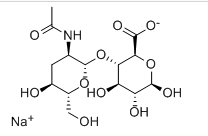
Chemical Formula:C14H22NNaO11
Synonyms:
HYALURONIC ACID HUMAN SODIUM SALT
Hyaluronic Acid, from Human Umbilical Cords
HYALURONIC ACID HUMAN SODIUM SALT
Appearance:white amorphous solid, odorless and tasteless
MOQ (Minimum Order Quantity): 1 FCL (Full Container Load)
Hyaluronic acid is white amorphous solid, odorless and tasteless, hygroscopic. It is soluble in water and insoluble in organic solvents. The specific rotation of the aqueous solution is -70°-80°. The most prominent is a high viscosity characteristics, the viscosity of its solution, when the following conditions, an irreversible decline can occur: pH below or above 7; hyaluronidase is present; many reducing substances such as cysteine, pyrogallic gallic acid, ascorbic acid, or the presence of heavy metal ions; (4) ultraviolet light, electron beam irradiation, and so on. A polymer consisting of the disaccharide repeating unit of (1→3)-2-acetamido-2-deoxy-β-D-glucose-(1→4)-O-β-D-glucuronide, which on hydrolysis produces a hexosamine (e.g., glucosamine) and a glucuronide (e.g., glucuronide). Originally used only as a biochemical reagent, it has now become a biochemical drug with high clinical value. It is widely found in nature in various tissues of animals: connective tissue, umbilical cord, skin, human serum, cockles, synovial fluid of joints, brain, cartilage, vitreous body of the eye, human urine, chicken embryo, rabbit oocytes, arteries and veins in the wall. Hyaluronic acid is often bound to proteins and coexists with other mucopolysaccharides. In vitreous and synovial fluid, it exists in a solubilized form, and in cockles and umbilical cords as a gel.
Applicaion of Hyaluronic acid
Hyaluronic acid is a naturally derived, non - immunogenic, non - adhesive glycosaminoglycan that plays a prominent role in various wound - healing processes, as it as it is naturally angiogenic when degraded to small fragments. Hyaluronic acid promotes early inflammation which is critical for initiating wound healing, but then moderates later stages of the process, allowing matrix stabilization and reduction of long term inflammation. Hyaluronic acid is a main source for pharmaceutical, medical and cosmetic application.
hyaluronic acid is a glycosaminoglycan component. Hyaluronic acid occurs naturally in the dermis. It is thought to play a critical role in healthy skin by controlling the physical and biochemical characteristics of epidermal cells. It also regulates general skin activity, such as water content, elasticity, and the distribution of nutrients. Its water-absorption abilities and large molecular structure allow the epidermis to achieve greater suppleness, proper plasticity, and turgor. Hyaluronic acid is a natural moisturizer with excellent water-binding capabilities. In a solution of 2 percent hyaluronic acid and 98 percent water, the hyaluronic acid holds the water so tightly that it appears to create a gel. However, it is a true liquid in that it can be diluted and will exhibit a liquid’s normal viscous flow properties. When applied to the skin, hyaluronic acid forms a viscoelastic film in a manner similar to the way it holds water in the intercellular matrix of dermal connective tissues. This performance and behavior suggests that hyaluronic acid makes an ideal moisturizer base, allowing for the delivery of other agents to the skin. Manufacturers claim that the use of hyaluronic acid in cosmetics results in the need for much lower levels of lubricants and emollients in a formulation, thereby providing an essentially greaseless product. Furthermore, its ability to retain water gives immediate smoothness to rough skin surfaces and significantly improves skin appearance. For the benefits of hyaluronic acid to be realized in a cosmetic, the product needs to be applied on a regular basis as it is broken down in skin within 24 to 48 hours of application. note, this is not the case with hyaluronic acid injections as the technology used is different.| Hyaluronic acid Chemical Properties |
| storage temp. | −20°C |
| solubility | H2O: 5 mg/mL, clear, colorless |
| form | Lyophilized Powder |
| color | White |
| Odor | Odorless |
| Optical Rotation | -70~-80 |
| Water Solubility | Soluble in water. |
| Major Application | 3D bioprinting tissue engineering (Hydrogels) |
| Cosmetics Ingredients Functions | SKIN CONDITIONING ANTISTATIC MOISTURISING HUMECTANT |
| Cosmetic Ingredient Review (CIR) | Hyaluronic acid (9004-61-9) |
| InChIKey | MAKUBRYLFHZREJ-IUPJJCKZNA-M |
| SMILES | [C@@H]1(O[C@H]2[C@H](O)[C@H]([C@H](O)O[C@@H]2C(=O)[O-])O)O[C@H](CO)[C@@H](O)C[C@H]1NC(=O)C.[Na+] |&1:0,2,3,5,6,9,15,18,21,r| |
| LogP | -6.623 (est) |
| CAS DataBase Reference | 9004-61-9 |
| EPA Substance Registry System | Hyaluronic acid (9004-61-9) |
| Safety Information |
| Hazard Codes | B |
| Safety Statements | 22-24/25 |
| WGK Germany | 3 |
| RTECS | MT7250000 |
| F | 3-10 |
| TSCA | TSCA listed |
| Hazardous Substances Data | 9004-61-9(Hazardous Substances Data) |
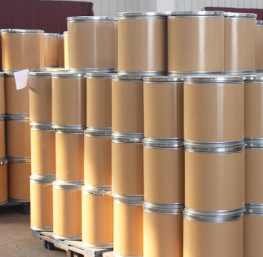
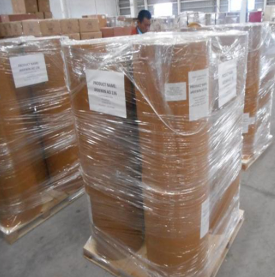
Fact Factory and Equipment Show