Urea #CAS57-13-6
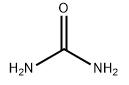
The urea molecule is planar in the crystal structure, but the geometry around the nitrogens is pyramidal in the gas-phase minimum-energy structure. In solid urea, the oxygen center is engaged in two N-H-O hydrogen bonds. The resulting dense and energetically favourable hydrogen-bond network is probably established at the cost of efficient molecular packing: The structure is quite open, the ribbons forming tunnels with square cross-section. The carbon in urea is described as sp2 hybridized, the C-N bonds have significant double bond character, and the carbonyl oxygen is basic compared to, say, formaldehyde. Urea's high aqueous solubility reflects its ability to engage in extensive hydrogen bonding with water.Urea dissolved in water is in equilibrium with the isomeric ammonium cyanate. The resulting activity of the isocyanic acid ions do result in carbamylation (formation of long-chain carbamides, liberating ammonia molecule as byproduct) of proteins if proteins are present in the solution too. The carbamylation reaction may occurs at elevated temperatures even without catalysts. At room temperature, water solutions of urea are prone to same decomposition reaction in the presence of urease. The isomerization of urea in solution at room temperature without catalysts is a slow process (taking days to reach equilibrium), and freshly prepared, unheated solutions had negligible carbamylation rates.Urea can react with alcohols to form urethanes and react with malonic esters to make barbituric acids.
Applicaion of Urea
Agriculture usesMore than 90% of world industrial production of urea is destined for use as a nitrogen-release fertilizer. Urea has the highest nitrogen content of all solid nitrogenous fertilizers in common use. Therefore, it has the lowest transportation costs per unit of nitrogen nutrient.
In the soil, it hydrolyses back to ammonia and carbon dioxide. The ammonia is oxidized by bacteria in the soil to nitrate, which can be absorbed by the plants. Urea is also used in many multi-component solid fertilizer formulations. Urea is highly soluble in water, therefore, very suitable for use in fertilizer solutions (in combination with ammonium nitrate: UAN), e.g., in ‘foliar feed’ fertilizers. For fertilizer use, granules are preferred because of their narrower particle size distribution, an advantage for mechanical application. The most common impurity of synthetic urea, biuret, must be present at less than 2 percent of the time, as it impairs plant growth.
PharmacaeuticalUrea and malonic acid react to form barbituric acid. This was discovered by Adolf Bayer in 1864. But the barbiturates were not exploited as hypnotics until the early 1900's.Urea is also used in the production of various acylureas and urethanes for use as sedatives and hypnotics.Chemical industry
Urea is a raw material for the manufacture of two main classes of materials: urea-formaldehyde resins and urea-melamine-formaldehyde used in marine plywood. They all have very varied uses including adhesives, laminates, moulding compounds, coatings and textile finishes.
Urea has the ability to trap many organic compounds in the form of clathrates. The organic compounds are held in channels formed by interpenetrating helices comprising of hydrogen-bonded urea molecules. This behavior can be used to separate mixtures, and has been used in the production of aviation fuel and lubricating oils, and in the separation of paraffin.
As the helices are interconnected, all helices in a crystal must have the same molecular handedness. This is determined when the crystal is nucleated and can thus be forced by seeding. The resulting crystals have been used to separate racemic mixtures.
Laboratory uses
Urea in concentrations up to 10 M is a powerful protein denaturant as it disrupts the noncovalent bonds in the proteins. This property can be exploited to increase the solubility of some proteins. A mixture of urea and choline chloride is used as a deep eutectic solvent, a type of ionic liquid.
Urea can in principle serve as a hydrogen source for subsequent power generation in fuel cells. Urea present in urine/wastewater can be used directly (though bacteria normally quickly degrade urea.) Producing hydrogen by electrolysis of urea solution occurs at a lower voltage (0.37 V) and thus consumes less energy than the electrolysis of water (1.2 V).
Urea in concentrations up to 8 M can be used to make fixed brain tissue transparent to visible light while still preserving fluorescent signals from labeled cells. This allows for much deeper imaging of neuronal processes than previously obtainable using conventional one photon or two photon confocal microscopes.
Automobile systems
Urea is used in SNCR and SCR reactions to reduce the NOx pollutants in exhaust gases from combustion, for example, from power plants and diesel engines. The BlueTec system, for example, injects water-based urea solution into the exhaust system. The ammonia produced by decomposition of the urea reacts with the nitrogen oxide emissions and is converted into nitrogen and water within the catalytic converter.
Fig.9 A line diagram of the car above illustrating five key elements in the design of the exhaust system.1 The oxidation catalyst is used to remove unwanted hydrocarbons, ensuring that they are oxidised to carbon dioxide and water. The catalyst is usually based on platinum or palladium.
2 Known as an NOx catalytic convertor, it contains aluminium oxide on whose surface, platinum and barium oxide are present. It traps the oxides of nitrogen. When the solid is saturated with the oxides, unburnt hydrocarbons are allowed to flow through, converting much of the mixture to nitrogen, carbon dioxide and water vapour.
3 A filter which traps particulates (small pieces of carbon and other solids).
4 A tank containing the solution of urea.
5 The SCR-catalytic convertor which contains another catalyst, for example an oxide of vanadium (or tungsten) on titanium dioxide, which allows the exhaust gases, still containing some nitrogen oxides, to react with ammonia formed from the urea solution, to produce exhaust gases with only traces of the oxides. By kind permission of Daimler AG
Others
A stabilizer in nitrocellulose explosive
A component of animal feed, providing a relatively cheap source of nitrogen to promote growth
A non-corroding alternative to rock salt for road de-icing, and the resurfacing of snowboarding half pipes and terrain parks
A flavor-enhancing additive for cigarettes
A main ingredient in hair removers such as Nair or Veet
A browning agent in factory-produced pretzels
An ingredient in some hair conditioners, facial cleansers, bath oils, skin softeners, and lotions
A reactant in some ready-to-use cold compresses for first-aid use, due to the endothermic reaction it creates when mixed with water
A cloud seeding agent, along with other salts
A flame-proofing agent, commonly used in dry chemical fire extinguisher charges such as the urea-potassium bicarbonate mixture.
An ingredient in many tooth whitening products
An ingredient in dish soap
Along with ammonium phosphate, as a yeast nutrient, for fermentation of sugars into ethanol
A nutrient used by plankton in ocean nourishment experiments for geoengineering purposes
As an additive to extend the working temperature and open time of hide glue
As a solubility-enhancing and moisture-retaining additive to dye baths for textile dyeing or printing
| Urea Chemical Properties |
| Melting point | 132-135 °C(lit.) |
| Boiling point | 332.48°C (estimate) |
| density | 1.335 g/mL at 25 °C(lit.) |
| bulk density | 720-760kg/m3 |
| vapor pressure | <0.1 hPa (20 °C) |
| refractive index | n |
| storage temp. | 2-8°C |
| solubility | H2O: 8 M at 20 °C |
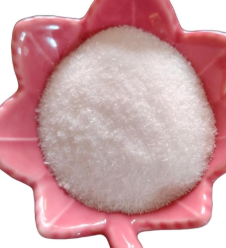
| form | powder |
| pka | 0.10(at 25℃) |
| color | white |
| Specific Gravity | 1.335 |
| Odor | almost odorless |
| PH | 8.0-10.0 (20℃, 8M in H2O) |
| biological source | synthetic |
| Water Solubility | 1080 g/L (20 ºC) |
| λmax | λ: 260 nm Amax: 0.03 λ: 280 nm Amax: 0.02 |
| Merck | 14,9867 |
| BRN | 635724 |
| Henry's Law Constant | 5.7×10⁶ mol/(m3Pa) at 25℃, Duchowicz et al. (2020) |
| Exposure limits | PC-TWA: 5 mg/m3; PC-STEL: 10 mg/m3 |
| Dielectric constant | 3.5(Ambient) |
| Stability: | Substances to be avoided include strong oxidizing agents. Protect from moisture. |
| Cosmetics Ingredients Functions | BUFFERING HUMECTANT SKIN CONDITIONING ANTISTATIC |
| InChI | 1S/CH4N2O/c2-1(3)4/h(H4,2,3,4) |
| InChIKey | XSQUKJJJFZCRTK-UHFFFAOYSA-N |
| SMILES | NC(N)=O |
| LogP | -1.660 (est) |
| CAS DataBase Reference | 57-13-6(CAS DataBase Reference) |
| NIST Chemistry Reference | Urea(57-13-6) |
| EPA Substance Registry System | Urea (57-13-6) |
| Absorption | ≤0.06 at 260nm at 5M ≤0.06 at 280nm at 5M |
| Safety Information |
| Hazard Codes | Xn,Xi |
| Risk Statements | 36/37/38-40-38 |
| Safety Statements | 26-36-24/25-37 |
| RIDADR | Not regulated |
| WGK Germany | 1 |
| RTECS | YR6250000 |
| TSCA | TSCA listed |
| HS Code | 3102100090 |
| Storage Class | 11 - Combustible Solids |
| Hazardous Substances Data | 57-13-6(Hazardous Substances Data) |
| Toxicity | LD50 orally in Rabbit: 8471 mg/kg LD50 dermal Rat 8200 mg/kg |
Fact Factory and Equipment Show