Aluminum Stearate #CAS637-12-7
CAS Number:637-12-7
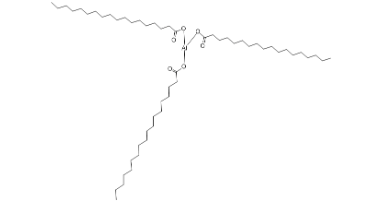
Chemical Formula:C54H105AlO6
Synonyms:
Trisstearic acid aluminum salt;Tristearic acid aluminum;Tristearic acid aluminum salt;
Aluminum octadecanoa;octadecanoicacid,aluminumsalt;rofob3
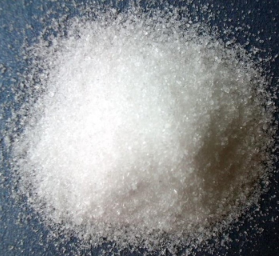
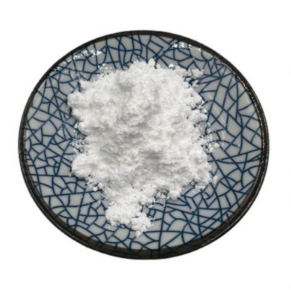
Appearance: White powder
MOQ (Minimum Order Quantity): 1 FCL (Full Container Load)
Aluminum Stearate #CAS637-12-7
Aluminum stearate is a non-stoichiometric compound consisting of mono-, di-, and tri-forms where aluminum distearate is the main constituent, and it forms the stearic coating on aluminum alloy surfaces. It is added to paints, enamels, and varnishes to suspend pigments in oil, prevent separation, reduce the oil required to wet pigments, increase paint body by forming a gel, and flatten varnishes. Aluminum stearate dissolves in heated vegetable oils and coats the surface of pigment particles to prevent settling upon cooling and gelling[1-3]. It is a fine white hydrophobic powder, practically insoluble in water and ethanol, while capable of gelling in mineral oils, turpentine and other hydrocarbon solvents; it will decompose under strong acidic conditions to release stearic acid and aluminum salts. Beyond its well-known function in solvent-based coatings, enamels and printing inks as an anti-settling agent, thixotropic thickener and matting additive, it also serves as an internal lubricant and auxiliary heat stabilizer in PVC and other polymer processing systems, lowering melt friction, improving resin flowability and promoting uniform dispersion of fillers and pigments inside plastic compounds. In rubber manufacturing, it acts as a processing aid and anti-tack agent to stop uncured rubber sheets from sticking to rollers and molds, facilitating molding and stripping operations. Thanks to its outstanding water-repellent property, aluminum stearate is widely adopted as a waterproofing additive for concrete, mortar, textiles, leather and paper, helping to block capillary water penetration and extend the service life of these porous materials. It is also used as a gelling agent for specialty lubricating greases, raising the dropping point and enhancing water resistance of grease formulations for mechanical equipment working under humid or high-temperature conditions. In cosmetic and powder formulations, it can function as an anti-caking agent and texture modifier to improve spreadability. Moreover, it is applied as a surface treatment agent for metal powders and inorganic fillers to boost their compatibility with organic matrices, as well as a rust-preventive auxiliary in certain metal-protective coatings. Its versatile thickening, suspending, lubricating and water-repellent features make aluminum stearate a popular metallic soap additive across coatings, plastics, rubber, construction, lubricant and fine chemical sectors.
Applicaion of Aluminum Stearate
Waterproofing fabrics, ropes; in paint and varnish driers; thickening lubricating oils; in cements; in light-sensitive photographic compositions. Aluminum stearate is a saline form of stearic acid used as a thickener and emulsifier, and to regulate the stability and suspension of a cosmetic formulation. Aluminum stearate is used for waterproofing fabrics and for thickening lubricating oils. It is involved in the preparation of polyamides and thermosetting plastics. It is used as a waterproofing additive in cements and in light-sensitive photographic compositions. It acts as a gelling agent for alkyd paints, as a defoamer for oil drilling fluids and as a retarder for polysulfide dental impression materials. Further, it is used in greases, lubricants, cutting compounds, cosmetics and pharmaceuticals. It serves as a flatting agent, as a defoaming agent in beet sugar and yeast processing. In addition to this, it is used as a water-repellent soap for natural stone surfaces. In coating systems, it improves pigment suspension, reduces pigment settling and separation, develops thixotropy, and delivers uniform matte effects for varnishes and industrial topcoats while enhancing water resistance of the finished coating film. In plastic and rubber processing, it works as an internal lubricant, filler dispersant and anti-tack agent, lowering melt viscosity, preventing adhesion to processing rollers and molds, and promoting homogeneous dispersion of inorganic fillers and colorants in PVC, polyolefin and thermosetting resin compounds. For grease production, it functions as a thickener to manufacture high-performance lubricating greases with improved water resistance and structural stability, suitable for bearings and mechanical parts exposed to moisture. It can also be incorporated into polishing pastes and metal polishing compounds to provide smooth lubrication and uniform abrasive distribution. In construction materials apart from cement, it is added to mortar and gypsum products to reduce water absorption and efflorescence. In ink formulations, especially offset and solvent-based inks, it controls rheology, prevents pigment sedimentation and adjusts surface gloss. In powder formulations for agrochemicals, it acts as an anti-caking agent to maintain free-flow properties. It is also utilized in foundry release agents to facilitate clean demolding of sand molds and castings. Owing to its dual properties of thickening and water repellency, aluminum stearate remains a multi-functional metallic soap additive widely deployed across coatings, construction, petroleum, textile, personal care, pharmaceutical, plastic, rubber and specialty chemical industries.
| Aluminum Stearate Chemical Properties |
| Melting point | 103°C |
| Boiling point | 250℃[at 101 325 Pa] |
| density | 1.01 |
| vapor pressure | 0Pa at 25℃ |
| solubility | Practically insoluble in water and in anhydrous ethanol. |
| form | Powder |
| Specific Gravity | 1.01 |
| color | white |
| Water Solubility | Soluble in alkali, glycol, chlorinated hydrocarbons, petroleum, benzene, turpentine oil, mineral oil, vegetable oil, mixture of benzene, toluene and the three xylene isomers. Insoluble in water, ethanol and ether. |
| Merck | 14,364 |
| Exposure limits | ACGIH: TWA 1 mg/m3 |
| Stability: | Stable. Incompatible with strong oxidizing agents. |
| Cosmetics Ingredients Functions | VISCOSITY CONTROLLING OPACIFYING ANTICAKING SKIN CONDITIONING - EMOLLIENT EMULSION STABILISING |
| Cosmetic Ingredient Review (CIR) | Aluminum Stearate (637-12-7) |
| LogP | 22.69 |
| CAS DataBase Reference | 637-12-7(CAS DataBase Reference) |
| NIST Chemistry Reference | Aluminum stearate(637-12-7) |
| EPA Substance Registry System | Aluminum stearate (637-12-7) |
| Safety Information |
| Hazard Codes | Xi |
| Risk Statements | 36/37/38 |
| Safety Statements | 22-24/25-36-26 |
| WGK Germany | 3 |
| RTECS | BD0707000 |
| TSCA | TSCA listed |
| HS Code | 2915709000 |
| Hazardous Substances Data | 637-12-7(Hazardous Substances Data) |
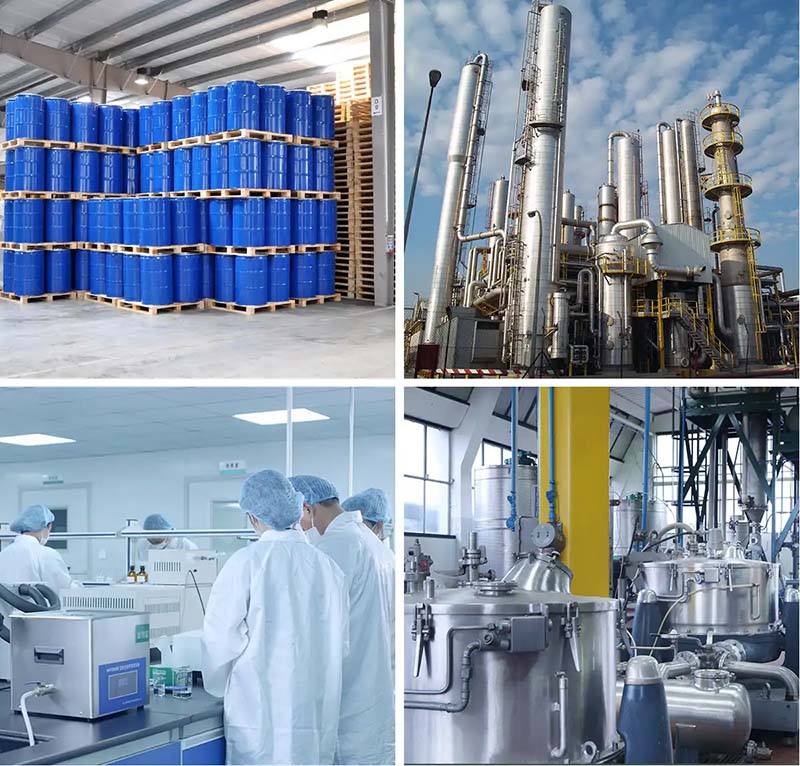
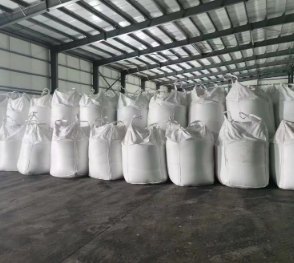
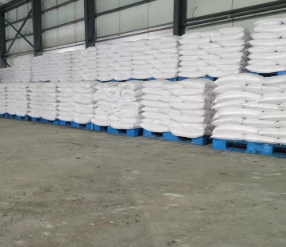
Fact Factory and Equipment Show