
Barium stearate #CAS6865-35-6
CAS Number:6865-35-6
Chemical Formula:C36H70BaO4
Synonyms:
Barium bis(stearate);Bis(octadecanoic acid)barium salt;Einecs 229-966-3;
Octadecanoic acid, barium salt (2:1);barium distearate;BARIUM STEARATE;
octadecanoic acid barium salt;STEARIC ACID BARIUM SALT
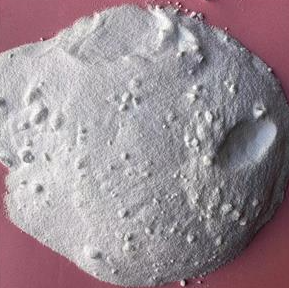
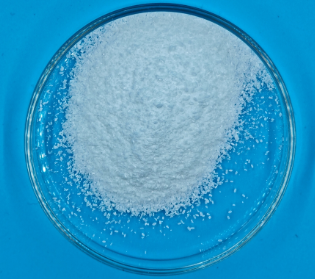
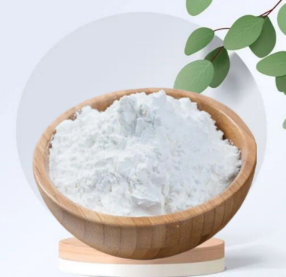
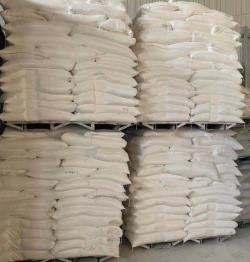
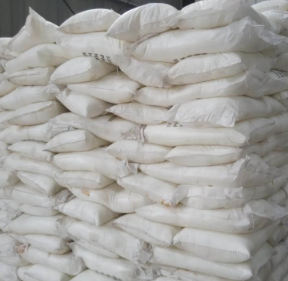
Appearance: White powder
MOQ (Minimum Order Quantity): 1 FCL (Full Container Load)
Barium stearate #CAS6865-35-6
Barium stearate is a typical metallic soap and barium salt of stearic acid, is a white fine hydrophobic powder with good heat resistance, internal and external lubricity and water repellency. It is mainly used as a thermo-stabilizer of polyethylene and polyvinyl chloride copolymer, as well as lubricant in polymer processing. It delivers excellent long-term heat-resistant stability, smooth oilness and outstanding processibility for various polyvinyl chloride products such as transparent film, leatheroid, hard plate material and tubing. When compounded synergistically with zinc stearate, calcium stearate or epoxy auxiliary stabilizers, it can further suppress thermal degradation of PVC melt during high-temperature extrusion and calendering, reduce melt viscosity, lower friction between resin and processing equipment, prevent die buildup and improve the surface smoothness and transparency of finished articles. Beyond plastic additives, it also can be used for high-temperature resistance, release and anti-blocking agents, as well as machinery high-temperature lubricant under harsh thermal conditions. It is also applicable in rubber processing as an anti-sticking and processing aid, and serves as a flatting and water-repellent additive for coatings and inks. The method for producing barium stearate is mainly the traditional saponification metathesis process. This method has technical maturity, stable product quality and good particle compactness, but water consumption is large, it uses caustic soda, and the high-concentration salt-containing wastewater quantity discharged is large, contaminating the environment. They do not meet the requirements of current energy-saving, environmental protection, and cleaner production. Another method is adding stearic acid, water, and hydrated barium hydroxide in advance and then carrying out the saponification reaction with sodium hydroxide. This route shares the same shortcomings of heavy wastewater load and alkali consumption, while the obtained product is fluffy and poor in bulk density and flowability compared with the product prepared via saponification double decomposition.
Applicaion of Barium stearate
Barium stearate (CAS 6865-35-6) is an important metallic soap additive widely applied in plastic processing, rubber, coatings and other related industries, functioning primarily as a thermal stabilizer and lubricant for PVC and polyolefin materials. In polyvinyl chloride processing, it provides outstanding long-term heat stabilization performance, effectively inhibiting the thermal oxidative degradation of PVC molecular chains at high processing temperatures, preventing the discoloration and carbonization of products during extrusion, calendering and injection molding; when used together with zinc stearate, calcium stearate or other auxiliary stabilizers, it generates a remarkable synergistic effect to further enhance the heat resistance and weather resistance of PVC formulations. Meanwhile, it possesses both internal and external lubricating properties, which can reduce the melt viscosity of resin, lower the friction between polymer melt and metal processing equipment, improve the flowability of the material, avoid adhesion to rollers and molds, and facilitate continuous and stable production. It is especially suitable for manufacturing transparent PVC films, artificial leather, rigid sheets, pipes and profiles, helping finished products obtain smooth surface, uniform texture and good transparency. Apart from the PVC sector, it can serve as a high-temperature release agent and anti-blocking agent for plastic films to reduce surface tackiness and prevent films from sticking together during winding and storage. In rubber production, it acts as a processing aid and anti-sticking agent, improving the dispersion of compounding ingredients and easing demolding operations. It can also be formulated into high-temperature lubricants for mechanical parts working under thermal service conditions. In paints, coatings and inks, it works as a matting agent, water repellent and sedimentation inhibitor, adjusting surface gloss and improving the water resistance of coating films. In addition, it is used as a filler surface modifier to enhance the compatibility between inorganic fillers and organic resin matrices, so as to upgrade the mechanical and processing performance of composite materials.
| Barium stearate Chemical Properties |
| Melting point | >225℃ |
| density | 1.145g/cm3 |
| storage temp. | Store at room temperature, keep dry and cool |
| solubility | insoluble in H2O, ethanol |
| form | Powder |
| color | white |
| Odor | odorless |
| Water Solubility | insoluble H2O, alcohol [HAW93] |
| InChI | InChI=1S/2C18H36O2.Ba/c2*1-2-3-4-5-6-7-8-9-10-11-12-13-14-15-16-17-18(19)20;/h2*2-17H2,1H3,(H,19,20);/q;;+2/p-2 |
| InChIKey | AGXUVMPSUKZYDT-UHFFFAOYSA-L |
| SMILES | O([Ba]OC(=O)CCCCCCCCCCCCCCCCC)C(=O)CCCCCCCCCCCCCCCCC |
| LogP | 8.216 (est) |
| CAS DataBase Reference | 6865-35-6(CAS DataBase Reference) |
| EPA Substance Registry System | Barium stearate (6865-35-6) |
| Safety Information |
| Risk Statements | 20/22 |
| Safety Statements | 28 |
| RIDADR | 1564 |
| RTECS | WI2840000 |
| TSCA | TSCA listed |
| HS Code | 2915709000 |
| Toxicity | LD50 orl-rat: 4 g/kg GISAAA 39(11),91,74 |
Fact Factory and Equipment Show