Product Details
Betaine #CAS107-43-7
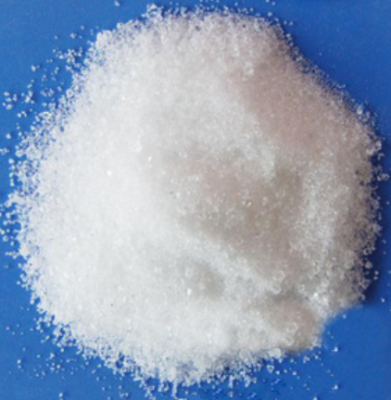
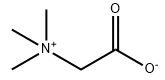
Betaine is also known as trimethylamine, and is the quaternary ammonium derivatives of glycine and a class of N-methyl-compound or trimethyl inner salt after the hydrogen of the amino group being substituted by the methyl group. Common kinds include glycyl betaine, β-alanyl-betaine and prolyl-betaine. We can obtain prismatic crystals or leaf-shaped crystals from ethanol, is sweet taste, and deliquescent. Melting point: 293 °C; it will decomposed at 300 °C. It is soluble in water, methanol and ethanol, but insoluble in ether, and can be isomerized into dimethylamino methyl acetate at the melting point. We can obtain its monohydrate crystal from the aqueous solution of the free acid HO-N (CH3) 3-CH2COOH which generates betaine upon dehydration at 100 °C, and is stable in acid. It can obtain trimethylamine upon reaction with concentrated aqueous potassium hydroxide and can have Maillard reaction with sugar (browning reaction). It is presented in plant such as cottonseed and beetroot as well as in animal substance such as barbed shark meat and crab refined juice. It can be recycled from the mother liquor of beet sugar. It may also be obtained from the methylation reaction of amino acetate or the reaction between chloroacetate with trimethylamine. Clinically it is used in combination with N-amidino glycine for treatment of myasthenia gravis. In analytic chemistry, it can also be used as the reagent for identifying gold. This product is the amphoteric surfactants of betaine used as a leveling agent for vat dyes dying. Drought or salt stress, many plants can accumulate betaine inside their body and become a major organic solutes for osmotic adjustment and have a further protective effect on cell membrane and cellular proteins.The above information is edited by the Chemicalbook of Dai Xiongfeng.
Application of Betaine
2. It is used as betaine type amphoteric surfactants, also used as leveling agent of dye vat dyes.
3. It can be used as feed grade anhydrous betaine for being as a feed additive. It is a natural and efficient methyl donor which can partially substitute methionine and choline chloride, lower the feed costs, reduce back-fat of pig, and increase the rate lean meat and carcass quality.
4. It can be used for lowering blood pressure, anti-fatty liver and anti-aging.
5. It can be used as a feed additive for promoting animal growth and increased disease resistance.
Betaine is an active ingredient in toothpaste to control the symptoms of dryness of the mouth. It is used to treat homocystinuria, which is a defect in the major pathway of methionine biosynthesis. It is also used for boosting the immune system and for improving athletic performance. It is helpful to prevent noncancerous tumors in the colon (colorectal adenomas).
betaine is a surfactant, humectant, and excellent skin conditioner. It is also used to build product viscosity and as a foam booster. It is found mostly in skin cleansers, shampoos, and bath products.| Betaine Chemical Properties |
| Melting point | 310 °C (dec.) |
| Boiling point | 218.95°C (rough estimate) |
| density | 1.00 g/mL at 20 °C |
| vapor pressure | 0.05Pa at 25℃ |
| refractive index | 1.4206 (estimate) |
| FEMA | 4223 | BETAINE |
| storage temp. | 2-8°C |
| solubility | methanol: 0.1 g/mL, clear |
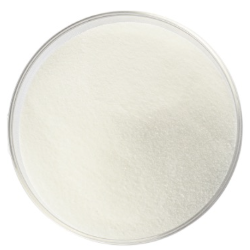
| form | Crystals or Crystalline Powder |
| pka | 1.83(at 0℃) |
| color | colorless |
| Odor | bland |
| biological source | sugar beets |
| Water Solubility | 160 g/100 mL |
| Sensitive | Hygroscopic |
| Merck | 14,1179 |
| JECFA Number | 2265 |
| BRN | 3537113 |
| Stability: | Stable. Hygroscopic. Incompatible with strong oxidizing agents. |
| Major Application | flavors and fragrances |
| Cosmetics Ingredients Functions | SKIN CONDITIONING - HUMECTANT HUMECTANT HAIR CONDITIONING |
| Cosmetic Ingredient Review (CIR) | Betaine (107-43-7) |
| InChI | 1S/C5H11NO2/c1-6(2,3)4-5(7)8/h4H2,1-3H3 |
| InChIKey | KWIUHFFTVRNATP-UHFFFAOYSA-N |
| SMILES | C[N+](C)(C)CC([O-])=O |
| LogP | -3.1 at 20℃ |
| CAS DataBase Reference | 107-43-7(CAS DataBase Reference) |
| NIST Chemistry Reference | Methanaminium, 1-carboxy-n,n,n-trimethyl-, hydroxide, inner salt(107-43-7) |
| EPA Substance Registry System | Betaine (107-43-7) |
| Absorption | ≤0.05 at 280nm in methanol at 1M ≤0.09 at 260nm in methanol at 1M |
| Safety Information |
| Hazard Codes | Xn |
| Risk Statements | 20/21/22-36/37/38 |
| Safety Statements | 24/25-36-26 |
| WGK Germany | 3 |
| RTECS | DS5900000 |
| F | 3-10 |
| TSCA | TSCA listed |
| HS Code | 29239000 |
| Storage Class | 11 - Combustible Solids |
| Hazardous Substances Data | 107-43-7(Hazardous Substances Data) |
Fact Factory and Equipment Show

Leave your messages