
L-Methionine #CAS63-68-3
CAS Number:63-68-3
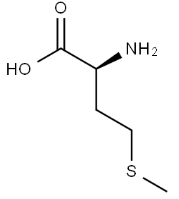
Chemical Formula:C5H11NO2S
Synonyms:
L-METHIONINE (13C5,D8,15N)
L-METHIONINE (1,2,3,4-13C4
METHYL-13CH3)
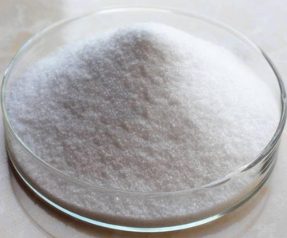
Appearance:white or almost white, crystalline powder or colorless crystals.
MOQ (Minimum Order Quantity): 1 FCL (Full Container Load)
L-Methionine #CAS63-68-3
L-methionine’s scientific name is methylthiobutanenitrile acid and is one of the essential amino acids. It is white flaky crystal or crystalline powder with specific odor. Its relative molecular weight is 149.21. DL-methionine(racemic)m.p. 281℃(decomposition). Its relative density is 1.340. It is soluble in water, dilute acid and dilute alkali solution and slightly soluble in 95% ethanol, which is insoluble in ether. L-methionine (L-body) melting point 280~281℃(decomposition). It is soluble in hot water and alcohol, which is insoluble in ethanol, ethyl ether, petroleum ether, benzene and acetone. D-methionine (D-body) Melting point 273 ℃ (decomposition). It is soluble water, acid and alkal and very slightly soluble in alcohol, insoluble in ether. Usually right-handed amino acids in body are invalid in biochemistry. However, this is the exception of methionine. D-methionine and L-methionine both are effective accelerator. This is due to the D-methionine in vivo can be converted into L-methionine. Therefore, the synthesis of DL-methionine does not require an analysis of points and can be used for the direct application. L-Methionineis one of the essential amino acids in the animal body, which is one of the components of the protein. It can maintain the growth and development of the body and balance nitrogen. It cannot be synthesized in animals in vivo and must be supplied in the form of amino acids or proteins from in vitro. L-Methionineis an important feed additive (nutrition enhancer). On the medical side, L-Methionineis one of the major components of amino acid infusion and compound amino acid preparation. It is also used for the prevention and treatment of liver disease and arsenic, benzene poisoning. It is also used as protein nutritional supplements for patients with protein deficiency or inadequate absorption. It can be obtained through the following steps: by the addition of methyl mercaptan and acrolein and then reacted with sodium cyanide and ammonium chloride .This step generates α-aminonitrile and then via hydrolysis to get the target production. It can also be obtained by hydrolysis of casein and then refined.
Application of L-Methionine
Amino acid drugs, nutritional supplements. Used for fatty liver and cirrhosis. Also widely used as feed additives to improve feed quality, improve the utilization of the native protein and promote animal growth. Such as DL-methionine can increase egg production of chickens, pigs make weight gain, more milk cows and so on. Adverse reaction: hepatic coma hanged.
Nutritional supplements. One of the essential amino acids of the human body. Because the price is higher than DL-methionine and the results are equal, so commonly used DL-methionine.
For biochemical studies and nutritional supplements, and as adjunctive treatment for pneumonia, liver cirrhosis and fatty liver.
Essential aminoacid for human development. Hepatoprotectant; antidote (acetominophen poisoning); urinary acidifier.methionine is slows down and normalizes oil gland sebum production. Methionine is also used as a texturizer in cosmetic creams. It is an essential amino acid found in a number of proteins and obtained by means of fermentation.
L-Methionine is used as an essential amino acid for human development and therapeutically acts as an antidote for acetaminophen poisoning. It serves as a chelating agent for heavy metals, as a flavoring agent and nutritional supplement for foods. It acts as a feed additive, vegetable oil enrichment and as a single cell protein. In addition to this, it is used as a hepatoprotectant and also acts as a lipotropic agent and prevents excess fat buildup in the liver.
| L-Methionine Chemical Properties |
| Melting point | 284 °C (dec.)(lit.) |
| alpha | 23.25 º (c=2, 6N HCl) |
| Boiling point | 393.91°C (estimate) |
| density | 1,34g/cm |
| bulk density | 550kg/m3 |
| refractive index | 1.5216 (estimate) |
| storage temp. | 20-25°C |
| solubility | 1 M HCl: 0.5 M at 20 °C, clear, colorless |
| pka | 2.13(at 25℃) |
| form | Solid |
| color | White |
| Odor | Slight characteristic |
| PH | 5-7 (10g/l, H2O, 20℃) |
| biological source | synthetic |
| Optical Rotation | [α]20/D +23.7±0.5°, c = 5% in 5 M HCl |
| Water Solubility | Soluble |
| λmax | λ: 260 nm Amax: 0.40 λ: 280 nm Amax: 0.05 |
| Merck | 14,5975 |
| BRN | 1722294 |
| Stability: | Stable. Incompatible with strong oxidizing agents. |
| Major Application | peptide synthesis pharmaceutical (small molecule) |
| InChI | 1S/C5H11NO2S/c1-9-3-2-4(6)5(7)8/h4H,2-3,6H2,1H3,(H,7,8)/t4-/m0/s1 |
| InChIKey | FFEARJCKVFRZRR-BYPYZUCNSA-N |
| SMILES | CSCC[C@H](N)C(O)=O |
| LogP | 0.217 (est) |
| CAS DataBase Reference | 63-68-3(CAS DataBase Reference) |
| NIST Chemistry Reference | L-Methionine(63-68-3) |
| EPA Substance Registry System | L-Methionine (63-68-3) |
| Safety Information |
| Risk Statements | 33 |
| Safety Statements | 24/25 |
| WGK Germany | 2 |
| RTECS | PD0457000 |
| F | 10-23 |
| TSCA | TSCA listed |
| HS Code | 29304010 |
| Storage Class | 11 - Combustible Solids |
| Hazardous Substances Data | 63-68-3(Hazardous Substances Data) |
| Toxicity | LD50 oral in rat: 36gm/kg |
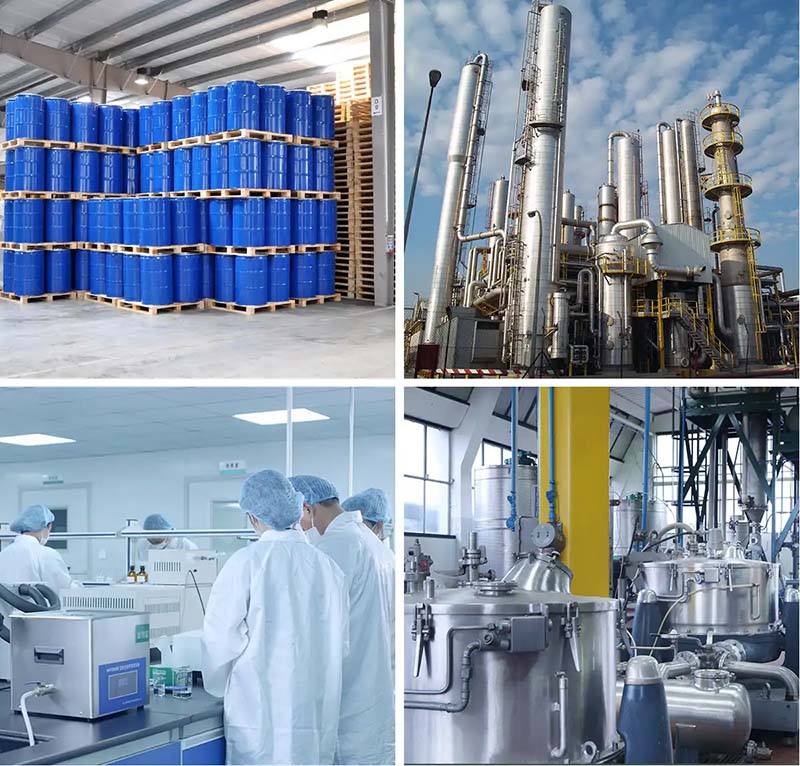
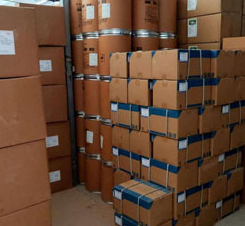
Fact Factory and Equipment Show