Sodium pyrophosphate#CAS7758-16-9
Sodium pyrophosphate#CAS7758-16-9
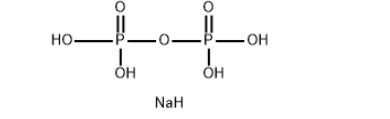
Sodium acid pyrophosphate (SAPP), or disodium pyrophosphate, is a condensed phosphate formed when sodium orthophosphate is heated to remove the water. It is an inorganic compound consisting of sodium cations and pyrophosphate anion. It is used in food mainly for its two properties: It is a leavening acid that combines with baking soda to release carbon dioxide to improve the texture and volume of baked goods. It is a chelating agent to chelate iron to prevent discolouration in processed potatoes. It is extensively used in food processing, such as in canned seafood, cured meat, and potato products, to adjust the pH, maintain colour, improve the water-holding capacity, and reduce purge during retorting. However, little is known about its toxicity[1].
Disodium dihydrogendiphosphate [7758-16-9], disodium diphosphate, acidic sodium pyrophosphate, Na2H2P2O7, Mr 221.97, d 2.31. Its solubility in water is 13g Na2H2P2O7/100g H2O at 20 °C, and 20g at 80°C. The pH of a 1% aqueous solution is 4.1. The usual commercial product is the anhydrous, nonhygroscopic salt in powder form. The hexahydrate, Na2H2P2O7.6H2O, d 1.85, crystallizes from aqueous solution below 27 °C. Above this temperature, it is converted to the anhydrous form. Disodium diphosphate is used as a (tropically stable) acid carrier in baking powder, for improvement of flow properties in flour, for pH regulation, and in dental care products for prevention of tartar formation.
Applicaion of Sodium pyrophosphate
Sodium Pyrophosphate is a leavening agent, preservative, sequestrant, and buffer which is mildly acidic with a ph of 4.1. It is moderately soluble in water, with a solubility of 15 g in 100 ml at 25°c. It is used in doughnuts and biscuits for its variable gas release rate during the mixing, bench action, and baking process. It is used in baking powder as a leavening agent. It is used in canned fish products to reduce the level of undesired struvite crystals (magnesium ammonium phosphate hexahydrate) by complexing the magnesium. It is used to sequester metals in processed potatoes. It is also termed sapp, sodium acid pyrophosphate, acid sodium pyrophosphate, disodium diphosphate, and disodium dihydrogen pyrophosphate.
Sodium Pyrophosphate Dibasic is anhydrous form, pyrophosphate salt used in buffers.
| Sodium pyrophosphate Chemical Properties |
| Melting point | decomposes 220℃ [MER06] |
| density | (hexahydrate) 1.86 |
| vapor pressure | 0Pa at 20℃ |
| storage temp. | -70°C |
| solubility | H2O: 0.1 M at 20 °C, clear, colorless |
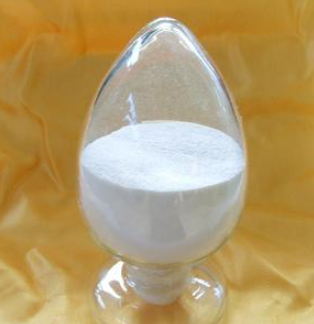
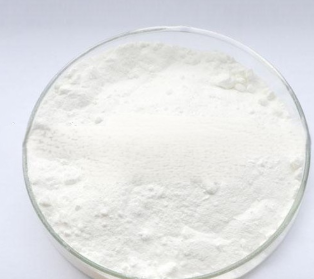
| form | white powder |
| color | White to Off-White |
| PH | 3.5-4.5 (20℃, 0.1M in H2O, freshly prepared) |
| biological source | rabbit |
| Water Solubility | Fully miscible in water. Insoluble in alcohol and ammonia. |
| λmax | λ: 260 nm Amax: 0.11 λ: 280 nm Amax: 0.09 |
| Merck | 13,8643 |
| Stability: | Stable. |
| Cosmetics Ingredients Functions | BUFFERING ANTICORROSIVE CHELATING |
| Cosmetic Ingredient Review (CIR) | Sodium pyrophosphate (7758-16-9) |
| InChI | InChI=1S/Na.H4O7P2.H/c;1-8(2,3)7-9(4,5)6;/h;(H2,1,2,3)(H2,4,5,6); |
| InChIKey | IQTFITJCETVNCI-UHFFFAOYSA-N |
| SMILES | O(P(O)(O)=O)P(O)(O)=O.[NaH] |
| LogP | -3.420 (est) |
| CAS DataBase Reference | 7758-16-9(CAS DataBase Reference) |
| EPA Substance Registry System | Disodium diphosphate (7758-16-9) |
| Safety Information |
| Hazard Codes | Xi |
| Risk Statements | 36 |
| Safety Statements | 24/25-26 |
| WGK Germany | 2 |
| RTECS | UX6475000 |
| TSCA | TSCA listed |
| Storage Class | 11 - Combustible Solids |
| Hazard Classifications | Eye Irrit. 2 |
| Hazardous Substances Data | 7758-16-9(Hazardous Substances Data) |
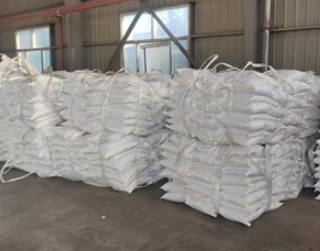
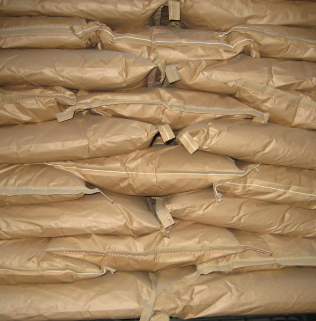
Fact Factory and Equipment Show