Cationic starch #CAS53540-93-5
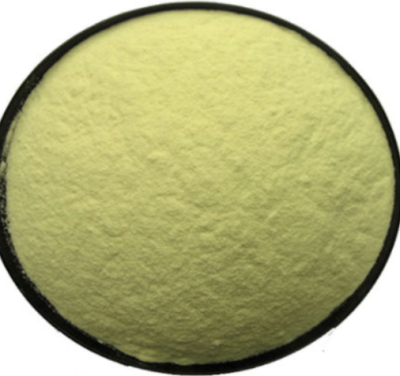
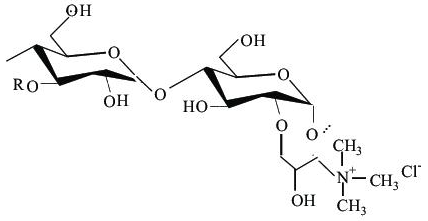
Cationic starch is a cationically modified starch derivative. It carries permanent positive charges on its molecular chain. It can swell and dissolve in hot water to form uniform, stable colloidal solution, and it is insoluble in ethanol, acetone and most common organic solvents. Its charge property enables it to adsorb and combine with negatively charged substances such as fibers, fillers and anionic impurities. It maintains good stability in neutral and weakly alkaline conditions. In strong acid environment or under long-term high-temperature heating, the starch molecular chain will break, leading to viscosity reduction and degradation. It is hygroscopic, so it is easy to absorb moisture in humid surroundings. It has good compatibility with many water-soluble additives. It will not react violently under normal storage and application conditions.
Applicaion of Cationic starch
Cationic starch is a biodegradable cationic modified natural polymer. It is widely used in many industrial sectors. In papermaking, it is the most common retention aid, drainage aid and dry strength agent. It neutralizes the negative charge of fine cellulose fibers, mineral fillers and anionic trash in pulp, promotes the aggregation of fine substances, improves the retention rate of fibers and fillers, reduces the turbidity of white water, reduces the loss of raw materials, speeds up the dewatering speed on the paper machine, improves the running speed of the machine. It also significantly improves the dry tensile strength, burst strength, folding endurance and surface smoothness of finished paper. It can be used for cultural paper, packaging paper, tissue paper and cardboard. It can also reduce the dosage of other chemical additives in the paper system. In water treatment, it works as an eco-friendly organic flocculant. It can neutralize negative charges on suspended solid particles, colloids and dye molecules, gather tiny particles into large and dense flocs for sedimentation. It is suitable for domestic sewage, textile printing and dyeing wastewater, papermaking wastewater, food processing wastewater and sludge dewatering. Compared with synthetic polymeric flocculants, it is easier to biodegrade and causes less secondary pollution. In textile industry, it is used as warp sizing agent. It forms a flexible, tough film on the surface of warp yarns, increases the yarn friction resistance and reduces end breakage during weaving. It is also used for pigment printing and fabric finishing, improving the adhesion of pigment to fabric, enhancing color fastness and soft hand feel. In mineral processing, it acts as selective flocculant. It can selectively flocculate target fine mineral particles while keeping gangue particles dispersed, so as to realize solid-liquid separation and mineral enrichment. It is also applied in adhesive, coating, latex and daily chemical formulations. It serves as thickener, binder and emulsion stabilizer to adjust system viscosity and improve dispersion stability. In the building material industry, it can be added into mortar and coating to improve water retention and construction performance. In the petroleum industry, it can be used as drilling fluid additive for fluid loss control.
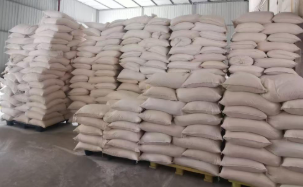
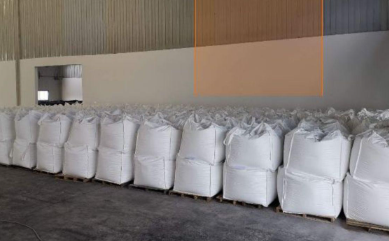
Fact Factory and Equipment Show