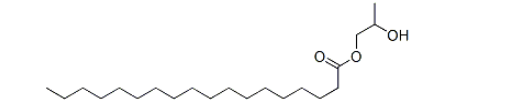
Propylene glycol monostearate (contains ca. 35% monopalmitate) #CAS1323-39-3
Propylene glycol monostearate (contains ca. 35% monopalmitate) #CAS1323-39-3
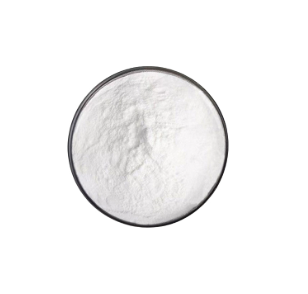
White solid; fatty aroma.As a food emulsifier, propylene glycol stearate ranks among the top six food emulsifiers globally—surpassed in usage internationally only by substances such as monoglycerides, sorbitan esters, and soybean phospholipids.
The direct esterification method involves esterifying propylene glycol with fatty acids in the presence of quicklime, potassium carbonate, and a catalyst; the mixture is then cooled, neutralized, and stripped of unreacted components, followed by cooling, solidification, and pulverization to obtain the final product. Alternatively, the transesterification method yields the product through the transesterification of propylene glycol with fats or oils.
Applicaion of Propylene glycol monostearate (contains ca. 35% monopalmitate)
In the personal care and cosmetics industry, propylene glycol stearate is used in the production of creams to enhance their lubricity, smooth texture, and stability, while also providing moisturizing benefits—for instance, in lipsticks. In the pharmaceutical industry, it is used in the formulation of emulsions, ointments, suppositories, and other medicinal preparations.
Propylene glycol stearate can function as a surfactant; in the personal care and cosmetics industry, it is used in the formulation of creams to enhance their lubricity, smooth texture, and stability, while also providing moisturizing benefits—for instance, in lipsticks.
Propylene glycol stearate appears as a milky-white solid at room temperature. It is insoluble or poorly dispersible in water and glycerol, but dissolves in solvents such as propylene glycol and isopropanol when heated. Its molecular structure is dominated by a hydrophobic component, which imparts water-in-oil (W/O) emulsification properties. It does not exhibit mesomorphism in water. The monoester exists in an $\alpha$-crystalline form; while it does not display polymorphism, it shows a distinct tendency toward the $\alpha$-crystalline state. Furthermore, it can stabilize the $\alpha$-crystalline form of other emulsifiers and possesses excellent aeration properties. These characteristics dictate its range of applications.
| Propylene glycol monostearate (contains ca. 35% monopalmitate) Chemical Properties |
| Melting point | 44 °C |
| Boiling point | 196°C 91mm |
| density | 0,88 g/cm3 |
| vapor pressure | 0Pa at 25℃ |
| refractive index | 1.5192 (estimate) |
| FEMA | 4208 | PROPYLENE GLYCOL MONO- AND DIESTERS OF FATTY ACIDS |
| Fp | 470 |
| storage temp. | Sealed in dry,Room Temperature |
| solubility | Chloroform (Slightly), Dichloromethane (Slightly), Methanol (Slightly, Heated) |
| form | powder to crystal |
| color | White to Almost white |
| Odor | at 100.00 %. fatty |
| Odor Type | fatty |
| Water Solubility | 6.205μg/L at 25℃ |
| FreezingPoint | 32.0 to 37.0 ℃ |
| JECFA Number | 926 |
| Hydrophilic-Lipophilic Balance (HLB) | 3.4 |
| Cosmetics Ingredients Functions | OPACIFYING SKIN CONDITIONING SURFACTANT - CLEANSING SURFACTANT - EMULSIFYING |
| LogP | 7.67 at 25℃ |
| EPA Substance Registry System | Octadecanoic acid, monoester with 1,2-propanediol (1323-39-3) |
| Safety Information |
| Safety Statements | 24/25 |
| RTECS | WI4550000 |
| TSCA | TSCA listed |
| HS Code | 2918.19.9000 |
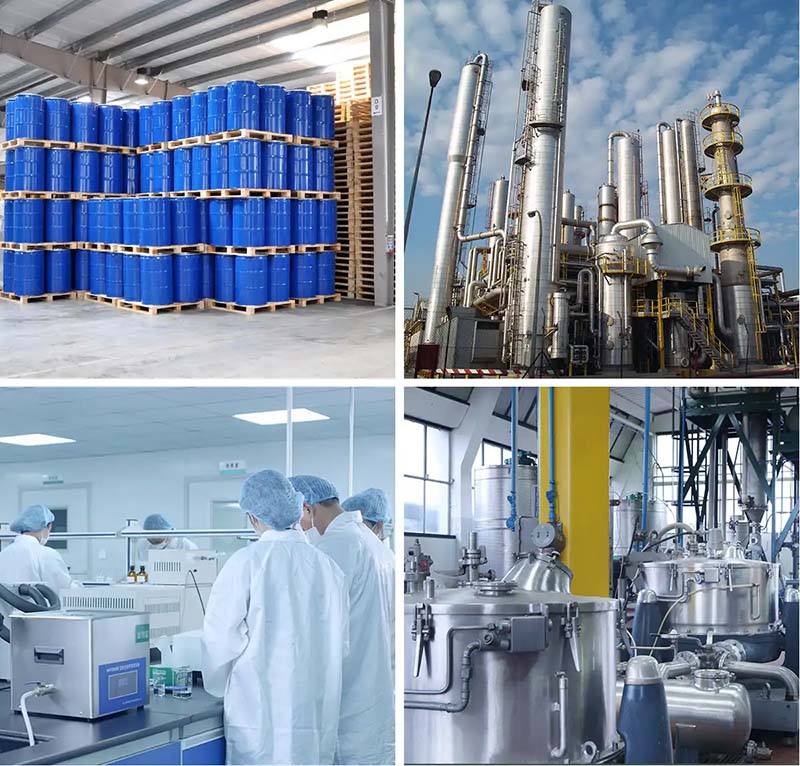
Fact Factory and Equipment Show