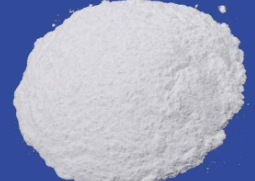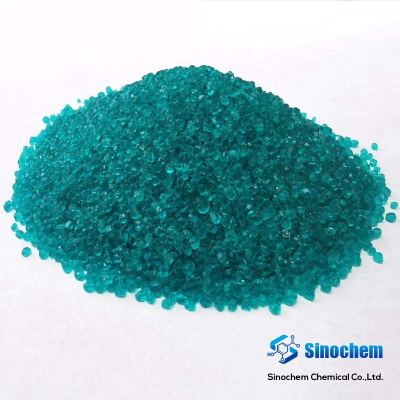
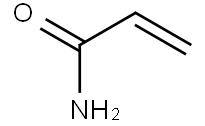
Polyacrylamide, also briefly referred as PAM, is commonly a polymer with acrylamide monomers bonded connected by end to end configuration; it is a hard glassy solid at room temperature. Because of the difference in production methods, the products can be white powder, translucent beads and flaky like. Its density is 1.302 g/cm3 (23 °C) with glass transition temperature being 153 °C and softening temperature being 210 °C. It has good thermal stability and is soluble in water; its aqueous solution is clear and transparent with its viscosity increasing with increased molecular weight of the polymer, and also having a logarithmic relationship with the change in concentration of the polymer. Except for a few solvent such as acetic acid, acrylic acid, ethylene glycol, glycerol and formamide, it is generally insoluble in organic solvents.Polyacrylamide is relatively stable to heat with its solid only being softened at 220~230 °C and its solution subjecting to significant degradation only at above 110 °C. Polyacrylamide is insoluble in benzene, toluene, xylene, gasoline, kerosene, diesel fuel, but soluble in water. Polyacrylamide can react with alkaline with partial hydrolysis of polyacrylamide. It will have imidization reaction in strongly acidic (pH≤2.5) which will reduce its solubility in water. It can be cross-linked by the poly-nuclear olation complex ion formed between aldehyde (such as formaldehyde) and high metal (such as aluminum, chromium, zirconium, etc.) and is easy to be degraded by the action of the mechanical and (or) oxygen. In oil exploitation, it is mainly used as oil displacement agent, water blocking agent, profile control agent, thickener, drag-reducing agent, water treatment agent.
Applicaion of Polyacrylamide
1. It is used as a flocculant in water treatment industry. Also used in petroleum geology drilling configuration for removing non-dispersing low solid phase mud.2. It can be used as setting agent in sugar industry settling agent (sugar co-agent); film formers.
3. It can be used as a soil conditioner, flocculants, and can be used in textile and paper sizing reinforcement.
4. It can be used at coal field, oil field and flocculant agents.
5. It can be used as efficient flocculants for neutral and alkaline medium, and can be used as drilling mud additives.
6. It can also be used as oilfield mud additives, sewage treatment agent, and for textile sizing, paper reinforcement.
7. PAM is an important water-soluble polymer, and also has various values effects such as flocculation, thickening, cleavage resistant, reducing resistance, and dispersing properties. These properties are biased according to the difference of the derivative ions. Therefore, it has wide application in various fields such as oil exploration, mineral processing, coal washing, metallurgy, chemicals, paper, textile, sugar, medicine, environmental protection, building materials, and agricultural production.
8. It can be used as the flocculant for water-based drilling fluid which can improve the rheological properties of the drilling fluid, reducing friction.
9. It is widely used in petrochemical, metallurgy, coal, mineral processing and textile and other industrial sectors, and is also used as precipitation flocculant, oil field water thickeners, drilling mud treatment agent, textile pulp, paper reinforcing agent, fiber modifier, soil conditioners soil stabilizing agent, fiber paste, resin finishing agents, synthetic resin coatings, adhesives, and dispersing agents.
Binding agent, dispersing aid, lubricant, drag reduction and crystal formation control.
Polyacrylamide is a polymer formed from acrylamide subunits. Polyacrylamide has been extensively used in applications such as polyacrylamide gel electrophoresis.
polyacrylamide is a binder, film former, and fixative with greater use in hair and nail than in skin care preparations. It is used in some hand and body lotions and cleansing creams.
| Polyacrylamide Chemical Properties |
| Melting point | >300 °C |
| density | 1.189 g/mL at 25 °C |
| Tg | 165°C |
| refractive index | n |
| Fp | >230 °F |
| storage temp. | 2-8°C |
| solubility | Water |
| pka | 3.2 |
| form | Granules |
| color | White to faintly yellow |
| Odor | odorless |
| Water Solubility | SOLUBLE |
| Stability: | Stable. Incompatible with strong oxidizing agents, aluminium, copper, iron, iron salts |
| Cosmetics Ingredients Functions | BINDING FILM FORMING ANTISTATIC |
| InChI | 1S/C3H5NO/c1-2-3(4)5/h2H,1H2,(H2,4,5) |
| InChIKey | HRPVXLWXLXDGHG-UHFFFAOYSA-N |
| SMILES | NC(=O)C=C |
| EPA Substance Registry System | Polyacrylamide (9003-05-8) |
| Safety Information |
| Hazard Codes | T |
| Risk Statements | 45-21/22-36/37/38-42/43 |
| Safety Statements | 24/25-45-36/37/39-23-53 |
| WGK Germany | 1 |
| RTECS | AS3700000 |
| TSCA | TSCA listed |
| HS Code | 39069010 |
| Storage Class | 11 - Combustible Solids |
| Hazardous Substances Data | 9003-05-8(Hazardous Substances Data) |
| Toxicity | LD50 oral in rabbit: 11250mg/kg |
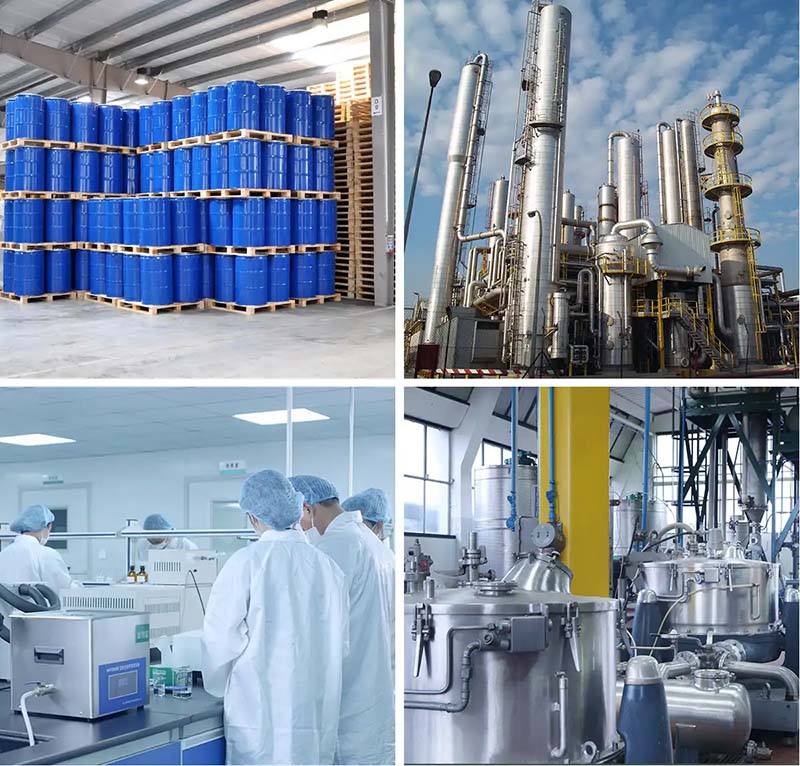
Fact Factory and Equipment Show