Potassium Phosphate Monobasic #CAS:7778-77-0
CAS Number:7778-77-0
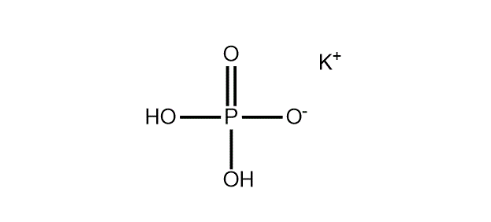
Chemical Formula:KH2PO4
Synonyms:
Potassium phosphate monobasic, anhydrousFCC, ≥ 98.0% (Assay, dried basis)
Potassium dihydrogen phosphate anhydrous 99.995 Suprapur
PHOSPHATE LOW NO 1
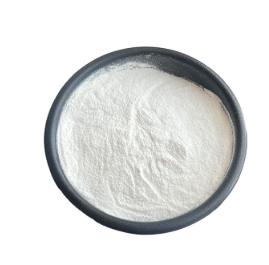
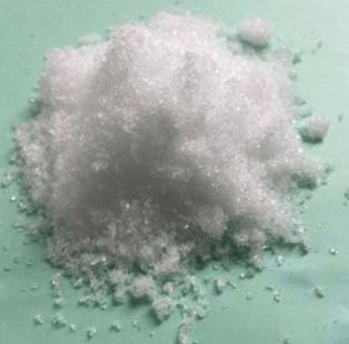
Appearance:White transparent
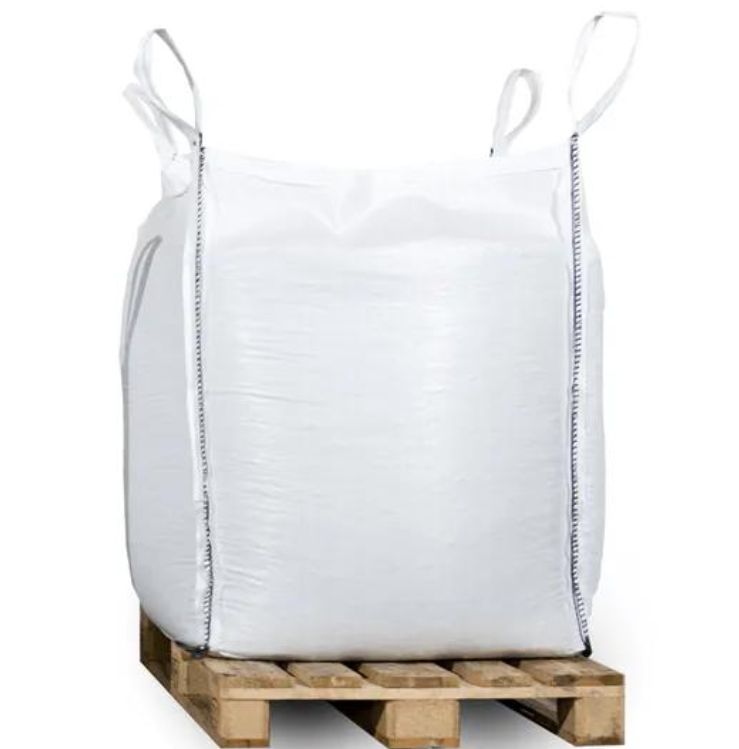
MOQ (Minimum Order Quantity): 1 FCL (Full Container Load)
Potassium Phosphate Monobasic #CAS:7778-77-0
Potassium dihydrogen phosphate is a kind of highly efficient and rapid dissolving phosphorus and potassium compound fertilizer containing, phosphorus and potassium, two elements for providing the necessary nutrients for plant growth and development, being applicable to any soil and crop, especially being applicable to the treatment of regions of simultaneous lack of phosphorus and potassium nutrients and phosphorus-preferred and potassium-preferred crops. It is mostly used for root top dressing, seed soaking, and seed dressing, being able to yield significant effect. If it sued for the roots fertilization, it can be used as basal fertilizer, seed fertilizer or moderate-late phase topdressing.
Its aqueous solution can react with silver nitrate, generating yellow phosphorus dihydrogen phosphate precipitation, being able to be used as a differential reaction.
As potassium dihydrogen phosphate is expensive, there is less agricultural production. Therefore, it is generally applied of the soaking or root top dressing for application. For crop soaking, the commonly used concentration is 0.2%. After dipping 18~20h, the field can be sown after drying. For root top dressing, if spraying alone, the highest concentration can be 0.5%. If within the range of jointing-booting stage of wheat and rice, we can spray for 1 or 2 times during the cotton, rape early flowering phase. Upon spraying 2 times, the interval can be about 7 to 10 days with the liquid usage amount per acre being about 100~150kg. It can also be combined with other nutrients to be formulated into compound nutrition for foliage top-dressing. For example, the leaf fertilizer used for field crops in North China has its main ingredient be exactly potassium dihydrogen phosphate, urea and the addition inclusion of some trace elements. In recent years, the use of blade complex nutrition also mostly adopts the potassium dihydrogen phosphate as a high concentration and excellent hydrophilic phosphate and potassium fertilizer source. With the development of facilities of horticultural crops and drip irrigation, fertilizer irrigation, the increasing daily demand for potassium dihydrogen phosphate is also increasing.
Application of Potassium Phosphate Monobasic
As feed phosphorus additives; In the food industry, it is used for the manufacture of baked goods, for leavening agent, flavoring agent, fermentation additives, nutritional fortifiers, yeast food. Also used as a buffer, chelating agent.It can be used as fertilizer, flavoring agent and the culture agent of brewing yeast; used for the preparation of buffer solution, also used in medicine and manufacturing of potassium metaphosphate.
It can be used for the fertilization of rice, wheat, cotton, rape, tobacco, sugar cane, apple and other crops.
It can be used as chromatography reagents and buffer, but also for the synthesis of medicine.
As a highly efficient fertilizer, it is suitable for all kinds of soil and crops. It can also used as a bacterial culture agent, the flavoring agent for the synthesis of sake and the raw material for making potassium metaphosphate. In medicine, it is used for the uric acidification as a nutritional agent.
Used as feed nutritional supplements;As a quality improver, it has effects of improving the complexation metal ions and pH value, increasing the ionic strength of food, and thus improving the adhesion and water holding capacity of food. China provides that it can be used for wheat flour with the maximum usage amount of 5.0g/kg and 2.0 g/kg in the beverage.
| Potassium Phosphate Monobasic Chemical Properties |
| Melting point | 252.6 °C (lit.) |
| Boiling point | > 450 °C |
| bulk density | 1200kg/m3 |
| density | 2.338 g/mL at 25 °C (lit.) |
| vapor pressure | 0Pa at 25℃ |
| refractive index | 1.4864 |
| storage temp. | Store at +5°C to +30°C. |
| solubility | H2O: 1.5 M at 20 °C, clear, colorless |
| form | powder |
| color | White transparent |
| Specific Gravity | 2.338 |
| Odor | Odorless |
| PH | 4.2-4.6 (20g/l, H2O, 20℃) |
| pka | (1) 2.15, (2) 6.82, (3) 12.38 (at 25℃) |
| biological source | rabbit |
| Water Solubility | 222 g/L (20 ºC) |
| Specific Heat Capacity | Cp(crystal): 0.85 J/(g·K), at 25℃ |
| Sensitive | Hygroscopic |
| λmax | λ: 260 nm Amax: 0.046 λ: 280 nm Amax: 0.040 |
| Decomposition | 253 °C |
| Merck | 14,7659 |
| Specific Activity | 25-33nmol/min·mg |
| Stability: | Hygroscopic |
| Cosmetics Ingredients Functions | BUFFERING |
| InChI | 1S/K.H3O4P/c;1-5(2,3)4/h;(H3,1,2,3,4)/q+1;/p-1 |
| InChIKey | GNSKLFRGEWLPPA-UHFFFAOYSA-M |
| SMILES | [K+].OP(O)([O-])=O |
| CAS DataBase Reference | 7778-77-0(CAS DataBase Reference) |
| EPA Substance Registry System | Monopotassium phosphate (7778-77-0) |
| Absorption | ≤0.01 at 260nm ≤0.01 at 280nm |
| Safety Information |
| Hazard Codes | |
| WGK Germany | WGK 1 |
| RTECS | TC6615500 |
| TSCA | TSCA listed |
| HS Code | 2835240000 |
| Storage Class | 11 - Combustible Solids |
| Hazardous Substances Data | 7778-77-0(Hazardous Substances Data) |
| Toxicity | LD50 skin in rabbit: > 4640mg/kg |
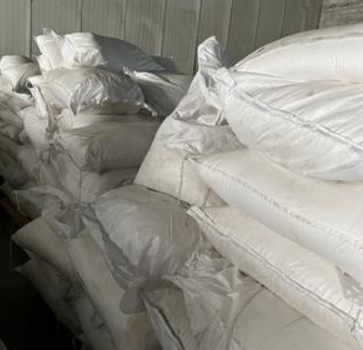
Fact Factory and Equipment Show