Plastic Antioxidant #CAS6683-19-8
CAS Number:6683-19-8
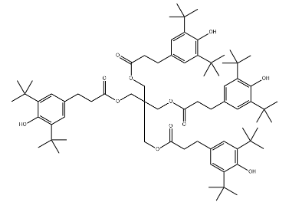
Chemical Formula:C73H108O12
Synonyms:
Anti‑oxidant
Age retarder
Stabiliser against oxidation
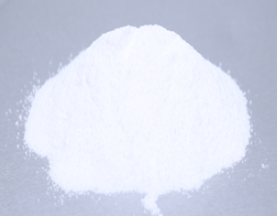
Appearance:White to Off-White
MOQ (Minimum Order Quantity): 1 FCL (Full Container Load)
Plastic Antioxidant #CAS6683-19-8
Plastic antioxidants are generally stable under normal temperature and dry conditions. Most common hindered phenolic and phosphite types are insoluble in water, soluble in organic solvents such as ethanol, acetone and toluene. They have the ability to capture free radicals and decompose hydroperoxides, inhibiting the chain reaction of thermal‑oxidative degradation of polymer molecules during processing and long‑term service. They are sensitive to strong oxidants, strong acids and high heat. Under sustained high‑temperature conditions beyond their tolerance range, they will decompose and lose their anti‑oxidation activity. Many grades are prone to discolouration after long‑term exposure to strong light. They show good compatibility with most plastic resins, plasticisers, heat stabilisers and fillers. They are non‑flammable and non‑explosive. They should be stored in a cool, dry and dark place, away from strong oxidising substances and acidic materials.
Application of Plastic Antioxidant
Plastic antioxidant serves as a vital stabilising additive for polymer materials, widely deployed across polyolefin, PVC, ABS, polyester, polyamide and other plastic systems. Its fundamental function is to trap reactive free radicals and decompose hydroperoxides formed under thermal and oxidative conditions, interrupting the self‑propagating chain reaction that breaks down polymer molecular structures. During high‑temperature plastic processing such as extrusion, injection moulding, blow moulding, calendering and pelletising, it counteracts the thermal oxidation triggered by heating and mechanical shearing, avoiding premature yellowing, surface chalking and loss of mechanical properties before the finished product is formed. For end‑use articles, it continuously suppresses the slow degradation of plastic chains caused by oxygen and heat over years of service, maintaining stable tensile strength, impact toughness, elongation and surface gloss, and delaying brittleness, cracking and dimensional change. Different types of antioxidants follow distinct protection mechanisms: primary hindered phenolic antioxidants scavenge carbon‑centred and peroxy radicals, while secondary phosphite antioxidants decompose unstable hydroperoxides, and the compound formula of these two types delivers prominent synergistic anti‑ageing performance. It is extensively adopted for plastic pipes, geomembranes, packaging films, injection moulded household goods, automotive plastic components, wire and cable insulation layers, blow‑moulded tanks and recycled plastic compounds. It has excellent compatibility with plastic resins, plasticisers, lubricants, light stabilisers, fillers and pigments. It can be selected according to the processing temperature, long‑term thermal stability requirement and intended service environment. It should be noted that ordinary industrial grades cannot be used for food‑contact, medical or drinking‑water applications; special food‑approved grades must be chosen if such contact is required.
| Antioxidant 1010 Chemical Properties |
| Melting point | 115-118 °C (dec.)(lit.) |
| Boiling point | 779.1°C (rough estimate) |
| density | 0.9594 (rough estimate) |
| refractive index | 1.6390 (estimate) |
| storage temp. | 2-8°C |
| solubility | Chloroform (Slightly), Ethyl Acetate (Slightly) |
| pka | 11.71±0.40(Predicted) |
| form | Solid |
| color | White to Off-White |
| Cosmetics Ingredients Functions | ANTIOXIDANT |
| InChIKey | BGYHLZZASRKEJE-UHFFFAOYSA-N |
| LogP | 18.832 (est) |
| CAS DataBase Reference | 6683-19-8(CAS DataBase Reference) |
| EPA Substance Registry System | Pentaerithritol tetrakis[3,5-di-tert-butyl-4-hydroxyhydrocinnamate] (6683-19-8) |
| Safety Information |
| Safety Statements | 22-24/25 |
| WGK Germany | - |
| RTECS | DA8340900 |
| TSCA | TSCA listed |
| HS Code | 29182900 |
| Storage Class | 11 - Combustible Solids |
| Toxicity | LD50 unreported in mammal (species unspecified): 10gm/kg |
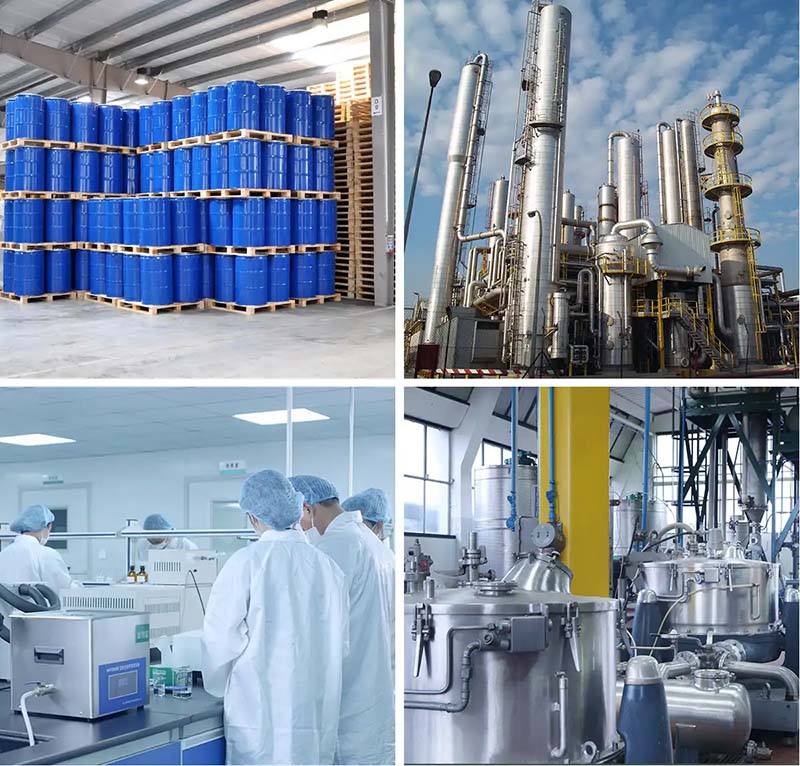
Fact Factory and Equipment Show