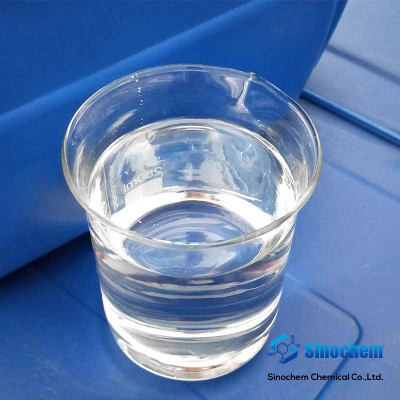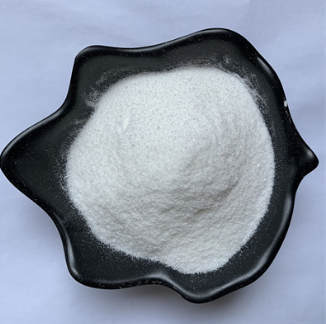
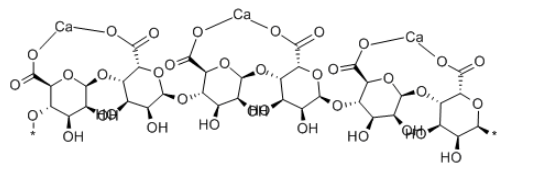
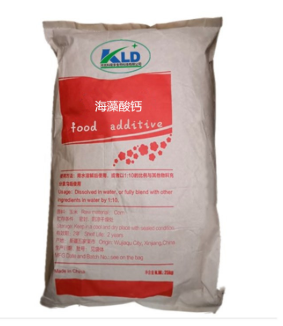
Calcium Alginate #CAS9005-35-0
Calcium Alginate is the calcium salt of alginic acid, a natural polyuronide constituent of certain brown algae. Calcium alginate is prepared by the neutralization of purified alginic acid with appropriate pH control agents, or from sodium alginate by metathesis with appropriate calcium salts.
Alginate, a colloidal polyuronic acid structural molecule capable of gelation, is used in the preparation of colloidal biodegradable structures such as gels, biofilms, beads, nanoparticles, and microcapsules suitable for applications that range from gel based separation technologies to drug delivery and cell preservation.
Calcium alginate has been around for years. More recently, it has been added to wound gels, hydrocolloids, and cleansers. Silver, a known antimicrobial agent, also has been added to many wound products, including calcium alginate. Unadulterated calcium alginate comes in the form of a flat square or mat (in many sizes) or a rope. The ropes can be manipulated to fit easily in wound cavities. Although one of its stated uses is to provide homeostasis, calcium alginate is more commonly thought of as the dressing that can absorb 20 times its weight in exudate, soak up loose debris from the wound bed, provide an optimal environment for healing, and provide a painless dressing change. This study is a reminder that calcium alginate is a valuable tool in our wound care arsenal.
Applicaion of Calcium Alginate
Alginate is used in many applications and new ones are being found all the time. The uses range from applications in the food industry to wound dressings, medicines and dental impression materials.
In pharmaceutical formulations, calcium alginate and calciumsodium alginate have been used as tablet disintegrants. The use of a high concentration (10%) of calcium-sodium alginate has been reported to cause slight speckling of tablets.
A range of different types of delivery systems intended for oral administration have been investigated. These exploit the gelling properties of calcium alginate. Calcium alginate beads have been used to prepare floating dosage systems containing amoxicillin, furosemide, meloxicam, and barium sulfate,(10) and as a means of providing a sustained or controlled-release action for sulindac, diclofenac, tiaramide, insulin, and ampicillin. The effect of citric acid in prolonging the gastric retention of calcium alginate floating dosage forms has been reported. Impregnating meloxicam in calcium alginate beads may reduce the risk of ulceration and mucosal inflammation following oral adminstration. The use of calcium alginate beads, reinforced with chitosan, has been shown to slow the release of verapamil, and may be useful for the controlled release of protein drugs to the gastrointestinal tract. The bioadhesive properties, swelling and drug release of calcium alginate beads have also been investigated.
A series of studies investigating the production, formulation,) and drug release from calcium alginate matrices for oral administration have been published. The release of diltiazem hydrochloride from a polyvinyl alcohol matrix was shown to be controlled by coating with a calcium alginate membrane; the drug release profile could be modified by increasing the coating thickness of the calcium alginate layer. The microencapsulation of live attenuated Bacillus Calmette–Guerin (BCG) cells within a calcium alginate matrix has also been reported.
It has been shown that a modified drug release can be obtained from calcium alginate microcapsules, pellets, and microspheres. When biodegradable bone implants composed of calcium alginate spheres and containing gentamicin were introduced into the femur of rats, effective drug levels in bone and soft tissue were obtained for 30 days and 7 days, respectively. The incorporation of radioactive particles into calcium alginate gels may be useful for the localized delivery of radiation therapy to a wide range of organs and tissues.
Therapeutically, the gelling properties of calcium alginate are utilized in wound dressings in the treatment of leg ulcers, pressure sores, and other exuding wounds. These dressings are highly absorbent and are suitable for moderately or heavily exuding wounds. Calcium alginate dressings also have hemostatic properties, with calcium ions being exchanged for sodium ions in the blood; this stimulates both platelet activation and whole blood coagulation. A mixed calcium–sodium salt of alginic acid is used as fibers in dressings or wound packing material.
Sterile powder consisting of a mixture of calcium and sodium alginates has been used in place of talc in glove powders.
In foods, calcium alginate is used as an emulsifier, thickener, and stabilizer.
| Calcium Alginate Chemical Properties |
| density | 2.1173 g/cm3 |
| FEMA | 2015 | ALGINATES, SODIUM, CALCIUM, AND AMMONIUM |
| storage temp. | room temp |
| solubility | Practically insoluble in chloroform, ethanol, ether, water, and other organic solvents. Soluble in dilute solutions of sodium citrate and of sodium bicarbonate and in sodium chloride solution. Soluble in alkaline solutions or in solutions of substances that combine with calcium. |
| form | powder |
| Specific Gravity | 1.6 |
| color | White to Gray to Brown |
| Odor | odorless |
| biological source | algae (brown) |
| Merck | 14,242 |
| Cosmetics Ingredients Functions | FRAGRANCE VISCOSITY CONTROLLING |
| Cosmetic Ingredient Review (CIR) | Calcium Alginate (9005-35-0) |
| InChIKey | OKHHGHGGPDJQHR-YMOPUZKJSA-L |
| SMILES | [Ca+2].[O-]C(=O)[C@@H]1O[C@H]([C@H]([C@H]([C@@H]1O[C@@H]2O[C@H]([C@H]([C@@H]([C@@H]2O)O)O[C@@H]3O[C@@H]([C@H]([C@@H]([C@@H]3O)O)O)C(=O)[O-])C(=O)O)O)O)O |
| LogP | -1.53 |
| CAS DataBase Reference | 9005-35-0 |
| EPA Substance Registry System | Calcium alginate (9005-35-0) |
| Safety Information |
| Safety Statements | 24/25 |
| WGK Germany | 3 |
| RTECS | AZ5820000 |
| F | 3 |
| TSCA | TSCA listed |
| HS Code | 3913100000 |
| Storage Class | 11 - Combustible Solids |
| Hazardous Substances Data | 9005-35-0(Hazardous Substances Data) |
Fact Factory and Equipment Show