
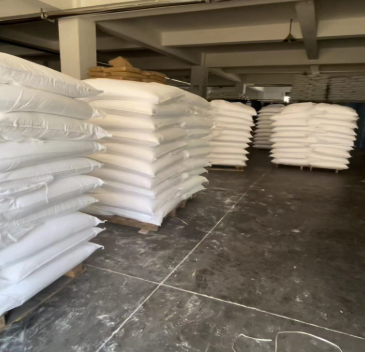
Dicalcium Phosphate #CAS:7757-93-9
CAS Number:7757-93-9
Chemical Formula:CaHO4P
Synonyms:
calciumdibasicphosphate
ammonified,granular
CALCIUM MONOHYDROGEN PHOSPHATE
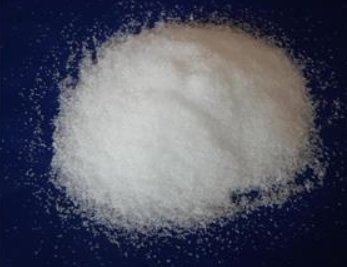
Appearance:White
MOQ (Minimum Order Quantity): 1 FCL (Full Container Load)
Dicalcium Phosphate #CAS:7757-93-9
Dibasic Calcium Phosphate is anhydrous or contains two molecules of water of hydration. It occurs as a white, odorless, tasteless powder that is stable in air. It is practically insoluble in water, but is readily soluble in dilute hydrochloric and nitric acids. It is insoluble in alcohol.
Dibasic calcium phosphate is produced by the reaction of phosphoric acid, calcium chloride, and sodium hydroxide. Calcium carbonate can be used in place of the calcium chloride and sodium hydroxide.Dibasic calcium phosphate anhydrous is generally regarded as relatively nontoxic and nonirritant material. It is widely used in oral pharmaceutical products and food products.
Functional Use in Foods: Leavening agent; dough conditioner; nutrient; dietary supplement; yeast food.
Calcium hydrogen phosphate—also known as calcium hydrogen phosphate dihydrate—has the chemical formula CaHPO4 (or CaHPO4·2H2O for the dihydrate form), a CAS number of 7789-77-7, and a molecular weight of 172.09. It appears as a white crystalline powder (or white monoclinic crystalline powder), is odorless and tasteless, has a density of 2.31 g/cm³, and a boiling point of 158°C. The melting point is 109°C for the dihydrate form and 190°C for the monoclinic form
This compound is slightly soluble in water, insoluble in ethanol, readily soluble in dilute hydrochloric acid, dilute nitric acid, and acetic acid, and dissolves slowly in glycerol . Regarding stability, the dihydrate form is stable below 36°C, while the anhydrous form is stable above 36°C. It gradually loses its water of crystallization above 100°C and converts into calcium pyrophosphate at 400–430°C. It is primarily used as a food additive and a pharmaceutical excipient (e.g., as a diluent or adsorbent), and it can influence the stability, absorption, and metabolic processes of pharmaceutical preparations. Methods of preparation include the acid hydrolysis and neutralization of animal bones, or the neutralization of phosphoric acid with milk of lime. It is classified with the hazard code "Xi" and carries the risk phrases R36/37/38 (indicating it is irritating to the eyes, respiratory system, and skin).
Application of Dicalcium Phosphate
Dibasic calcium phosphate is found in nature as the mineral monetite. It is used as a food supplement and source of calcium, both in human food and animal feed. It is used in dough conditioner; in several dental products and in medicine. Other applications are in fertilizers, plastics and in the manufacture of glass.
In food products, dicalcium phosphate primarily serves as a leavening agent, anti-caking agent, and nutritional fortifier. In baked goods—such as bread and cakes—it reacts with sodium bicarbonate to produce carbon dioxide, which helps the dough rise. In powdered food products like milk powder and seasonings, it acts as an anti-caking agent. It is also added to cereals and beverages to provide supplemental calcium and phosphorus, in compliance with national standards for food additives. Furthermore, it is an essential nutritional component in infant formula, supplying the calcium and phosphorus necessary to support the development of bones and teeth.
In the pharmaceutical industry, dicalcium phosphate is primarily used as a tablet filler and as a calcium supplement. Its stability and flow properties make it well-suited for tablet compression; it can also be formulated into calcium tablets or oral solutions. These products are intended for children, pregnant women, and the elderly, serving to prevent or treat conditions such as osteoporosis, rickets, and disorders related to abnormal phosphorus metabolism. It is often used in combination with vitamin D to enhance calcium absorption; however, excessive intake may lead to constipation or interfere with the absorption of iron and zinc.
In toothpaste, dicalcium phosphate serves as an abrasive agent; its fine particles physically remove dental plaque without damaging tooth enamel. Due to its high safety profile, it is widely used in formulations for both adult and children’s toothpaste.
Dicalcium phosphate is an important mineral feed additive. Rich in calcium and phosphorus, it helps maintain an appropriate calcium-to-phosphorus ratio in animal feed (typically 1–2:1), thereby promoting skeletal growth and nutrient absorption in animals. Additionally, it is used in the production of fertilizers, ceramics, and various industrial goods.
| Calcium phosphate dibasic Chemical Properties |
| Melting point | 370°C(decomposition) |
| density | 2.306(16℃) |
| RTECS | TB8528000 |
| storage temp. | 2-8°C |
| solubility | Practically insoluble in water and in ethanol (96 per cent). It dissolves in dilute hydrochloric acid and in dilute nitric acid. |
| form | gel (aged) |
| color | White |
| PH | 7 (10g/l, H2O, 20°C) suspension |
| Water Solubility | Sparingly soluble in water, practically insoluble in cold water. |
| Merck | 13,1697 |
| Solubility Product Constant (Ksp) | pKsp: 7 |
| Stability: | Stable. Incompatible with strong oxidizing agents. |
| Major Application | pharmaceutical (small molecule) |
| Cosmetics Ingredients Functions | OPACIFYING ORAL CARE BULKING ABRASIVE |
| Cosmetic Ingredient Review (CIR) | Calcium phosphate dibasic (7757-93-9) |
| InChI | 1S/Ca.H3O4P/c;1-5(2,3)4/h;(H3,1,2,3,4)/q+2;/p-2 |
| InChIKey | FUFJGUQYACFECW-UHFFFAOYSA-L |
| SMILES | [Ca++].OP([O-])([O-])=O |
| LogP | -2.148 (est) |
| CAS DataBase Reference | 7757-93-9(CAS DataBase Reference) |
| EPA Substance Registry System | Calcium hydrogen phosphate (7757-93-9) |
| Safety Information |
| Hazard Codes | Xi |
| Risk Statements | 36/37/38 |
| Safety Statements | 26-36-24/25-22 |
| WGK Germany | 3 |
| TSCA | TSCA listed |
| HS Code | 2835 25 00 |
| Storage Class | 11 - Combustible Solids |
| Hazardous Substances Data | 7757-93-9(Hazardous Substances Data) |
| Toxicity | LD50 orally in Rabbit: 10000 mg/kg LD50 dermal Rabbit > 7940 mg/kg |
Fact Factory and Equipment Show