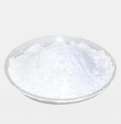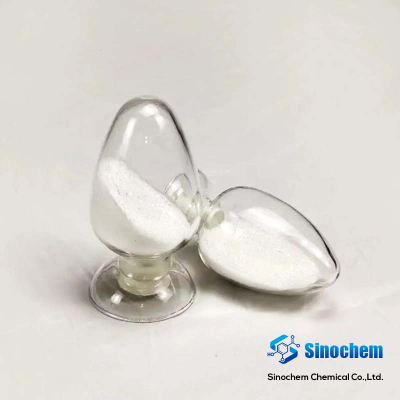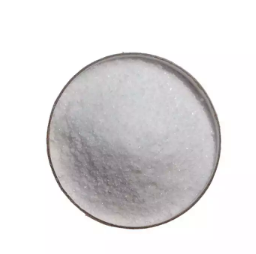
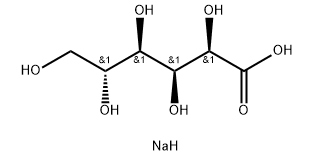
Sodium gluconate #CAS527-07-1
CAS Number:527-07-1
Chemical Formula:C6H13NaO7
Synonyms:
Developer,partB;SODIUM GLUCONATE REAGENT;SODIUM GLUCONATE pure;
D-Gluconate sodium salt, D-Gluconic acid sodium salt;2,3,4,5,6-Pentahydroxycaproic acid sodium salt, D-Gluconate sodium salt, Sodium D-gluconate;
2,3,4,5,6-Pentahydroxycaproic acid sodium salt, D-Gluconate sodium salt, D-Gluconic acid sodium salt, Sodium D-gluconate;glonsen;GLUCONIC ACID SODIUM SALTAppearance: White to light beige Crystalline Powder
MOQ (Minimum Order Quantity): 1 FCL (Full Container Load)
Sodium gluconate #CAS527-07-1
Sodium gluconate is the organic sodium salt of gluconic acid. Sodium gluconate is a chelator that forms stable complexes with various ions and ultimately prevents these ions from engaging in chemical reactions. Gluconates are naturally occurring substances that freely dissociate to the gluconate anion and its respective cations. Being fully biodegradable and non-toxic, it represents an environment friendly alternative to the common chelating agents used in cosmetics such as EDTA. In addition to this, sodium gluconate has a low acute toxicity to aquatic organisms.
It appears as white or light yellow crystalline powder, readily soluble in water, sparingly soluble in ethanol and insoluble in ether. It features mild chemical stability under normal temperature and neutral to weakly alkaline conditions, and will not easily decompose. Its powerful chelating capacity covers calcium, magnesium, iron, aluminum and other polyvalent metal ions. This characteristic enables it to inhibit the negative impacts of metal ions including discoloration, turbidity, precipitation and oxidation deterioration in different formulations.
This product enjoys wide application scenarios. In the cosmetic and personal care industry, it is adopted as a green chelating agent to stabilize shampoo, body wash, cream and lotion systems, maintain stable pH and extend shelf life. In construction, it serves as a high-efficiency concrete retarder and water reducer, adjusting the hydration rate of cement, prolonging setting time and improving the workability of concrete. In food processing, it acts as a food additive for metal ion control and quality stabilization. It is also extensively used in industrial cleaning, textile printing and dyeing, water treatment and electroplating processes, where it softens water, removes scale and avoids adverse effects caused by hard metal ions. With outstanding environmental compatibility, sodium gluconate has become a preferred eco-friendly chelating agent replacing traditional chelators in many low-toxic and green production systems.
Applicaion of Sodium gluconate
Sodium gluconate is used as a natural preservative. It prevents the growth of microbes in our products to keep them safe for our consumers. It also works as a skin-conditioning agent and a chelating agent which helps cleansing products to foam better in hard water. You can often find sodium gluconate in soap, sunscreen, shampoo, toothpaste, hair products, makeup, and a variety of other personal care products.
Sodium gluconate has been used as a component of recording buffer used in two-electrode voltage-clamp (TEVC) recording in Xenopus laevis oocytes. It has also been used as a control for sodium.
Research indicated that the addition of sodium gluconate significantly inhibited the reaction of geopolymers paste setting time of the geopolymer. An increase in sodium gluconate dosage from 0% to 3% significantly delays the initial setting time of geopolymer pastes from 31 min to 183 min. Microstructural analyses demonstrate that sodium gluconate interferes with the dissolution of precursor materials and the growth of the hydration gel in geopolymer, leading to an inhibitory effect on the early hardening process.
Beyond these applications, sodium gluconate is widely recognized in the construction industry as a high-performance retarder and water-reducing admixture for ordinary Portland cement concrete. It can slow down cement hydration reactions effectively, extend the available working time of fresh concrete, improve slump retention, reduce heat release during early hydration, and enhance the flowability and pumpability of concrete mixtures, which is highly valuable for large-volume concrete casting, hot-weather construction and ready-mix concrete production. In industrial cleaning and water treatment, its strong chelating ability toward calcium, magnesium, iron and other metal ions makes it suitable for scale removal, boiler cleaning and water softening; it suppresses scale deposition on pipeline and equipment surfaces without generating harmful by‑products. In the food and beverage industry, it functions as a quality stabilizer and acidity regulator, controlling metal ion-induced discoloration and turbidity in canned foods, dairy products and beverages.
It is also applied in textile printing and dyeing to sequester metal impurities in dye baths, avoiding colour variation and precipitation of dyestuffs. In electroplating processes, it acts as a complexing agent to stabilize plating solutions and promote uniform metal deposition. Compared with conventional chelating agents such as EDTA, sodium gluconate features low toxicity and excellent biodegradability, making it a sustainable option for formulations that require low environmental impact.
| Sodium gluconate Chemical Properties |
| Melting point | 170-175 °C |
| alpha | [α]D20 +11~+13° (c=10, H2O) |
| FEMA | 4934 | Sodium Gluconate |
| storage temp. | Store below +30°C. |
| solubility | H2O: 0.1 g/mL, clear |
| form | Crystalline Powder |
| color | White to light beige |
| Odor | wh. to ylsh. cryst. powd., pleasant odor |
| PH | 7.0-8.0 (100g/l, H2O, 20℃) |
| biological source | microbial |
| Water Solubility | Very soluble in water; sparingly soluble in alcohol; insoluble in ether. |
| Merck | 14,4456 |
| BRN | 3919651 |
| Stability: | Stable. Incompatible with strong oxidizing agents. |
| Major Application | agriculture |
| Cosmetics Ingredients Functions | SKIN CONDITIONING CHELATING |
| InChI | InChI=1/C6H12O7.Na.H/c7-1-2(8)3(9)4(10)5(11)6(12)13;;/h2-5,7-11H,1H2,(H,12,13);;/t2-,3-,4+,5-;;/s3 |
| InChIKey | MPPJUDJABRMYJR-QZHCVFHNNA-N |
| SMILES | [C@@H](O)([C@@H](O)C(=O)O)[C@H](O)[C@H](O)CO.[NaH] |&1:0,2,7,9,r| |
| LogP | -3.175 (est) |
| CAS DataBase Reference | 527-07-1(CAS DataBase Reference) |
| EPA Substance Registry System | Sodium gluconate (527-07-1) |
| Safety Information |
| Safety Statements | 24/25 |
| WGK Germany | 1 |
| RTECS | LZ5235000 |
| Autoignition Temperature | >200 °C |
| TSCA | TSCA listed |
| HS Code | 2918160000 |
| Storage Class | 11 - Combustible Solids |
| Toxicity | LD50 orally in Rabbit: > 2000 mg/kg |
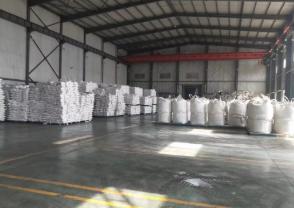
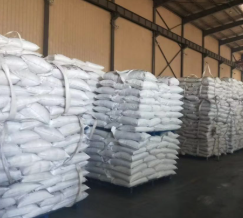
Fact Factory and Equipment Show