
Aluminum oxide #CAS1302-74-5
Activated alumina is a porous high-surface-area solid material mainly composed of γ‑alumina. It is insoluble in water and organic solvents, and shows amphoteric properties, reacting slowly with strong acids and strong alkalis. It has stable chemical performance under neutral and weak alkaline conditions. Its porous framework gives it strong physical adsorption capacity for moisture, fluoride, arsenic and certain gaseous impurities. It will not decompose at ordinary temperature, and can withstand moderate heating. However, long-term immersion in strong acid or strong alkali solution will gradually destroy its pore structure and reduce adsorption capacity. It is non-flammable and non-explosive, and does not release toxic substances under normal service conditions. After saturation of adsorption, it can be regenerated by desorption treatment to restore part of its adsorption performance.
Applicaion of Aluminum oxide
Alumina is the most widely used oxide,chiefly because it is plentiful, relatively lowin cost, and equal to or better than most oxidesin mechanical properties. Density can be variedover a wide range, as can purity — downto about 90% alumina — to meet specificapplication requirements. Alumina ceramicsare the hardest, strongest, and stiffest of theoxides. They are also outstanding in electricalresistivity, dielectric strength, are resistant toa wide variety of chemicals, and are unaffectedby air, water vapor, and sulfurous atmospheres.However, with a melting point ofonly 2039°C, they are relatively low in refractoriness,and at 1371°C retain only about 10%of room-temperature strength. In addition toits wide use as electrical insulators and itschemical and aerospace applications, the highhardness and close dimensional tolerancecapability of alumina make this ceramic suitablefor such abrasion-resistant parts as textileguides, pump plungers, chute linings, dischargeorifices, dies, and bearings.
The oxide of aluminum is Al2O3. The naturalcrystalline mineral is called corundum, but thesynthetic crystals used for abrasives are designatedusually as aluminum oxide or marketedunder trade names. For other uses and as a powder it is generally called alumina. It iswidely distributed in nature in combinationwith silica and other minerals, and is an importantconstituent of the clays for making porcelain,bricks, pottery, and refractories.
The crushed and graded crystals of aluminawhen pure are nearly colorless, but the finepowder is white. Off colors are due to impurities.American aluminum oxide used for abrasivesis at least 99.5% pure, in nearly colorlesscrystals melting at 2050°C. The chief uses foralumina are for the production of aluminummetal and for abrasives, but it is also used forceramics, refractories, pigments, catalyst carriers,and in chemicals.
| Aluminum oxide Chemical Properties |
| Melting point | 2040 °C(lit.) |
| Boiling point | 2980℃ [CRC10] |
| density | 1.06 g/mL at 25 °C |
| bulk density | 500-900kg/m3 |
| refractive index | 1.771 |
| storage temp. | no temp limit |
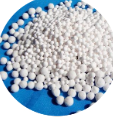
| form | powder |
| color | White |
| PH | 8.5-10.5 (20°C, 100g/L in H2O, slurry) |
| Water Solubility | insoluble H2O; very slightly soluble acids, alkalies [HAW93] |
| Dielectric constant | 4.5(Ambient) |
| InChI | 1S/2Al.3O |
| InChIKey | TWNQGVIAIRXVLR-UHFFFAOYSA-N |
| SMILES | [Al]21O[Al](O2)O1 |
| CAS DataBase Reference | 1302-74-5(CAS DataBase Reference) |
| EPA Substance Registry System | Corundum (Al2O3) (1302-74-5) |
| Safety Information |
| Hazard Codes | Xi |
| Risk Statements | 36/37/38 |
| Safety Statements | 26 |
| RIDADR | UN1993 |
| WGK Germany | - |
| RTECS | BD1200000 |
| F | 3 |
| TSCA | Yes |
| HazardClass | 3 |
| PackingGroup | II |
| Storage Class | 13 - Non Combustible Solids |
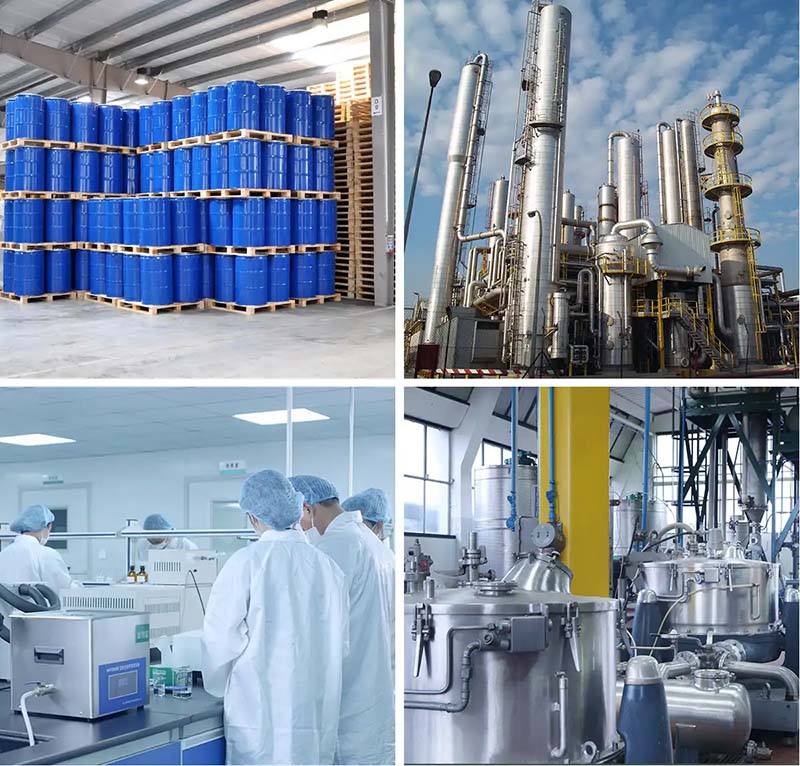
Fact Factory and Equipment Show