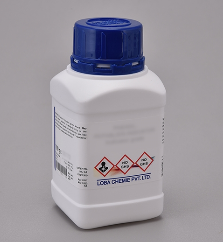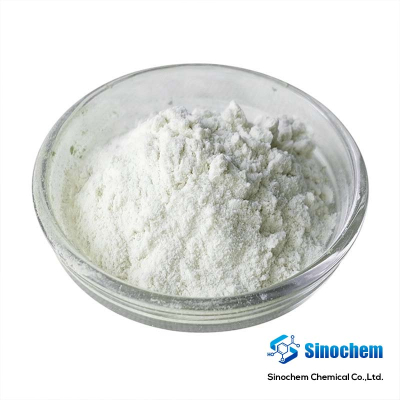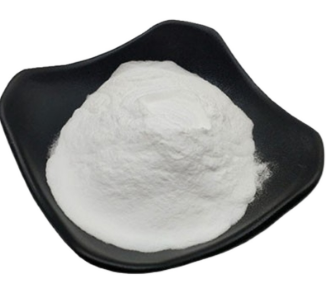
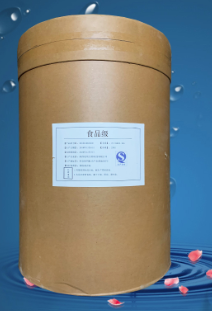
Microcrystalline cellulose#CAS9004-34-6
CAS Number:9004-34-6
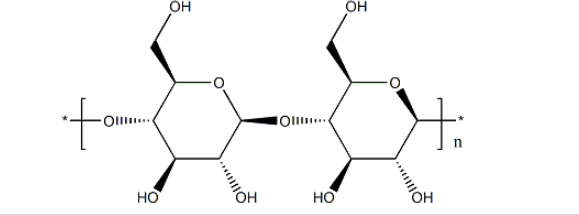
Chemical Formula:(C12H20O10)n
Synonyms:
AVICEL PH 101(R)
HYCIL 102 MICROCRYSTALLINE CELLULOSE
HYCIL 101 MICROCRYSTALLINE CELLULOSE
Appearance:White or almost white powder
MOQ (Minimum Order Quantity): 1 FCL (Full Container Load)
Microcrystalline cellulose#CAS9004-34-6
Odorless, white powdery fibers. Density 1.5 g cm-3. The biopolymer composing the cell wall of vegetable tissues. Prepared by treating cotton with an organic solvent to de-wax Cellulose microcrystalline and removing pectic acids by extration with a solution of sodium hydroxide. The principal fiber composing the cell wall of vegetable tissues (wood, cotton, flax, grass, etc.). Technical uses depend on the strength and flexibility of its fibers. Insoluble in water. Soluble with chemical degradation in sulfuric aicd, and in concentrated solutions of zinc chloride. Soluble in aqueous solutions of cupric ammonium hydroxide (Cu(NH3)4(OH)2).
Microcrystalline cellulose is a purified, partially depolymerized cellulose that occurs as a white, odorless, tasteless, crystalline powder composed of porous particles. It is commercially available in different particle sizes and moisture grades that have different properties and applications.
Application of Microcrystalline cellulose
ACCEL-101 is most widely used for direct compression tableting and wet granulation. ACCEL-102 has similar compression properties to ACCEL-101. However, it has larger particle size and therefore, may be of value in improving the flow if fine powders. ACCEL
cellulose is a thickener and an emulsifier. It is obtained from plants. cellulose (microcrystalline) is used as an emulsifier in cosmetic creams. It is the chief constituent of plant fiber.
Wood contains 50–70% cellulose; cotton and other textile fibers of plant origin contain 65–95%; rayon is prepared by dissolving natural cellulose and then precipitating it from solution, with some loss of crystallinity. Cellulose is made into cellophane film and is used to form fibers, resins, coatings and gums.
Microcrystalline Cellulose is a gum that is the nonfibrous form of cellulose, an alpha-cellulose. It is dispersible in water but not soluble, requiring considerable energy to disperse and hydrate. In this form it is used in dry applications such as tableting, capsules, and shredded cheese where it functions as a non-nutritive filler, binder, flow aid, and anticaking agent. By the addition of carboxymethylcellulose to the alpha-cellulose prior to drying, improved functional properties of hydration and dispersion are obtained. This product is designed for use in water dispersions, being insoluble in water but dispersing in water to form colloidal sols below 1% and white opaque gels above the 1% usage level. It is used as a heat shock stabilizer and bodying agent in frozen desserts, as an opacifier in low-fat dressings, as a foam stabilizer in whipped toppings, and as an emulsifier in dressings. Also termed cellulose gel.
| Microcrystalline cellulose Chemical Properties |
| Melting point | 76-78 °C(Solv: acetone (67-64-1); chloroform (67-66-3)) |
| bulk density | 70-400kg/m3 |
| density | 1.5 g/cm3 (20℃) |
| refractive index | n20/D 1.504 |
| Fp | 164 °C |
| storage temp. | room temp |
| solubility | Practically insoluble in water, in acetone, in anhydrous ethanol, in toluene, in dilute acids and in a 50 g/L solution of sodium hydroxide |
| form | powder |
| color | White or almost white |
| Odor | Odorless |
| PH | 5-7.5 (100g/l, H2O, 20℃)(slurry) |
| biological source | spruce |
| Optical Rotation | -120 (Cuprammonium hydroxide solution) |
| Water Solubility | insoluble |
| Merck | 14,1965 |
| Exposure limits | ACGIH:TLV-TWA 10 mg/m3 OSHA:PEL-TWA 15 mg/m3 (total dust),5 mg/m3 (respirable fraction) NIOSH:REL-TWA 10 mg/m3 (total dust),5 mg/m3 (respirable fraction) |
| Dielectric constant | 3.2(Ambient) |
| Stability: | Stable. Combustible. Incompatible with strong oxidizing agents. |
| Cosmetics Ingredients Functions | OPACIFYING LIGHT STABILIZER ABSORBENT BULKING EMULSION STABILISING ABRASIVE ANTICAKING VISCOSITY CONTROLLING |
| Cosmetic Ingredient Review (CIR) | Microcrystalline cellulose (9004-34-6) |
| InChI | 1S/C12H22O11/c13-1-3-5(15)6(16)9(19)12(22-3)23-10-4(2-14)21-11(20)8(18)7(10)17/h3-20H,1-2H2/t3,4,5,6,7,8,9,10-,11,12+/m1/s1 |
| InChIKey | UFHFLCQGNIYNRP-UHFFFAOYSA-N |
| SMILES | O1[C@H](C(C(C(C1CO)O)O)O)O[C@@H]2C(OC(C(C2O)O)O)CO |
| EPA Substance Registry System | Cellulose (9004-34-6) |
| Safety Information |
| Hazard Codes | Xi |
| Risk Statements | 37 |
| Safety Statements | 24/25 |
| OEB | B |
| OEL | TWA: 10 mg/m3 (total) |
| WGK Germany | 3 |
| RTECS | FJ5950200 |
| F | 3 |
| Autoignition Temperature | 232 °C |
| TSCA | TSCA listed |
| HS Code | 39129090 |
| Storage Class | 11 - Combustible Solids |
| Toxicity | LD50 orally in Rabbit: > 5000 mg/kg LD50 dermal Rabbit > 2000 mg/kg |
Fact Factory and Equipment Show