Textile Antistatic Agent
Synonyms:
Textile static inhibitor
Antistatic finishing agent
Static dissipative agent
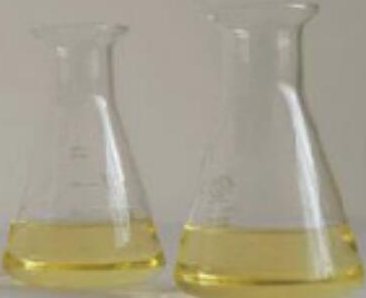
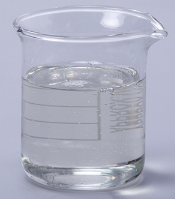
Appearance:Colorless to pale yellow transparent viscous liquid at 25℃.
MOQ (Minimum Order Quantity): 1 FCL (Full Container Load)
Textile Antistatic Agent
This textile antistatic agent is a non‑ionic or weak cationic surfactant polymer. It is easily soluble in water and can form a uniform aqueous solution without delamination. The pH value of its 1% aqueous solution is 5.5 to 7.5, which is close to neutral. It has good compatibility with most cationic, non‑ionic and partial anionic textile auxiliaries. It can absorb moisture from the air and form a conductive water film on the fiber surface to reduce surface resistivity and eliminate static electricity. It has excellent thermal stability and will not decompose or lose efficacy under normal textile finishing temperature. It shows good resistance to hard water and will not precipitate in water with moderate hardness. It will not corrode textile fibers and equipment. Under sealed storage conditions at 0℃ to 40℃, the product maintains stable performance without stratification and precipitation. If frozen at low temperature, it will turn turbid and thicken, but it can return to the original state after slow thawing and gentle stirring, and its application performance will not be affected. The shelf life is 12 months.
Applicaion of Textile Antistatic Agent
This textile antistatic agent is a hydrophilic polymer finishing agent, designed for static control on polyester, nylon, polypropylene, acrylic and other synthetic fibers, as well as their blends with cotton, viscose, lyocell and modal. It forms a continuous hydrophilic conductive film on the fiber surface to absorb trace moisture in the air, effectively lowering surface resistivity and rapidly dissipating static charges generated by friction during textile processing and end use. It can solve a series of static-related troubles, including fiber winding and filament breakage during spinning, warping and yarn sticking in weaving, fabric clinging to human body, dust adsorption, electrostatic sparking and uncomfortable electric shock when wearing. It brings minimal influence on fabric original shade, color fastness, luster and hand feel, and meets OEKO‑TEX Standard 100 and common eco‑textile requirements, free of APEO. It supports both padding continuous finishing and exhaust dipping batch treatment, and can also be added as spin finish for filament and staple fiber production. It is widely applicable to sportswear, outerwear, knitted fabrics, bedding, curtains, upholstery, carpets, automotive interior textiles, filter fabrics, non‑woven fabrics, cleanroom garments and ESD protective workwear for electronic workshops. It can be used alone or mixed with compatible cationic and non‑ionic softeners, wetting agents and other finishing auxiliaries. The application dosage shall be adjusted according to fiber type, fabric structure, environmental humidity and target surface resistance value. For scenarios with strict anti‑static requirements under low humidity conditions or for technical textiles, higher dosage or repeated finishing treatment is recommended. Complete desizing, scouring and rinsing are required before finishing to remove spinning oil, slurry and surface impurities, which is critical to obtain uniform and long‑lasting antistatic performance. Its antistatic effect is related to ambient relative humidity; the performance will be better under higher humidity. This product is compatible with most cationic and non‑ionic auxiliaries, while compatibility test is necessary when used together with anionic chemicals. A lab trial on small fabric swatches is mandatory before mass production to verify the antistatic effect, color change, hand feel and washing resistance, so as to avoid batch quality risks.
Fact Factory and Equipment Show