
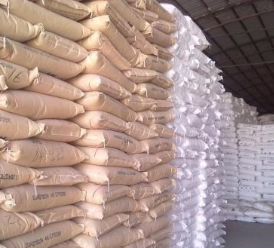
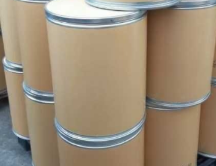
Palmitic acid #CAS57-10-3
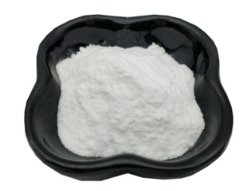
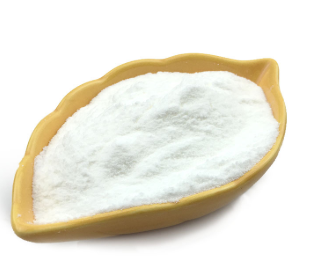
Palmitic acid occurs as white crystalline scales with a slight characteristic odor and taste. It is one of the most common saturated fatty acids found in animals and plants. It is a mixture of solid organic acids obtained from fats consisting chiefly of palmitic acid (C16H35O2) with varying amounts of stearic acid (C16H36O2). As its name tells us, it is found in palm oil but also in butter, cheese, milk and meat.Palmitic acid is a saturated long-chain fatty acid with a carboxyl functional group. It is nearly insoluble in water, soluble in ethanol, chloroform and other organic solvents. It can undergo typical carboxylic acid reactions, reacting with alkalis to form palmitate soaps, and reacting with alcohols to generate esters. It has good thermal stability under normal storage conditions; it will not decompose easily below its melting point. It is combustible, and dust may form explosive mixtures with air. It does not contain unsaturated double bonds, so it is not prone to oxidation and rancidity compared with unsaturated fatty acids. It can react with strong oxidants under suitable conditions.
Applicaion of Palmitic acid
palmitic acid is one of the skin’s major fatty acids produced by the sebaceous glands. In cosmetic preparations, it is used as a formula texturizer. This acid is naturally occurring in allspice, anise, calamus oil, cascarilla bark, celery seed, coffee, tea, and many animal fats and plant oils. It is obtained from palm oil, Japan wax, or Chinese vegetable tallow.Palmitic Acid is a common fatty acid found in plants and animals. The body converts excess carbohydrates into Palmitic Acid, thus Palmitic Acid is the first fatty acid produced during fatty acid synt hesis as well as a precursor for longer fatty acids
Palmitic Acid is a fatty acid which is a mixture of solid organic acids from fats consisting principally of palmitic acid with varying amounts of stearic acid. it functions as a lubricant, binder, and defoaming agent.
Palmitic acid, also known as hexadecanoic acid, is a fundamental saturated fatty acid raw material widely applied across multiple industrial sectors. It is a core feedstock for synthesizing various surfactants, anionic and nonionic emulsifiers, which are essential components for soap, laundry detergent, industrial cleaning agents and textile auxiliaries. It can react with alkali metals and alkaline earth metals to produce corresponding metal palmitates, these metal soaps are extensively used as heat stabilizers, mold release agents and lubricants for PVC and other polymer materials in plastic processing industry. It is also an important raw material for esterification reactions, and the generated palmitate esters can be used as high-performance lubricants, oil additives, plasticizers, as well as base materials for cosmetic emollients. In cosmetic and personal care field, it is added into creams, ointments, body lotions, shaving products and makeup formulas to adjust the product’s texture, improve the emulsifying system and enhance the spreadability on skin. It acts as a key intermediate for further fractionation and synthesis to produce stearic acid and other higher fatty acids. Within rubber industry, it works as a processing aid, internal lubricant and activator, improving the dispersion of fillers and the fluidity of rubber compound during mixing and molding. It can be adopted in the production of wax blends, polishing agents and waterproofing agents to increase hardness and water resistance of finished products. In food industry, food-grade palmitic acid can be used as food additives, coating agents and release agents for food processing. Moreover, it is applied in pharmaceutical synthesis to prepare pharmaceutical intermediates, ointment substrates and sustained-release excipients, and it is also used in the manufacturing of candle, grease and flotation agents for mineral processing.
| Palmitic acid Chemical Properties |
| Melting point | 61-62.5 °C(lit.) |
| Boiling point | 351.5 °C |
| density | 0.852 g/mL at 25 °C(lit.) |
| bulk density | 415kg/m3 |
| vapor pressure | 10 mm Hg ( 210 °C) |
| refractive index | 1.4273 |
| FEMA | 2832 | PALMITIC ACID |
| Fp | >230 °F |
| storage temp. | room temp |
| solubility | chloroform: 0.5 M, clear, colorless |
| form | Flakes |
| pka | 4.78±0.10(Predicted) |
| color | White or almost white |
| Odor | at 100.00 %. slightly waxy fatty |
| Odor Type | waxy |
| biological source | plant (vegetable) |
| Water Solubility | insoluble |
| Specific Heat Capacity | Cp(crystal): 1.8 J/(g·K), at 25℃ |
| JECFA Number | 115 |
| Merck | 14,6996 |
| BRN | 607489 |
| Henry's Law Constant | 4.9×10⁻¹ mol/(m3Pa) at 25℃, Duchowicz et al. (2020) |
| Dielectric constant | 2.3(71℃) |
| Stability: | Stable. Combustible. Incompatible with bases, oxidizing agents, reducing agents. |
| Cosmetics Ingredients Functions | SURFACTANT - EMULSIFYING SKIN CONDITIONING - EMOLLIENT |
| Cosmetic Ingredient Review (CIR) | Palmitic acid (57-10-3) |
| InChI | 1S/C16H32O2/c1-2-3-4-5-6-7-8-9-10-11-12-13-14-15-16(17)18/h2-15H2,1H3,(H,17,18) |
| InChIKey | IPCSVZSSVZVIGE-UHFFFAOYSA-N |
| SMILES | CCCCCCCCCCCCCCCC(O)=O |
| LogP | 7.170 |
| CAS DataBase Reference | 57-10-3(CAS DataBase Reference) |
| NIST Chemistry Reference | Hexadecanoic acid(57-10-3) |
| EPA Substance Registry System | Palmitic acid (57-10-3) |
| Safety Information |
| Hazard Codes | Xi |
| Risk Statements | 36-36/38-36/37/38 |
| Safety Statements | 26-37/39-36 |
| WGK Germany | - |
| RTECS | RT4550000 |
| TSCA | TSCA listed |
| HS Code | 2915709000 |
| Storage Class | 13 - Non Combustible Solids |
| Hazardous Substances Data | 57-10-3(Hazardous Substances Data) |
| Toxicity | LD50 i.v. in mice: 57±3.4 mg/kg (Or, Wretlind) |
Fact Factory and Equipment Show