Citric acid #CAS77-92-9
CAS Number:77-92-9
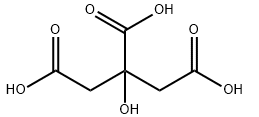
Chemical Formula:C6H8O7
Synonyms:
BETZ 6251;BETZ 0623
CITRIC ACID 99.5+% FCC
CITRIC ACID, 500MG, NEAT
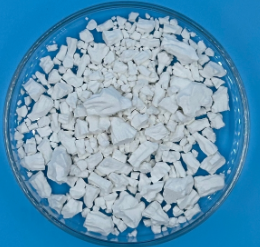
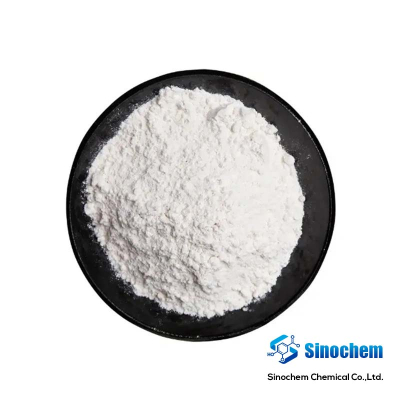
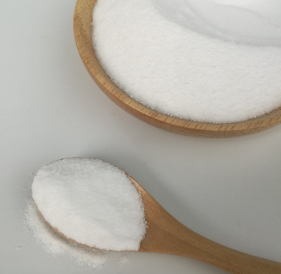
Appearance:Citric acid appears as colourless translucent crystals or white crystalline granules/powder, odourless with a strongly sour taste.
MOQ (Minimum Order Quantity): 1 FCL (Full Container Load)
Citric acid #CAS77-92-9
Citric acid is soluble 66 % in water, 33% in alcohol, 3% in ether. Soluble about 20% in Propylene glycol. Virtually odorless. The aqueous solution has a clean acid taste, pleasant in the concentration of 0.02 to 0.08%. Citric acid is a weak organic acid with the formula C6H8O7. It is a natural preservative / conservative and is also used to add an acidic, or sour, taste to foods and soft drinks. In biochemistry, the conjugate base of citric acid, citrate, is important as an intermediate in the citric acid cycle, which occurs in the metabolism of all aerobic organisms.Citric acid is a commodity chemical, and more than a million tonnes are produced every year by fermentation. It is used mainly as an acidifier, as a flavoring, and as a chelating agent.
Citric acid is a weak organic tricarboxylic acid that is readily soluble in water and ethanol. It can undergo typical reactions of carboxylic acids such as neutralization, esterification and salt formation. It is stable at room temperature, decomposes upon heating, and has good chelating ability to bind metal ions. It is also susceptible to oxidation under strong oxidizing conditions.
Applicaion of Citric acid
citric acid has astringent and anti-oxidant properties. It can also be used as a product stabilizer, pH adjuster, and preservative with a low sensitizing potential. It is not usually irritating to normal skin, but it can cause burning and redness when applied to chapped, cracked, or otherwise inflamed skin. It is derived from citrus fruits.
Citric Acid is an acidulant and antioxidant produced by mold fermentation of sugar solutions and by extraction from lemon juice, lime juice, and pineapple canning residue. it is the predominant acid in oranges, lemons, and limes. it exists in anhydrous and monohydrate forms. the anhydrous form is crystallized in hot solutions and the monohydrate form is crystallized from cold (below 36.5°c) solutions. anhydrous citric acid has a solubility of 146 g and monohydrate citric acid has a solubility of 175 g/100 ml of distilled water at 20°c. a 1% solution has a ph of 2.3 at 25°c. it is a hygroscopic, strong acid of tart flavor. it is used as an acidulant in fruit drinks and carbonated beverages at 0.25-0.40%, in cheese at 3-4%, and in jellies. it is used as an antioxidant in instant potatoes, wheat chips, and potato sticks, where it prevents spoilage by trapping the metal ions. it is used in combination with antioxidants in the processing of fresh frozen fruits to prevent discoloration.
Citric acid is one of the most versatile organic acid additives with broad applications covering food, beverage, cosmetics, personal care, cleaning, pharmaceutical, feed, textile, electroplating and environmental fields. In the food and beverage industry, it functions as a primary acidulant, flavour modifier, pH stabiliser, antioxidant synergist and preservative aid. It imparts a refreshing sour taste to carbonated drinks, fruit juices, bottled iced teas, jams, jellies, confectionery, baked goods and canned fruits and vegetables; it inhibits browning reactions, stabilises natural pigments and suppresses the growth of spoilage microorganisms, thereby prolonging product shelf life. In the cosmetic and personal care industry, citric acid is commonly used as a pH adjuster and buffering agent in facial cleansers, toners, moisturising creams, shampoos, conditioners and exfoliating products. It helps bring the pH of formulations closer to the skin’s natural range, enhances the efficacy of active ingredients and gently promotes skin exfoliation at suitable concentrations. Leveraging its powerful chelating capacity, citric acid is widely incorporated into household cleaners, dishwashing liquids, laundry detergents and industrial descaling agents. It readily complexes calcium, magnesium, iron and other metal ions, softens hard water, prevents mineral scale deposition and improves the cleaning performance of surfactants. In the pharmaceutical industry, it is a key raw material for effervescent tablets, oral syrups and buffer systems; it can also be used to adjust the acidity of medicinal preparations and assist in drug dissolution. For animal feed, citric acid acts as an acidifier to lower gastrointestinal pH, improve nutrient digestibility and inhibit harmful bacteria in livestock and poultry. In textile printing and dyeing, it serves as a pH regulator and metal ion sequesterant to reduce dye defects and improve colour uniformity. In electroplating, it works as a complexing agent for environmentally friendly plating solutions. Additionally, citric acid is adopted in water treatment, concrete retardation, bioremediation and the production of citrate salts, demonstrating great practical value in both consumer and industrial manufacturing.
| Citric acid Chemical Properties |
| Melting point | 153-159 °C (lit.) |
| Boiling point | 310 °C (decomp) |
| bulk density | 560kg/m3 |
| density | 1.67 g/cm3 at 20 °C |
| vapor density | 7.26 (vs air) |
| vapor pressure | <0.1 hPa (20 °C) |
| refractive index | 1.493~1.509 |
| FEMA | 2306 | CITRIC ACID |
| Fp | 100 °C |
| storage temp. | 2-8°C |
| solubility | Citric acid also dissolves in absolute (anhydrous) ethanol (76 parts of citric acid per 100 parts of ethanol) at 15 °C. |
| form | grit |
| pka | 3.14(at 20℃) |
| color | White |
| PH | 3.24(1 mM solution);2.62(10 mM solution);2.08(100 mM solution); |
| Odor | Odorless |
| Odor Type | odorless |
| biological source | synthetic |
| explosive limit | 8%, 65°F |
| Water Solubility | soluble in Water (1174g/L at 10°C, 1809g/L at 30°C, 3825g/L at 80°C). |
| Sensitive | Hygroscopic |
| λmax | λ: 260 nm Amax: 0.20 λ: 280 nm Amax: 0.10 |
| Merck | 14,2326 |
| JECFA Number | 218 |
| BRN | 782061 |
| Henry's Law Constant | 3.1×10¹⁵ mol/(m3Pa) at 25℃, Burkholder et al. (2019) |
| Stability: | Stable. Incompatible with bases, strong oxidizing agents, reducing agents, metal nitrates. |
| Cosmetics Ingredients Functions | CHELATING FRAGRANCE BUFFERING |
| Cosmetic Ingredient Review (CIR) | Citric acid (77-92-9) |
| InChI | 1S/C6H8O7/c7-3(8)1-6(13,5(11)12)2-4(9)10/h23H,1-2H2,(H,7,8)(H,9,10)(H,11,12) |
| InChIKey | KRKNYBCHXYNGOX-UHFFFAOYSA-N |
| SMILES | OC(=O)CC(O)(CC(O)=O)C(O)=O |
| LogP | -1.64 |
| CAS DataBase Reference | 77-92-9(CAS DataBase Reference) |
| NIST Chemistry Reference | 1,2,3-Propanetricarboxylic acid, 2-hydroxy-(77-92-9) |
| EPA Substance Registry System | Citric acid (77-92-9) |
| Safety Information |
| Hazard Codes | Xi,C,T |
| Risk Statements | 41-36/37/38-36/38-37/38-34-36-35-61-60 |
| Safety Statements | 26-39-37/39-24/25-36/37/39-45-36-53 |
| RIDADR | UN 1789 8/PG 3 |
| WGK Germany | 1 |
| RTECS | GE7350000 |
| F | 9 |
| TSCA | TSCA listed |
| HS Code | 2918140000 |
| Storage Class | 11 - Combustible Solids |
| Hazard Classifications | Eye Irrit. 2 STOT SE 3 |
| Hazardous Substances Data | 77-92-9(Hazardous Substances Data) |
| Toxicity | LD50 in mice, rats (mmol/kg): 5.0, 4.6 i.p. (Gruber, Halbeisen) |
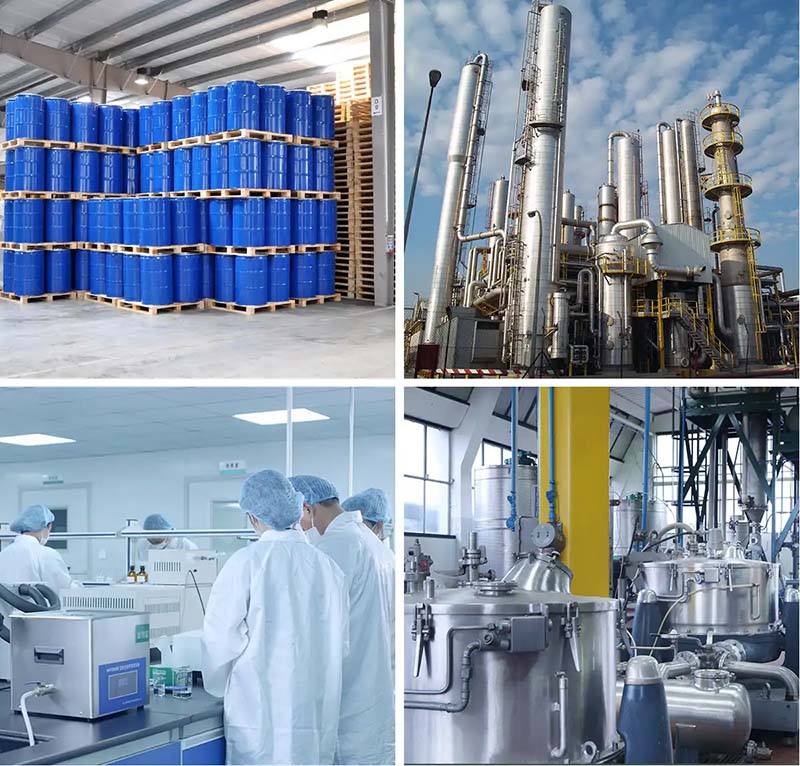
Fact Factory and Equipment Show