Vitamin B2 #CAS:83-88-5
CAS Number:83-88-5
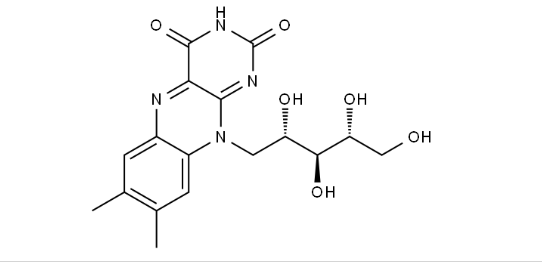
Chemical Formula: C17H20N4O6
Riboflavin (1.07609)
Riboflavin Vitamin B2
Vitamin B2 (Riboflavine)
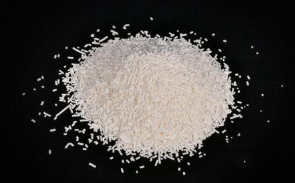
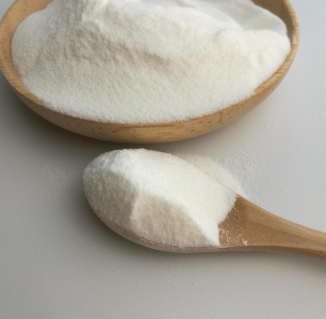
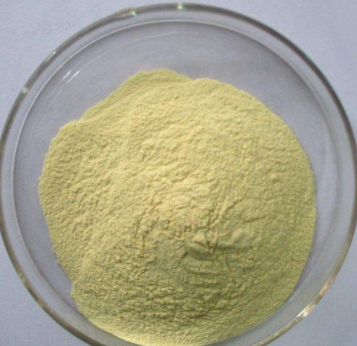
Appearance:Yellow to orange
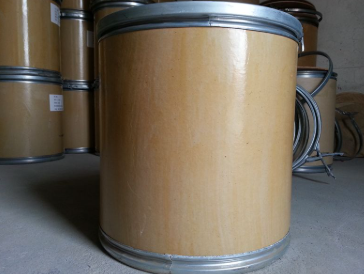
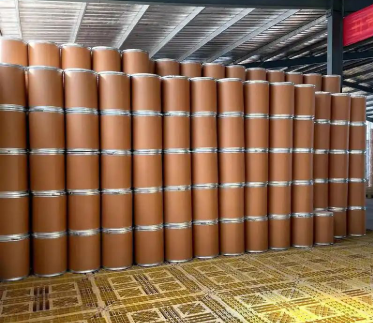
MOQ (Minimum Order Quantity): 1 FCL (Full Container Load)
Vitamin B2 #CAS:83-88-5
A water-soluble B fraction was found in the 1920s to contain a yellow, fluorescent growth factor called riboflavin in England and vitamin G in the United States. In the early 1930s, several groups found the coenzyme forms of riboflavin 50-phosphate (flavin mononucleotide) and the further conjugate with adenylic acid (flavin adenine dinucleotide).
Vitamin B2, also known as riboflavin, is a member of the B-vitamin complex. It is slightly soluble in water and remains stable when heated in neutral or acidic solutions. As a component of the prosthetic groups of flavoenzymes in the body, it plays a crucial role in biological oxidation; a deficiency can impair this process and disrupt metabolism. Such a deficiency typically manifests as inflammation in the mouth, eyes, or external genitalia—conditions including angular cheilitis, cheilitis, glossitis, conjunctivitis, and scrotal dermatitis—which is why vitamin B2 is frequently used in the prevention and treatment of these ailments. Since the body’s storage capacity for vitamin B2 is very limited, it must be replenished daily through one's diet. Two specific properties of vitamin B2 are primarily responsible for its loss: (1) it can be destroyed by light; and (2) it can be destroyed when heated in an alkaline solution.
Applicaion of Vitamin B2
Vitamin B2 (riboflavin) is produced by yeast from glucose, urea, and mineral salts in an aerobic fermentation.
Nutritional factor found in milk, eggs, malted barley, liver, kidney, heart, leafy vegetables. Richest natural source is yeast. Minute amounts present in all plant and animal cells. Vitamin (enzyme cofactor).
riboflavin (Vitamin B2) is used in skin care preparations as an emollient. It can be found in sun care products as a suntan enhancer. Medicinally, it is used for the treatment of skin lesions.
Riboflavin is the water-soluble vitamin b2 required for healthy skin and the building and maintaining of body tissues. it is a yellow to orange-yellow crystalline powder. it acts as a coenzyme and carrier of hydrogen. it is stable to heat but may dissolve and be lost in cooking water. it is relatively stable to storage. sources include leafy vegetables, cheese, eggs, and milk.
| Riboflavin Chemical Properties |
| Melting point | 290 °C (dec.)(lit.) |
| alpha | -135 º (c=5, 0.05 M NaOH) |
| Boiling point | 504.93°C (rough estimate) |
| density | 1.2112 (rough estimate) |
| bulk density | 100kg/m3 |
| refractive index | -135 ° (C=0.5, JP Method) |
| Fp | 9℃ |
| storage temp. | 2-8°C |
| solubility | Very slightly soluble in water, practically insoluble in ethanol (96 per cent). Solutions deteriorate on exposure to light, especially in the presence of alkali. It shows polymorphism (5.9). |
| form | Powder |
| pka | 1.7(at 25℃) |
| color | Yellow to orange |
| Odor | Slight odour |
| PH Range | 6 |
| PH | 5.5-7.2 (0.07g/l, H2O, 20°C) |
| biological source | synthetic |
| Optical Rotation | [α]/D -135.0 to -155.0°, c =0.5% in 0.05 M NaOH (dry basis) |
| Water Solubility | 0.07 g/L (20 ºC) |
| Sensitive | Light Sensitive |
| ex/em | λex 443, 353 nm; λem 531 nm in EtOH |
| Merck | 14,8200 |
| BRN | 97825 |
| BCS Class | 1 |
| Stability: | Stable, but light-sensitive. Incompatible with strong oxidizing agents, reducing agents, bases, calcium, metallic salts. May be moisture sensitive. |
| Cosmetics Ingredients Functions | SKIN CONDITIONING - MISCELLANEOUS COLORANT |
| InChI | 1S/C17H20N4O6/c1-7-3-9-10(4-8(7)2)21(5-11(23)14(25)12(24)6-22)15-13(18-9)16(26)20-17(27)19-15/h3-4,11-12,14,22-25H,5-6H2,1-2H3,(H,20,26,27)/t11-,12+,14-/m0/s1 |
| InChIKey | AUNGANRZJHBGPY-SCRDCRAPSA-N |
| SMILES | CC1=C(C)C=C(N(C[C@H](O)[C@@H]([C@H](O)CO)O)C(C2=N3)=NC(NC2=O)=O)C3=C1 |
| LogP | -2.009 (est) |
| CAS DataBase Reference | 83-88-5(CAS DataBase Reference) |
| NIST Chemistry Reference | Riboflavine(83-88-5) |
| EPA Substance Registry System | Riboflavin (83-88-5) |
| Safety Information |
| Hazard Codes | F,T |
| Risk Statements | 11-23/24/25-39/23/24/25 |
| Safety Statements | 24/25-45-36/37-16 |
| RIDADR | UN1230 - class 3 - PG 2 - Methanol, solution |
| WGK Germany | 1 |
| RTECS | VJ1400000 |
| F | 8-10-21 |
| TSCA | TSCA listed |
| HS Code | 2936230000 |
| Storage Class | 11 - Combustible Solids |
| Hazardous Substances Data | 83-88-5(Hazardous Substances Data) |
| Toxicity | LD50 in rats (g/kg): >10 orally, 5.0 s.c., 0.56 i.p. (Unna, Greslin) |