
Tricalcium Phosphate (TCP) #CAS7758-87-4
CAS Number:7758-87-4
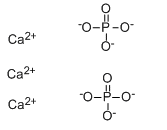
Chemical Formula:Ca3O8P2
Synonyms:
Calcium phosphate
APATITE TTCP, MONOCLINIC
calciumphosphate(ca3(po4)2)
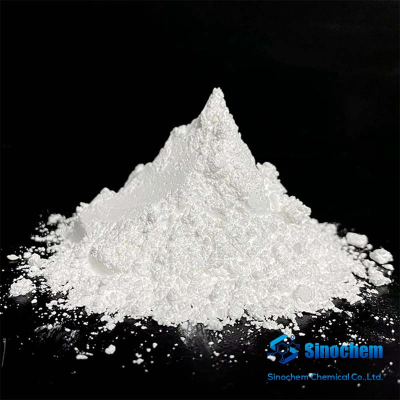
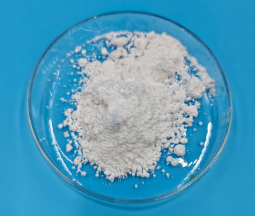
Appearance:white or almost white powder that is insoluble in water
MOQ (Minimum Order Quantity): 1 FCL (Full Container Load)
Tricalcium Phosphate (TCP) #CAS7758-87-4
Calcium phosphate, also known as tricalcium phosphate, is a white or almost white powder that is insoluble in water. It reacts with silicon oxide and carbon at electric furnace temperatures to yield phosphorus vapor. When reacted with sulfuric acid (H₂SO₄), it forms different products depending on the proportions used: phosphoric acid, dicalcium hydrogen phosphate (CaHPO₄, a white insoluble solid), or calcium dihydrogen phosphate (Ca(H₂PO₄)₂·H₂O, a white soluble solid). Its solubility product constant (Ksp) is 28.70.White amorphous powder; refractive index 1.63; density 3.14 g/cm3; melts at 1,670°C; insoluble in water; KSP 1.0x10⁻²⁵; soluble in acids.Application of Tricalcium Phosphate (TCP)
Tricalcium phosphate is a high-performance mineral feed additive. It provides digestible calcium and phosphorus for livestock, poultry and aquatic animals, and these two elements are indispensable for bone growth, tooth development and tissue mineralization. It helps maintain a balanced calcium-phosphorus ratio in animal feed, which supports normal metabolic functions and nutrient absorption. It can effectively prevent nutritional deficiency diseases such as rickets in young animals, osteomalacia and osteoporosis in adult animals, and reduce problems like lameness and skeletal deformity. For laying hens, it improves the thickness and hardness of eggshells, cuts down the rate of broken eggs and soft-shell eggs, stabilises egg production and extends the laying peak period. For meat pigs, broilers, cattle and sheep, it promotes daily weight gain, improves feed conversion rate and optimises carcass quality. When applied in aquafeed for fish, shrimp and crabs, it supports the formation of bones and crustacean shells, ensures smooth moulting, reduces moulting failure and mortality, and enhances the anti-stress ability of aquatic animals. Besides skeleton building, calcium and phosphorus take part in energy metabolism, enzyme activation, nerve conduction and muscle contraction inside organisms, which strengthens animal immunity and reduces the incidence of metabolic diseases. It has good compatibility with corn, soybean meal, wheat bran, trace element premixes and vitamin additives. It can be directly mixed into compound feed, concentrated feed and mineral premixes. It also benefits breeding animals, improves reproductive performance, increases the birth weight of offspring, and lowers the risk of postpartum paralysis for sows and dairy cows. It has stable chemical properties and will not easily react with most conventional feed raw materials during mixing and storage.
| Calcium phosphate Chemical Properties |
| Melting point | 1,670 °C (3,040 °F; 1,940 K) |
| density | 3.14 g/cm3 |
| refractive index | 1.63 |
| FEMA | 3081 | TRICALCIUM PHOSPHATE |
| Fp | Non-flammable |
| storage temp. | room temp |
| solubility | Practically insoluble in water. It dissolves in dilute hydrochloric acid and in dilute nitric acid. |
| form | amorphous powder |
| color | White |
| PH | 6-8 (50g/l, H2O, 20°C) suspension |
| Odor | Odorless |
| Water Solubility | 0.1 g/L (25 ºC) |
| Specific Heat Capacity | Cp(crystal): 0.73 J/(g·K), at 25℃ |
| Merck | 13,1699 |
| Solubility Product Constant (Ksp) | pKsp: 28.68 |
| Cosmetics Ingredients Functions | ORAL CARE ABRASIVE ANTICAKING FRAGRANCE OPACIFYING |
| Cosmetic Ingredient Review (CIR) | Calcium phosphate (7758-87-4) |
| InChI | 1S/3Ca.2H3O4P/c;;;2*1-5(2,3)4/h;;;2*(H3,1,2,3,4)/q3*+2;;/p-6 |
| InChIKey | QORWJWZARLRLPR-UHFFFAOYSA-H |
| SMILES | [Ca+2].[Ca+2].[Ca+2].[P](=O)([O-])([O-])[O-].[P](=O)([O-])([O-])[O-] |
| LogP | -2.15 |
| CAS DataBase Reference | 7758-87-4(CAS DataBase Reference) |
| EPA Substance Registry System | Tricalcium phosphate (7758-87-4) |
| Safety Information |
| Hazard Codes | Xi |
| Risk Statements | 36/37/38 |
| Safety Statements | 26-36-24/25-22 |
| WGK Germany | 3 |
| TSCA | TSCA listed |
| HS Code | 2835 26 00 |
| Storage Class | 11 - Combustible Solids |
| Hazardous Substances Data | 7758-87-4(Hazardous Substances Data) |
| Toxicity | LD50 orally in Rabbit: > 5000 mg/kg LD50 dermal Rabbit > 2000 mg/kg |
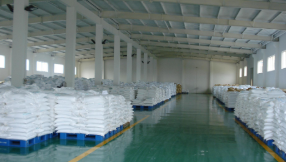
Fact Factory and Equipment Show