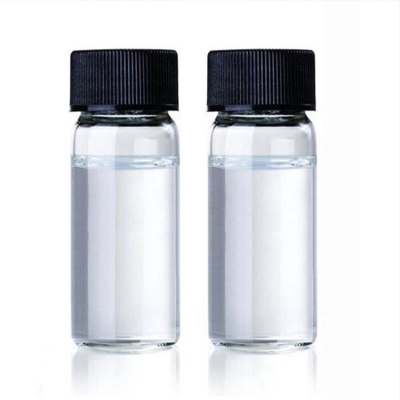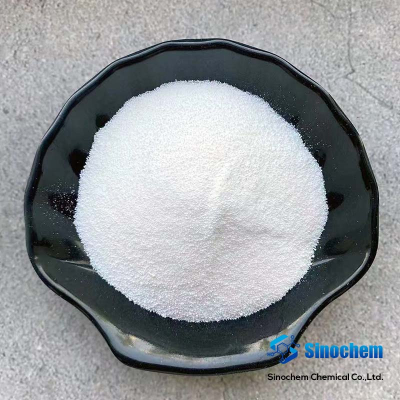
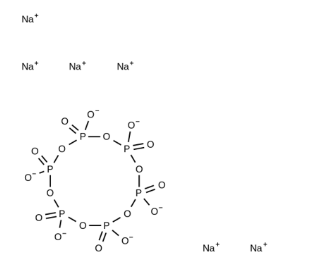
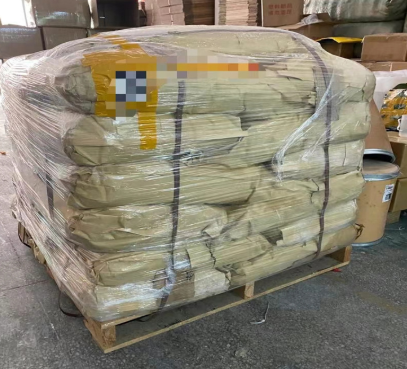
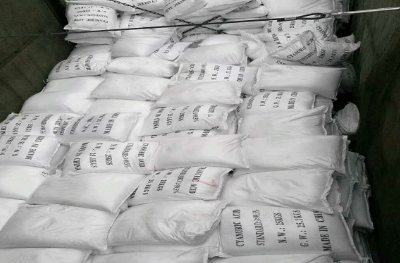
sodium hexametaphosphate #CAS10124-56-8
CAS Number:10124-56-8
Chemical Formula:H7NaO18P6
Sodium Hexametaphosphate(Sodium Polyphosphates, Glassy
SODIUM POLYPHOSPHATES
sodiumhexametaphosphate(na6p6o18)
MOQ (Minimum Order Quantity): 1 FCL (Full Container Load)
sodium hexametaphosphate #CAS10124-56-8
Sodium hexametaphosphate is a kind of sodium metaphosphate polymers. It is also known as "polyvinylidene sodium," "sodium multiple metaphosphate", "sodium metaphosphate vitreous body", and "Graham salt". It is a colorless transparent glass-like solid or white powder with greater solubility but low dissolving rate in water. Its aqueous solution exhibits acidic property. Its complex of divalent metal ion is relatively more stable than the complexes of mono-valent metal ion. It can easily be hydrolyzed to orthophosphate in warm water, acid or alkali solution. Hexametaphosphate has a relative strong hygroscopicity with being sticky after absorbing moisture. For certain metal ions (e.g., calcium, magnesium, etc.), it has the ability to form soluble complexes, and thus being able to being used for demineralizing water. It can also from precipitate with lead and silver ions with precipitate being re-dissolved in excess amount of sodium hexametaphosphate solution to form a complex salt. Its barium salt can also form complexes with the sodium hexametaphosphate. It can be used as a kind of highly efficient water softener of power stations, rolling stock boiler water; as detergent additive, as corrosion-controlling or anti-corrosion agents; as cement hardening accelerator; as streptomycin purification agent, and the cleaning agent of textile industry and dyeing industry. It can also be used as a kind of sedative drug, preservative, stabilizer, and fruit juice precipitant in food industry. In the oil industry, it is used for control of drilling pipe rust and adjusting the viscosity of oil drilling mud. It also has applications in fabric dyeing, tanning, paper, color film, soil analysis, radiation chemistry and analytical chemistry and other departments. Our GB2760-1996 provisions that hexametaphosphate is allowable food additives (water retention agent) for being used for canned food, fruit juice drinks, dairy products, soy products; it can also be used as a dye dispersant, and water treatment agent.
It is colorless and transparent glass flake or white granular crystals. It is easily soluble in water but insoluble in organic solvents.
The sodium polyphosphates class consists of several amorphous, water soluble polyphosphates composed of linear chains of metaphosphate units, (NaPO3)x where x ≥ 2, terminated by Na2PO4- groups. They are usually identified by their Na2O/ P2O5 ratio or their P2O5 content. The Na2O/P2O5 ratios vary from about 1.3 for sodium tetrapolyphosphate, where x = approximately 4; through about 1.1 for Graham’s salt, commonly called sodium hexametaphosphate, where x = 13 to 18; to about 1.0 for the higher molecular weight sodium polyphosphates, where x = 20 to 100 or more. The pH of their solution varies from about 3 to 9.
Applicaion of sodium hexametaphosphate
Sodium Hexametaphosphate is a sequestrant and moisture binder that is very soluble in water but dissolves slowly. solutions have a ph of 7.0. it permits peanuts to be salted in the shell by making it possible for the salt brine to penetrate the peanuts. in canned peas and lima beans, it functions as a tenderizer when added to the water used to soak or scald the vegetables prior to canning. it improves whipping properties in whipping proteins. it functions as a seques- trant for calcium and magnesium, having the best sequestering power of all the phosphates. it prevents gel formation in sterilized milk. it is also termed sodium metaphosphate and graham’s salt.
For industrial use, such as oil field, paper-making, textile, dyeing, petrochemical industry,tanning industry, metallurgical industry and building material industry, It is mainly used as a water sortening agent in solution for printing, dyeing ,and boiler; Diffusant in papermersing medium, high temperature agglomerant,detergent and soil analytical chemistry reagent,
sodium hexametaphosphate is a chelating agent and a corrosion inhibitor. This is an inorganic salt.
Sodium metaphosphate is the salt of metaphosphoric acid having a molecular formula (NaPO3)n, where n ranges from 3 to 10 (for cyclic molecules) or may be much larger (for polymers).
Cyclic molecules have alternate phosphorus and oxygen atoms in the rings and start with trimetaphosphate (NaPO3)3 to at least decametaphosphate.
Sodium hexametaphosphate may be a polymer where n is between 10 and 20.
Vitreous sodium phosphates have a Na2O:P2O5 ratio near unity and are called Graham's salts. The average number of phosphorus atoms in these vitreous glasses ranges from 25 to infinity.
Sodium hexametaphosphate (SHMP) or water glass Na6P6O18 is basically the salt of metaphosphoric acid. SHMP is difficult to dissolve. By mixing SHMP for 1-3 h, a solution of 8-10% can be obtained. The pH of this solution is about 5. Because of a weak acid reaction, the SHMP reacts with cations of bivalent metals forming Na2MeP6O18 or Na4MeP6O18. In the presence of oxygen, SHMP slowly decomposes into pyrophosphate and orthophosphate.
It can be used as a food quality improver in food industry, pH adjusting agent, metal ion chelating agents, dispersants, extenders, etc.
It can be used as a kind of common analytical reagents, water softener, and also used for photofinishing and printing.
It can be used as a water softener, detergent, preservative, cement hardening accelerator, fiber dyeing and cleaning agents; it can also used for medicine, food, petroleum, printing and dyeing, tanning, and paper industry.
It can be used as texturizing agent; emulsifiers; stabilizer; chelating agent. It is less frequently for being used alone and is generally used in mixture with pyrophosphate and metaphosphate. The mixture is mainly used for ham, sausage, surimi such as the tissue improver for water retention, tendering and meat softening. It can also be used for prevention of crystallization of canned crab as well as dissolving agent of pectin.
It can be used as the water softening agent of boiler water and industrial water (including water for the production of dyes, water for the production of titanium dioxide, water for printing and dyeing, and slurry mixing, water for cleaning color copy of the film, as well as chemical industrial water and the water for the medicines, reagents production, etc.) as well as the water treatment agent for the industrial cooling water; it can also be used as a corrosion inhibitor, flotation agent, dispersant agent, high temperature binding agent, dyeing auxiliaries, metal surface treatment, rust inhibitors, detergent additives and also cement hardening accelerator. Coated paper production can use it as pulp dispersants in order to improve the penetration capability. In addition, it can also be apply to the washing utensils and chemical fiber in order to remove iron ions of the pulp. In the oil industry, it can be used for the antirust of the drilling pipe and adjusting the slurry viscosity upon the control of oil drilling.
It can be used as the quality improver with various effects of increasing the complex metal ions of food, pH, ionic strength, thereby improving the adhesive capability as well as the water holding ability of food. China provides that it can be applied to the dairy products, poultry products, ice cream, instant noodles and meat with the maximum permitted amount being 5.0 g/kg; the maximal permitted usage amount in canned food, fruit juice (flavored) drinks and vegetable protein drink is 1.0g/kg.
It can be used as a food quality improver in food industry and applied to canned food, fruit juice drinks, dairy products, and soy milk. It can be used as Ph adjusting agent, metal ion chelate agent, adhesive and bulking agents. When being applied to beans and canned fruits and vegetables, it can be stabilize the natural pigment and protect the food color and lustre; when being used in canned meat, it can be used for preventing the emulsification of the fat and maintaining its uniform texture; when being applied to meat, it can be used to increase the water holding capacity and prevent the deterioration of fat in the meat. It can also help to clarify the wine when being supplied to beer and further prevent turbidity.
| sodium hexametaphosphate Chemical Properties |
| Melting point | 616℃ |
| Boiling point | 1500℃ |
| density | 2.181 |
| refractive index | 1.482 |
| FEMA | 3027 | SODIUM HEXAMETAPHOSPHATE |
| RTECS | OY3675000 |
| storage temp. | 2-8°C |
| form | Solid |
| color | White |
| Odor | odorless |
| Water Solubility | Soluble in water. Insoluble in organic solvents |
| Stability: | Stable. Keep dry. |
| Cosmetics Ingredients Functions | CHELATING ANTICORROSIVE FRAGRANCE |
| InChI | 1S/6Na.H6O18P6/c;;;;;;1-19(2)13-20(3,4)15-22(7,8)17-24(11,12)18-23(9,10)16-21(5,6)14-19/h;;;;;;(H,1,2)(H,3,4)(H,5,6)(H,7,8)(H,9,10)(H,11,12)/q6*+1;/p-6 |
| InChIKey | INSNVPUOJJTBAL-UHFFFAOYSA-H |
| SMILES | [Na+].[Na+].[Na+].[Na+].[Na+].[Na+].[P]1(=O)(O[P](=O)(O[P](=O)(O[P](=O)(O[P](=O)(O[P](=O)(O1)[O-])[O-])[O-])[O-])[O-])[O-] |
| CAS DataBase Reference | 10124-56-8(CAS DataBase Reference) |
| EPA Substance Registry System | Sodium hexametaphosphate (10124-56-8) |
| Safety Information |
| Safety Statements | 24/25 |
| WGK Germany | WGK 1 slightly water endangering |
| TSCA | TSCA listed |
| HS Code | 2835390000 |
| Storage Class | 11 - Combustible Solids |
| Hazardous Substances Data | 10124-56-8(Hazardous Substances Data) |