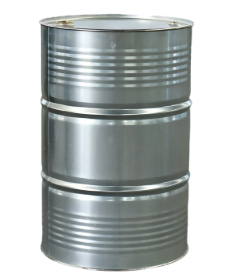
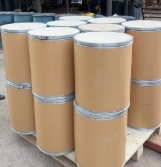
Ammonium dihydrogen phosphate #CAS7722-76-1
CAS Number:7722-76-1
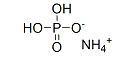
Chemical Formula:H6NO4P
Synonyms:
ammoniumdiacidphosphate
ammoniumdihydrogenphosphate((nh4)h2po4)
ammoniumphosphate(nh4h2po4)
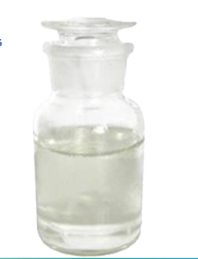
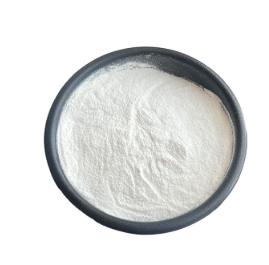
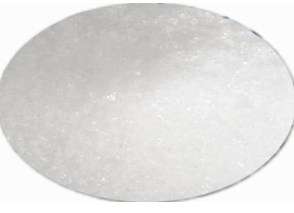
Appearance:White or colorless
MOQ (Minimum Order Quantity): 1 FCL (Full Container Load)
Ammonium dihydrogen phosphate #CAS7722-76-1
Ammonium dihydrogen phosphate (ADP) is a transparent, piezoelectric crystal containing no water of crystallization. Single crystals of this material were originally developed for use in underwater sound projectors and hydrophones.Ammonium dihydrogen phosphate is a colorless transparent tetragonal crystal. soluble in water, slightly soluble in alcohol, insoluble in acetone.Ammonium dihydrogen phosphate or monoammonium phosphate is formed when a solution of phosphoric acid is added to ammonia until the solution is distinctly acid. It crystallizes in quadratic prisms. Monoammonium phosphate is often used in the blending of dry agricultural fertilizers. It supplies soil with the elements nitrogen and phosphorus in a form which is usable by plants. The compound is also a component of the ABC powder in some dry powder fire extinguishers.Ammonium phosphate occurs in two forms-the monobasic, NH4H2P04, and dibasic,(NH4)2HP04, forms, It is a white crystalline solid that is soluble in water. Ammonium phosphate is a product of the reaction between ammonia and phosphoric acid.Ammonium phosphate is an important fertilizer and is used as a fire retardant.Ammonium phosphate monobasic (APM) is an inorganic salt widely used in fertilizer, baking powder and yeast production. It is also employed as an agent to control pH of a solution and in corrosion inhibition. APM can be prepared by reacting phosphoric acid with anhydrous ammonia maintaining the pH below 5.8. The change in some of the physical characteristics on its addition to a high carbonate containing unfired and fired illitic shale has been studied.
Application of Ammonium dihydrogen phosphate
Monoammonium phosphate (MAP) is a widely used source of P and N. It is made of two constituents common in the fertilizer industry and has the highest P content of any common solid fertilizer.
MAP has been an important granular fertilizer for many years. It is water soluble and dissolves rapidly in soil if adequate moisture is present. Upon dissolution, the two basic components of the fertilizer separate again to release NH4 + and H2PO4 - . Both of these nutrients are important to sustain healthy plant growth. The pH of the solution surrounding the granule is moderately acidic, making MAP an especially desirable fertilizer in neutral and high pH soils. Agronomic studies show that there is no significant difference in P nutrition from various commercial P fertilizers under most conditions.
Leavening agent, dough regulator, yeast food, brewing fermentation additives and buffer in the food industry.
Animal feed additives.
Nitrogen and phosphorus compound fertilizer with highly efficient.
Fire retardant for wood, paper, fabric, dispersant for fiber processing and dyeing industry, glaze for enamel, cooperating agent for fire retardant coating, decontamination agent for match stalk and candle core.
In indurstis of printing plate and pharmaceutical manufacturing.
Used as buffer solutions.
As baking powder with sodium bicarbonate; in fermentations (yeast cultures, etc.); fireproofing of paper, wood, fiberboard, etc.Ammonium dihydrogen phosphate is a general purpose food additive which is readily soluble in water. A 1% solution has a ph of 4.3–5.0. It is used as a dough strengthener and leavening agent in baked goods and as a firming agent and ph control agent in condiments and puddings. It is also used in baking powder with sodium bicarbonate and as a yeast food.Ammonium phosphates refer to a generic class of phosphorus fertilizers and are manufactured by reacting anhydrous ammonia with orthophosphoric acid or superphosphoric acid. These are either in solid or liquid form.
Ammonium phosphate fertilizers are highly soluble in water and fast acting in soil to give nitrogen and phosphorus in a chemical combination. They form an important base for many compound fertilizers. Both mono and diammonium phosphates have good physical properties when synthesized from the wetprocess phosphoric acid. Storage properties and the ease of granulation depends on the amount of impurities, which form a gel like structure (mainly aluminum and iron phosphates). This gel promotes granulation and serves as a conditioner to prevent caking even at moderately high moisture levels. A small proportion of phosphate rock added to phosphoric acid before ammoniation improves the granulation.
Ammonium phosphates, particularly Ammonium dihydrogen phosphate(DAP), are the most popular phosphate fertilizers worldwide because of their high utility and good physical properties. The standard commodity grade of diammonium phosphate is 18-46-0. Pure and completely soluble ammonium phosphates are used mainly as liquid fertilizers. In Britain, diammonium phosphate is not sold directly in this form, but is used to make compound fertilizers with a wide variety of plant foods.
| Ammonium dihydrogen phosphate Chemical Properties |
| Melting point | 190 °C (dec.) (lit.) |
| Boiling point | 87.4 °C |
| density | 1.02 g/mL at 20 °C |
| bulk density | 800-1100kg/m3 |
| vapor pressure | 0.066 hPa (125 °C) |
| RTECS | TC6587000 |
| refractive index | 1.525 |
| storage temp. | Inert atmosphere,Room Temperature |
| solubility | H2O: 0.1 M at 20 °C, clear, colorless |
| form | Solid |
| color | White or colorless |
| Specific Gravity | 1.803 |
| Odor | brilliant wh. cryst. or powd., odorless |
| PH Range | 3.8 - 4.4 |
| PH | 3.8-4.4 (25℃, 50mg/mL in H2O) |
| Water Solubility | 368 g/L (20 ºC) |
| λmax | λ: 260 nm Amax: ≤0.059 λ: 280 nm Amax: ≤0.050 |
| Merck | 14,543 |
| Cosmetics Ingredients Functions | BUFFERING ORAL CARE |
| Cosmetic Ingredient Review (CIR) | Ammonium dihydrogen phosphate (7722-76-1) |
| InChI | 1S/H3N.H3O4P/c;1-5(2,3)4/h1H3;(H3,1,2,3,4) |
| InChIKey | LFVGISIMTYGQHF-UHFFFAOYSA-N |
| SMILES | N.OP(O)(O)=O |
| LogP | -2.148 (est) |
| CAS DataBase Reference | 7722-76-1(CAS DataBase Reference) |
| EPA Substance Registry System | Monoammonium phosphate (7722-76-1) |
| Safety Information |
| Hazard Codes | Xi |
| Risk Statements | 36/37/38 |
| Safety Statements | 24/25-36-26 |
| RIDADR | UN3264 |
| WGK Germany | 1 |
| TSCA | TSCA listed |
| HazardClass | 8 |
| PackingGroup | III |
| HS Code | 31054000 |
| Storage Class | 11 - Combustible Solids |
| Hazardous Substances Data | 7722-76-1(Hazardous Substances Data) |
| Toxicity | LD50 orally in Rabbit: 5750 mg/kg LD50 dermal Rabbit > 7940 mg/kg |
Fact Factory and Equipment Show