
Carbon Black #CAS:1333-86-4
CAS Number:1333-86-4
Chemical Formula:C
Synonyms:
ACTIVATED CARBON DARCO G-60
ACTIVATED CHARCOAL NORIT
ACTIVATED CHARCOAL NORIT(R)
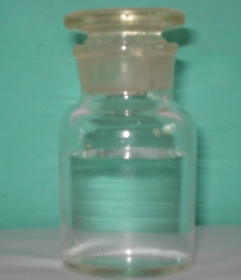
Appearance:Clear colorless rod
MOQ (Minimum Order Quantity): 1 FCL (Full Container Load)
Carbon Black #CAS:1333-86-4
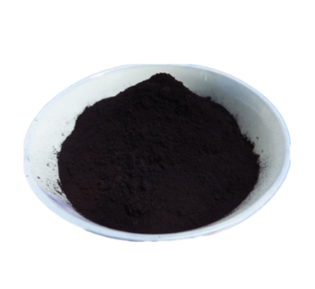
It appears as black powdery particles with a particle size of 0 to 500 μm. The relative density is 1.8 to 2.1. It is insoluble in water and organic solvents.
Carbon black is a finely divided form of carbon. It may ignite explosively if suspended in air in the presence of an ignition source or slowly undergo spontaneous combustion upon contact with water. In addition, it is toxic by inhalation, with a TLV of 3.5 mg/m3 in air. Primary uses are in the manufacture of tires, belt covers, plastics, carbon paper, colorant for printing inks, and as a solar-energy absorber.
Carbon black [1333-86-4] is virtually pure elemental carbon (diamond and graphite are other forms of nearly pure carbon) in the form of near-spherical colloidal particles that are produced by incomplete combustion or thermal decomposition of gaseous or liquid hydrocarbons. Its physical appearance is that of a black, finely divided pellet or powder, the latter sometimes small enough to be invisible to the naked eye. Its use in tires, rubber and plastic products, printing inks and coatings is related to the properties of specific surface area, particle size and structure, conductivity and color.
It is in the top 50 industrial chemicals manufactured worldwide, based on annual tonnage. Current worldwide production is about 15 billion pounds per year (6.81 million metric tons). Approximately 90% of carbon black is used in rubber applications, 9% as a pigment, and the remaining 1% as an essential ingredient in hundreds of diverse applications.
Modern carbon black products are direct descendants of early “lampblack”, first produced in China over 3500 years ago. These early lampblacks were not very pure and differed greatly in their chemical composition from current carbon blacks. Since the mid-1970s most carbon black has been produced by the oil furnace process, which is most often referred to as furnace black.
Unlike diamond and graphite, which are crystalline carbons, carbon black is an amorphous carbon composed of fused particles called aggregates. Properties, such as surface area, structure, aggregate diameter and mass differentiate the various carbon black grades.
Application of Carbon Black
Carbon black Super-P (TIMCAL) was used as conductive agent. Super P furnace black the best conductive additive. Carbon black (conducting material, super P black) was added with binder in the composite electrode to compensate the low electrical conductivity of PPy and PPyDVB in miniemulsion polymerization. The hybrid Super P-SACNT conductive network manifests itself as a promising strategy to improve the battery performances with a minimum amount of conductive fillers.
Tire treads, belt covers, and other abrasion- resistant rubber products; plastics as a reinforc- ing agent, opacifier, electrical conductor, UV- light absorber; colorant for printing inks;carbon paper; typewriter ribbons; paint pigment; nucleat- ing agent in weather modification; expanders in bat- tery plates; solar-energy absorber (see note).
| Carbon Black Chemical Properties |
| Melting point | 3550 °C(lit.) |
| Boiling point | 500-600 °C(lit.) |
| density | ~1.7 g/mL at 25 °C(lit.) |
| bulk density | 1.686g/cm3 (absolute, typical) |
| vapor pressure | <0.1 mm Hg ( 20 °C) |
| Fp | >230 °F |
| storage temp. | RT, stored under nitrogen |
| solubility | H2O: soluble0.1mg/mL |
| form | rod |
| color | Clear colorless |
| Specific Gravity | bulk 0.10/g/cm3 |
| Water Solubility | Insoluble |
| Merck | 14,1808 |
| Exposure limits | ACGIH:TLV-TWA 3 mg/m3,Inhalable particulate matter OSHA:PEL-TWA 3.5 mg/m3 NIOSH:REL-TWA 3.5 mg/m3 |
| Dielectric constant | 2.5(Ambient) |
| Stability: | Stable. Combustible. |
| Major Application | battery manufacturing |
| Cosmetics Ingredients Functions | COLORANT |
| InChI | 1S/C |
| InChIKey | VNWKTOKETHGBQD-UHFFFAOYSA-N |
| SMILES | [C] |
| LogP | 1.090 (est) |
| IARC | 2B (Vol. Sup 7, 65, 93) 2010 |
| EPA Substance Registry System | Carbon black (1333-86-4) |
| Safety Information |
| Hazard Codes | |
| OEB | B |
| OEL | TWA: 3.5 mg/m3 |
| WGK Germany | 3 |
| RTECS | FF5250100 |
| TSCA | TSCA listed |
| Storage Class | 11 - Combustible Solids |
| Hazardous Substances Data | 1333-86-4(Hazardous Substances Data) |
| Toxicity | LD50 oral in rat: > 15400mg/kg |
| IDLH | 1,750 mg/m3 |
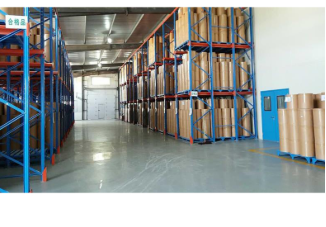
Fact Factory and Equipment Show