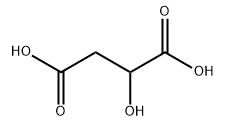
Malic acid #CAS6915-15-7
CAS Number: 6915-15-7
Chemical Formula: C4H6O5
Synonyms:
alpha-Hydroxysuccinic acid; alpha-hydroxysuccinicacid; Butanedioic acid, hydroxy-;commonmalicacid;deoxytetraricacid;femanumber2655;
hydroxy-butanedioicaci;Hydroxyethane-1,2-dicarboxylic acid
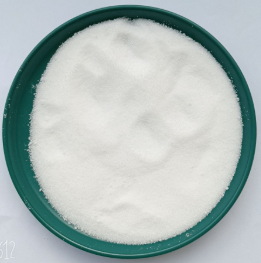
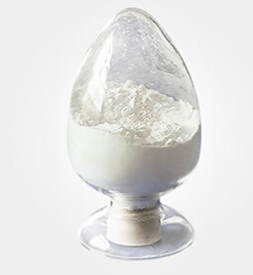
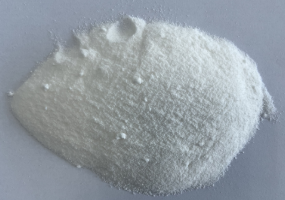
Appearance: White to Almost white; Solid
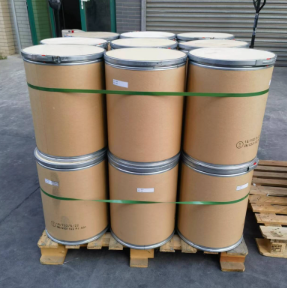
MOQ (Minimum Order Quantity): 1 FCL (Full Container Load)
Malic acid #CAS6915-15-7
White or nearly white, crystalline powder or granules having a slight odor and a strongly acidic taste. It is hygroscopic. The synthetic material produced commercially in Europe and the USA is a racemic mixture, whereas the naturally occurring material found in apples and many other fruits and plants is levorotatory.
Malic acid (CAS 6915-15-7, DL-malic acid) is a naturally occurring weak hydroxy dicarboxylic acid containing two carboxyl groups and one hydroxyl group within its molecular structure. It is highly soluble in water, methanol and ethanol, moderately soluble in acetone and only slightly soluble in ether. It undergoes characteristic chemical reactions of carboxylic acids, such as neutralization with alkalis to produce malate salts, esterification with alcohols to form malate esters, and can form stable chelate complexes with various metal ions including calcium, magnesium and iron. It shows good stability under normal room temperature and dry conditions, yet it is hygroscopic and tends to absorb moisture when exposed to high-humidity surroundings. Upon heating beyond its melting point, malic acid gradually loses water and undergoes thermal decomposition. Under strongly alkaline conditions, it may undergo dehydration to form fumaric acid and maleic acid. It can also be oxidized by strong oxidizing agents. Its hydroxyl group enables additional chemical derivatization reactions, which makes it a useful intermediate for organic synthesis.
Applicaion of Malic acid
Malic Acid is an acidulant that is the predominant acid in apples. it exists as white crystalline powder or granules and is considered hygroscopic. as compared to citric acid, it is slightly less soluble but is still readily soluble in water with a solubility of 132 g/100 ml at 20°c. it has a stronger apparent acid taste and has a longer taste retention than citric acid which peaks faster but does not mask the aftertaste as effectively. a quantity of 0.362–0.408 kg of malic acid is equivalent to 0.453 kg of citric acid and to 0.272–0.317 kg of fumaric acid in tartness. at temperatures above 150°c it begins to lose water very slowly to yield fumaric acid. it is used in soft drinks, dry-mix beverages, puddings, jellies, and fruit filling. it is used in hard can- dies because it has a lower melting point (129°c) than citric acid which improves the ease of incorporation.
Malic acid (CAS 6915-15-7, DL‑malic acid) has extensive applications in food and beverage, cosmetics, personal care, pharmaceutical, feed and other industrial sectors. In the food and beverage industry, it is widely used as an acidulant, flavour enhancer, pH regulator and preservative aid. Compared with citric acid, malic acid delivers a milder, longer-lasting sour taste that closely resembles the natural sourness of fruits, so it is frequently added to fruit drinks, carbonated beverages, jams, jellies, candies, chewing gums, baked goods and frozen desserts to enrich flavour layers, improve taste harmony, stabilize colour and inhibit the browning of fruit products. In the cosmetic and personal care industry, it serves as a pH adjuster, buffering agent and mild alpha-hydroxy acid. It can gently exfoliate the stratum corneum, promote skin metabolism, improve rough skin texture, and is commonly formulated into toners, facial masks, exfoliating creams, shampoos and body care products while helping maintain the proper pH range of cosmetic systems. In the pharmaceutical field, malic acid is used as an acidity regulator and solubilizing agent for oral preparations, effervescent formulations and syrups; it can also act as a chelating auxiliary to improve the stability of active pharmaceutical ingredients. As a feed acidifier, it helps reduce the pH value in the gastrointestinal tract of livestock and poultry, suppress the reproduction of harmful bacteria, boost the digestion and absorption of nutrients and improve animal growth performance. In addition, it is applied in cleaning products for its chelating property to bind metal ions and reduce water hardness, used as a raw material for synthesizing malate derivatives, and adopted in electroplating, textile processing and biochemical fields, making it a highly valuable organic acid raw material for both consumer and industrial production.
| Malic acid Chemical Properties |
| Melting point | 131-133 °C (lit.) |
| Boiling point | 167.16°C (rough estimate) |
| alpha | [α]D20 -0.5~+0.5° (c=5, H2O) |
| bulk density | 800kg/m3 |
| density | 1.609 |
| vapor density | 4.6 (vs air) |
| vapor pressure | <0.1 mm Hg ( 20 °C) |
| refractive index | 1.3920 (estimate) |
| Fp | 203 °C |
| storage temp. | 2-8°C |
| solubility | methanol: 0.1 g/mL, clear, colorless |
| pka | 3.4(at 25℃) |
| form | Solid |
| color | White to Almost white |
| Odor | at 100.00 %. odorless |
| PH | 3.33(1 mM solution);2.74(10 mM solution);2.21(100 mM solution); |
| Odor Type | odorless |
| biological source | synthetic |
| Optical Rotation | [α]/D 0.10 to +0.10° |
| Water Solubility | 558 g/L (20 ºC) |
| Merck | 14,5707 |
| BRN | 1723539 |
| Henry's Law Constant | 2.7×10⁸ mol/(m3Pa) at 25℃, Compernolle and Müller (2014) |
| Major Application | pharmaceutical (small molecule) |
| Cosmetic Ingredient Review (CIR) | Malic acid (6915-15-7) |
| InChI | 1S/C4H6O5/c5-2(4(8)9)1-3(6)7/h2,5H,1H2,(H,6,7)(H,8,9) |
| InChIKey | BJEPYKJPYRNKOW-UHFFFAOYSA-N |
| SMILES | OC(CC(O)=O)C(O)=O |
| LogP | -6.14 at 20℃ |
| CAS DataBase Reference | 6915-15-7(CAS DataBase Reference) |
| NIST Chemistry Reference | Hydroxybutanedioic acid(6915-15-7) |
| EPA Substance Registry System | Malic acid (6915-15-7) |
| Safety Information |
| Hazard Codes | Xn,Xi |
| Risk Statements | 22-37/38-41-36/37/38-42/43-34 |
| Safety Statements | 26-39-37/39-36-36/39 |
| WGK Germany | 1 |
| RTECS | ON7175000 |
| Autoignition Temperature | 644 °F |
| TSCA | TSCA listed |
| HS Code | 29181980 |
| Storage Class | 11 - Combustible Solids |
| Hazard Classifications | Eye Irrit. 2 |
| Hazardous Substances Data | 6915-15-7(Hazardous Substances Data) |
| Toxicity | LD50 orally in Rabbit: > 3200 mg/kg |
Fact Factory and Equipment Show